
How Can Hydrogen Change Life?
Compared with electric energy, hydrogen energy is convenient for storage and transportation, and can be used as an energy carrier instead of electric energy to participate in transportation, power generation, energy storage, industry and other fields.
In the future, we will see hydrogen fuel cell large trucks in mining areas, ports, industrial parks and other areas with high operational intensity and fixed driving routes. Not only that, but also public service vehicles such as urban buses, logistics distribution vehicles, and sanitation vehicles in the future. Hydrogen fuel will be used on a pilot basis, and hydrogen ships, hydrogen drones, etc. will also appear in the near future.
Since hydrogen power generation is more stable, it is very suitable for financial and commercial fields with high power quality requirements, as well as schools, industrial and mining enterprises, and can provide power to remote areas, islands and other places.
Focus on key core technologies, and promote the research and development of key core technologies in the production, storage, transmission, and use of green and low-carbon hydrogen energy. To develop hydrogen energy, we must first develop the source problem “manufacturing”. Hydrogen energy is very useful, so where does hydrogen come from?
Hydrogen energy is a beneficial supplement to existing energy sources, because hydrogen energy is also a secondary energy source, which does not exist naturally in nature, but must be converted from primary energy sources, such as fossil energy such as coal and natural gas to produce hydrogen, or use industrial by-products to produce hydrogen. In the future, we will focus on the development of hydrogen production from renewable energy sources, that is, electricity generated by solar energy and wind energy, and electrolysis of water to produce hydrogen, which is called green hydrogen. In this way, a clean, low-carbon, low-cost multiple hydrogen production system is formed. At the same time, hydrogen production from fossil energy is strictly controlled.
Because electricity is not easy to store, using electricity generated by solar and wind energy with relatively low stability to produce hydrogen can avoid part of the waste of electric energy on the one hand, and solve the problem of energy storage on the other hand.
The hydrogen fuel cell membrane electrode is the core component for converting hydrogen into electrical energy. When hydrogen passes through it, it will generate an electrochemical reaction to form an electric current. A membrane electrode of a hydrogen fuel cell can generate about 500w of electrical energy. A hydrogen energy bus needs to be installed with more than 300 The reaction speed of hydrogen fuel cells is very fast, and hydrogen can be converted into electrical energy in milliseconds, but it took 4 years for the scientific research team to successfully develop the conversion technology between milliseconds, and iteratively optimizes continuously. One of the core The import price of the material proton exchange membrane was once as high as more than 10,000 yuan per square meter.
Hydrogen is flammable and explosive, is it safe to use hydrogen? Although the ignition point of hydrogen is very low, there is no need to worry about the safety of hydrogen, because hydrogen is very volatile, and once leaked, it will spread quickly. Therefore, in an open environment, hydrogen can form explosive points or flammable Concentration is very difficult, and studies have shown that the safety of hydrogen energy is better than gas and gasoline.
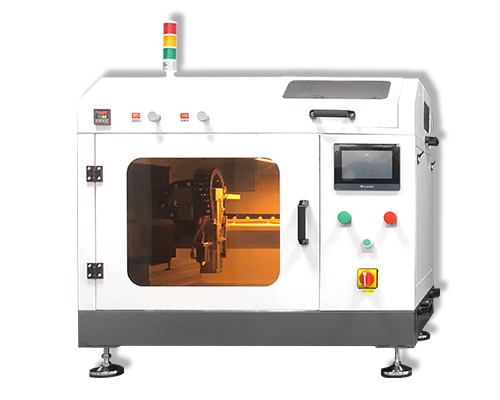
Cheersonic’s fuel cell catalyst coating systems are uniquely suited for these challenging applications by creating highly uniform, repeatable, and durable coatings. Using the company’s patented ultrasonic spray head technology, it can spray uniformly and efficiently on proton exchange membranes and gas diffusion layers. Uniform catalyst coatings are deposited onto PEM fuel cells, GDLs, electrodes, various electrolyte membranes, and solid oxide fuel cells with suspensions containing carbon black inks, PTFE binder, ceramic slurries, platinum and other precious metals. Other metal alloys, including Platinum, Nickel, Ir, and Ru-based fuel cell catalyst coatings of metal oxide suspensions can be sprayed using ultrasonics for manufacturing PEM fuel cells, polymer electrolyte membrane (PEM) electrolyzer, DMFCs (Direct Methanol Fuel Cells) and SOFCs (Solid Oxide Fuel Cells) to create maximum load and high cell efficiency.
The advantages of Cheersonic’s ultrasonic equipment include:
1.Very high Platinum utilization proven in MEA fabrication; as high as 90%.
2.Non-clogging
3.Low-flow spray reduces spillage and air pollution.
4.Continuous or intermittent operation possible
5.Highly porous coatings are extremely durable, preventing cracking or peeling of catalyst layer.
6.No moving parts to wear out
7.Minimal maintenance and downtime.
8.Robust design and materials resist corrosion.
9.Ultrasonic energy disperses the agglomerated particles, producing a homogeneous coating.
Chinese Website: Cheersonic Provides Professional Coating Solutions