
Four Major Water Electrolysis Technologies for Hydrogen Production
Electrolysis of water for hydrogen production is currently the core technology path for clean energy hydrogen production. It relies on the decomposition of water molecules by electricity to prepare high-purity hydrogen gas, which is suitable for multiple scenarios such as new energy coupled hydrogen production, industrial scale hydrogen production, and distributed hydrogen production. The four mainstream hydrogen production technologies in the industry are alkaline electrolyzed water (ALK), proton exchange membrane electrolyzed water (PEM), anion exchange membrane electrolyzed water (AEM), and solid oxide electrolyzed water (SOEC). The four types of technologies have their own advantages and disadvantages in terms of core materials, operational performance, conversion efficiency, construction and operation costs, and significant differences in adaptation scenarios. This article comprehensively disassembles the working principles, core characteristics, existing technical pain points, and industry application status of the four major hydrogen production technologies, helping industry practitioners to accurately select and grasp technological development trends.
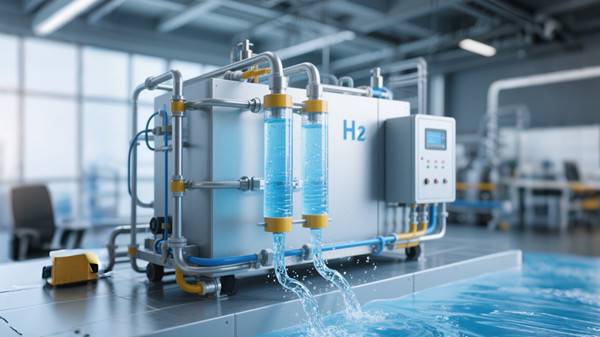
Detailed analysis of mainstream electrolytic water hydrogen production technology
Alkaline Electrolysis Water Technology (ALK)
Core features: This technology is currently the most mature commercially implemented electrolytic water hydrogen production process, with stable overall system operation, low equipment construction investment costs, and outstanding cost-effectiveness advantages. The core of the process adopts a liquid alkaline electrolyte system, combined with mature nickel based catalytic materials. The core components have strong universality and low maintenance threshold.
Working principle: Relying on direct current energy to drive the electrolysis reaction, after the equipment is powered on, the cathode region completes the hydrogen evolution reaction, and the anode region releases oxygen. The gas isolation between the two electrode regions is achieved through a dedicated diaphragm to avoid gas mixing and ensure the safety and purity of hydrogen production.
Technical pain points: There are certain limitations in the technical working conditions, and the space for increasing current density is limited. The problem of gas cross permeation will have a small impact on the efficiency of hydrogen production conversion, making it unable to adapt to high-voltage operation and fluctuating operation scenarios of new energy generation. At the same time, the liquid electrolyte system has higher requirements for equipment operation and control, and the process is relatively cumbersome.
Application status: After long-term industry iteration, this technology has a complete industrial chain system and low technical barriers. It is widely used in various large-scale fixed scale hydrogen production projects and is currently the mainstream choice for industrial hydrogen production.
Proton exchange membrane electrolysis of water technology (PEM)
Core features: superior conversion efficiency compared to traditional alkaline electrolysis water technology, fast equipment response speed, high integration, compact structure, and small footprint. It can perfectly adapt to fluctuating new energy sources such as wind power and photovoltaics, with flexible start stop and strong adaptability to working conditions. The system uses a solid acidic polymer membrane as the core conductive material, combined with high-performance precious metal catalysts.
Working principle: When powered on, water molecules undergo a decomposition reaction at the anode, generating oxygen and protons. Protons are precisely transported to the cathode through a dedicated proton exchange membrane, where they undergo a reduction reaction to produce high-purity hydrogen gas. The entire reaction process is controllable and the hydrogen production purity is high.
Technical pain points and optimization directions: The core catalytic materials rely on precious metal raw materials, which directly leads to high equipment manufacturing costs; There is still significant room for improvement in the long-term durability of core membrane materials and catalysts. At present, the mainstream in the industry is to reduce costs and increase efficiency through process upgrades. Among them, ultrasonic spraying technology can prepare ultra-thin, high uniformity low load precious metal catalytic layers, effectively reducing the amount of precious metal raw materials used. While reducing production costs, it greatly improves the overall operational performance of electrodes, which is one of the core directions for optimizing PEM hydrogen production technology at present.
Application status: With its flexible and adaptable working conditions, this technology continues to increase its penetration rate in scenarios such as distributed hydrogen production, rapid response hydrogen production, and vehicle mounted hydrogen production. The current industry research and development focus is on reducing precious metals, developing catalytic systems without precious metals, and extending the lifespan of core components, continuously promoting the popularization of technology on a large scale.
Solid Oxide Electrolysis of Water Technology (SOEC)
Core features: Theoretical hydrogen production conversion efficiency ranks first among the four types of technologies, relying on high-temperature operating environment to reduce thermodynamic reaction barriers and significantly improve electrolysis reaction efficiency. Can adapt to non precious metal catalysts, eliminate dependence on precious metal raw materials, use solid oxygen ion conductor materials as the core electrolyte, and the system is adaptable to high temperature conditions.
Working principle: Relying on a high temperature environment of 600-1000 ℃ to accelerate the cracking of water molecules, water vapor undergoes a reduction reaction at the cathode to generate hydrogen gas, and oxygen ions migrate to the anode through the solid electrolyte, ultimately releasing oxygen gas. High temperature conditions significantly reduce electrolysis energy consumption.
Technical pain points: High temperature operating conditions require extremely high temperature resistance and stability of equipment core materials, making system thermal management difficult and equipment startup slow. At the same time, the long-term stability of materials and the immaturity of large-scale mass production manufacturing processes are the core bottlenecks that restrict the commercialization implementation.
Application status: Currently, it is in the stage of demonstration testing and early commercialization exploration, and has not yet achieved large-scale popularization. The core development potential of this technology lies in its ability to efficiently match industrial waste heat and high-temperature clean energy scenarios, further reducing hydrogen production energy consumption through waste heat utilization, and having significant energy-saving advantages in the future.
Anion exchange membrane electrolysis water technology (AEM)
Core features: It belongs to the new generation of integrated hydrogen production technology, integrating the core advantages of two other mainstream technologies. It not only has the low-cost potential of ALK technology and can adapt to non precious metal catalysts, but also has the advantages of compact equipment and flexible response of PEM technology. Using solid alkaline polymer membrane to conduct hydroxide ions and avoid the operational drawbacks of liquid electrolytes.
Working principle: Water molecules decompose at the cathode to generate hydrogen gas and hydroxide ions. The hydroxide ions migrate to the anode through an anion exchange membrane and undergo oxidation reactions to produce oxygen and water. The reaction process is closed-loop and environmentally friendly.
Technical pain points: There are technological shortcomings in the core materials, such as high conductivity, strong alkali resistance anion exchange membranes, and highly active non precious metal catalysts that have not yet achieved technological breakthroughs. At the same time, the material’s resistance to carbon dioxide interference and long-term operational stability are insufficient, and there is a lack of complete system validation data.
Application status: Currently, it is still in the stage of basic material research and prototype verification, and there are no large-scale commercial application cases at present. But with the potential advantages of low cost and high performance, it is regarded by the industry as the core breakthrough direction for reducing costs and increasing efficiency in future hydrogen production through electrolysis of water.
Summary of Technological Landscape and Industry Development Prospects
From the current industry application pattern, ALK technology continues to dominate large-scale hydrogen production projects with its mature industrial chain, stable performance, and low cost; PEM technology, with its excellent flexibility in operating conditions, has rapidly emerged in new energy coupling and distributed hydrogen production scenarios. The key to its large-scale development lies in reducing catalyst costs and extending the lifespan of core components; SOEC and AEM, as cutting-edge next-generation hydrogen production technologies, have strong potential for technological iteration, but still need to overcome multiple challenges such as material research and development, engineering implementation, and large-scale manufacturing.
From the trend of cost reduction and efficiency improvement, various technologies have clear optimization directions: ALK technology focuses on upgrading diaphragm and electrode core materials, improving current density and overall hydrogen production efficiency; PEM technology relies on advanced precision manufacturing processes such as ultrasonic spraying to achieve catalyst reduction and performance upgrades, while simultaneously developing low iridium and iridium free catalytic systems and long-life membrane electrodes; AEM technology focuses on the technological breakthroughs of high-performance membrane materials and non precious metal catalysts; SOEC technology focuses on optimizing the stability of core materials, enhancing equipment’s thermal cycling tolerance, and adapting to long-term high-temperature operating conditions.
The overall hydrogen production industry chain continues to improve, with various technological research and industrialization processes accelerating. The iterative upgrading of advanced manufacturing processes such as precision coating effectively promotes the improvement of the core manufacturing level of hydrogen production electrodes, helps the rapid development of electrolytic water hydrogen production technology towards low cost, high efficiency, long life, and scale, and further expands the application scenarios of clean energy hydrogen production.
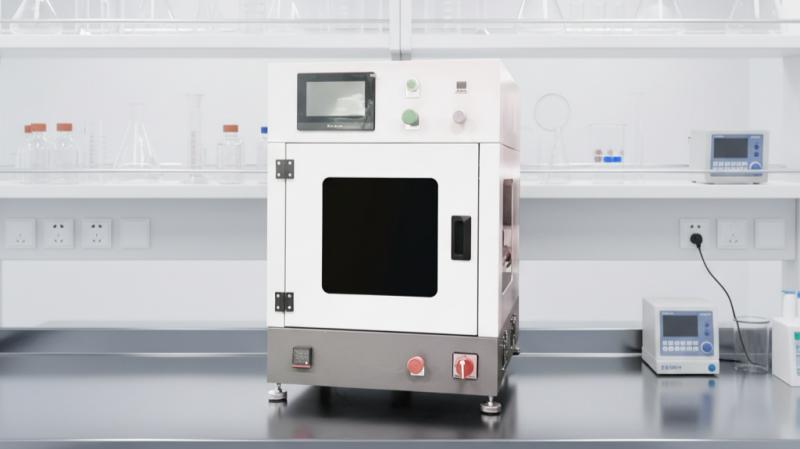
Ultrasonic Coating Technologies for Electrolyzers
Cheersonic ultrasonic spray platforms deliver high-quality catalyst coatings and thin film layers for advanced electrolyzer manufacturing. Our ultrasonic coating systems apply controlled coating solutions onto electrolyzer substrates including electrodes, proton exchange membranes, gas diffusion layers (GDL), and other MEA-related components. With precise nozzle control and programmable flow rate, ultrasonic spray enables repeatable catalyst deposition using a catalyst deposition machine designed for material science-driven electrochemical performance in both bench top development and high-volume PEM electrolyzer production.
About Cheersonic
Cheersonic is the leading developer and manufacturer of ultrasonic coating systems for applying precise, thin film coatings to protect, strengthen or smooth surfaces on parts and components for the microelectronics/electronics, alternative energy, medical and industrial markets, including specialized glass applications in construction and automotive.
Our coating solutions are environmentally-friendly, efficient and highly reliable, and enable dramatic reductions in overspray, savings in raw material, water and energy usage and provide improved process repeatability, transfer efficiency, high uniformity and reduced emissions.
Chinese Website: Cheersonic Provides Professional Coating Solutions
