
EMI Shielding Coatings for Plastic Housings
Application of Conductive Coatings and Ultrasonic Spraying Machines in Electromagnetic Shielding of Plastic Housings
With the rapid development of the electronics and information industry, electromagnetic interference has become a key factor affecting the performance stability of electronic devices. Plastics, due to their lightweight, ease of molding, and low cost, are widely used in the manufacture of electronic device housings; however, their insulating properties prevent them from blocking the propagation of electromagnetic signals. Electromagnetic shielding coatings, as a mainstream technology for achieving electromagnetic shielding in plastic housings, can construct a conductive shielding layer without altering the properties of the plastic substrate. The application of ultrasonic spraying machines further improves coating quality and process stability, providing a reliable solution for high-precision electromagnetic shielding requirements.
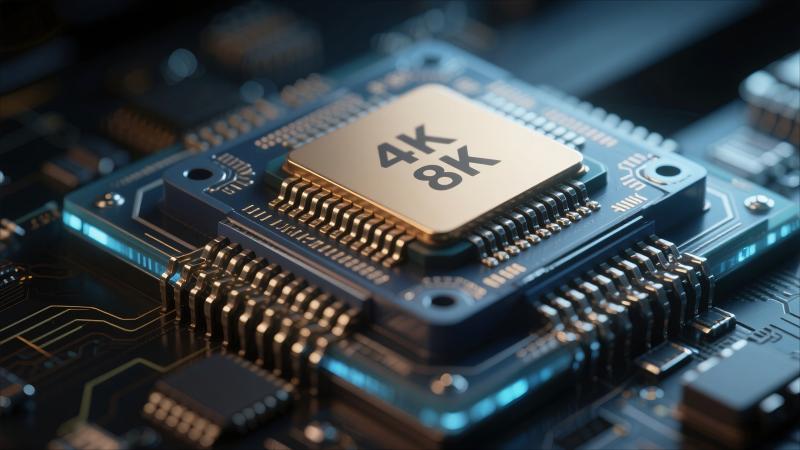
The core function of conductive coatings used for electromagnetic shielding of plastic housings is to form a continuous conductive path through the coating, achieving the reflection and absorption of electromagnetic signals. They are mainly composed of conductive fillers, binders, solvents, and additives. The type and content of the conductive filler directly determine the shielding effectiveness. Common conductive fillers include metallic fillers such as silver and copper, and carbon-based fillers such as graphene and carbon nanotubes. Metallic fillers offer excellent conductivity, providing 60-80dB of shielding effectiveness within the 30MHz-1GHz frequency range, making them suitable for precision electronic devices with high shielding requirements. Carbon-based fillers, on the other hand, offer advantages such as lightweight design and strong corrosion resistance, making them more suitable for weight-sensitive mobile devices. Adhesives must possess good substrate adhesion and flexibility to ensure the coating does not peel or crack during the molding and use of the plastic casing; commonly used systems include epoxy resin and polyurethane.
Ultrasonic spraying machines, with their unique atomization principle, have become ideal equipment for conductive coating processes. Their core principle is to use high-frequency ultrasonic vibration to atomize the conductive slurry into uniform droplets of 5-50μm, then precisely deliver these droplets to the surface of the plastic substrate via low-pressure airflow, where they dry and cure to form a dense coating. Compared to traditional pneumatic spraying, ultrasonic spraying machines offer significant advantages: First, they provide extremely high coating uniformity, with thickness deviations controlled within ±5%, effectively avoiding defects such as streaks and pinholes common in traditional processes, ensuring consistent shielding performance. Second, they boast high material utilization, with strong droplet orientation and minimal splashing, achieving a utilization rate exceeding 80%, far surpassing the 30-50% of traditional spraying, making them particularly suitable for energy-saving coating of conductive coatings for precious metals. Third, they offer excellent substrate compatibility, with atomization pressure of only 0.01-0.1 MPa, preventing stretching or damage to easily deformable plastic substrates. Furthermore, they can be used with room temperature or low-temperature curing processes, avoiding shrinkage and degradation of plastics due to high temperatures.
The application of ultrasonic spraying machines in coating conductive coatings on plastic casings requires adherence to strict process procedures to ensure coating quality. The first step is substrate pretreatment, which involves dust removal and degreasing of the plastic casing. If necessary, plasma or chemical etching may be used to improve surface roughness and enhance coating adhesion. The pretreated substrate must be coated within one hour to prevent surface energy loss. Following this, slurry preparation is performed, with the dispersion process adjusted according to the filler type. Metal slurries require the addition of antioxidants and ultrasonic dispersion for 30-40 minutes, controlling the viscosity to 50-200 cP. Carbon-based slurries require ball milling for 20-60 minutes to remove agglomerated particles. During spraying, precise control of process parameters is crucial. Ultrasonic power is typically set at 50-150W, spraying speed at 5-20 mm/s, and atomization pressure of 0.02-0.05 MPa, allowing for thickness control within the 10 nm-10 μm range. Finally, targeted post-treatment is applied: metal coatings are cured at 80-120℃ under nitrogen protection for 3 hours to prevent oxidation, while carbon-based coatings are dried at 60-120℃ or subjected to subsequent reduction processes to improve conductivity.
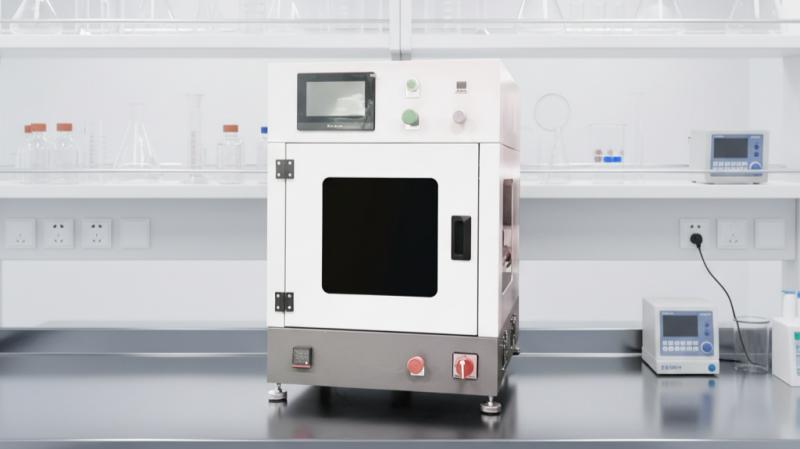
This combined technology has been widely applied in laptops, smartphones, medical devices, and industrial control instruments. In precision medical equipment, silver-based conductive coatings applied via ultrasonic spraying effectively shield electromagnetic signals generated by internal circuits, preventing interference with diagnostic accuracy. In the mobile terminal field, the combination of carbon-based conductive coatings and ultrasonic spraying achieves a balance between lightweight casing and electromagnetic shielding, meeting the high-frequency signal shielding requirements of 5G devices. As electronic devices move towards miniaturization and high density, the automation upgrade of ultrasonic spraying machines and the improvement of high-performance conductive coatings are becoming development trends. In the future, technologies such as multi-axis robot linkage and online quality inspection will further improve coating accuracy and production efficiency, driving the development of electromagnetic shielding technology for plastic casings towards greater efficiency and energy saving.
About Cheersonic
Cheersonic is the leading developer and manufacturer of ultrasonic coating systems for applying precise, thin film coatings to protect, strengthen or smooth surfaces on parts and components for the microelectronics/electronics, alternative energy, medical and industrial markets, including specialized glass applications in construction and automotive.
Our coating solutions are environmentally-friendly, efficient and highly reliable, and enable dramatic reductions in overspray, savings in raw material, water and energy usage and provide improved process repeatability, transfer efficiency, high uniformity and reduced emissions.
If you have any technical questions, customization demands, or procurement inquiries about ultrasonic atomization nozzles, feel free to contact our professional sales and technical team for detailed parameters, customized solutions, and industry application support.
Email: market2@cheersonic.com
