Drug‑Eluting Coronary Stent Coating
Drug‑Eluting Coronary Stent Coating: Core Technology Against Restenosis
The drug-eluting coronary stent (DES) coating is the core functional layer of the stent to achieve drug release, inhibit excessive intimal hyperplasia, and reduce restenosis. It is divided into two main components: the base coating (carrier polymer) and active drugs. Some products add an anti thrombotic surface layer, and the substrate is generally cobalt chromium alloy, platinum chromium alloy, or 316L stainless steel metal stent bare frame.
Layered coating structure
1. Bottom layer (bonding transition layer)
Improve the adhesion between polymer and metal bracket surfaces to prevent coating peeling and cracking. The metal bracket will first undergo surface polishing/micro etching treatment, and some parts will use silicon-based and phospholipid transition layers.
2. Drug polymer carrier layer (core)
Polymers serve as drug carriers to evenly load drugs and control drug release rates; The drug slowly releases into the blood vessel wall, inhibiting smooth muscle cell proliferation.
>Two mainstream carriers:
- Degradable polymer: After implantation, it gradually degrades and disappears over time, and there is no residual polymer on the surface of the stent in the later stage, reducing the risk of late stage thrombosis;
- Permanent (non degradable) polymer: Long term retention on the surface of the stent, early DES mainstream, long-term residual polymer may induce chronic local inflammation.
3. Optional surface layer (top coating)
- Controlled release layer: regulates drug release kinetics to avoid explosive drug release;
- Hydrophilic/antithrombotic coating (phospholipids, heparins): reduces platelet adhesion and improves early anticoagulant performance during stent implantation.
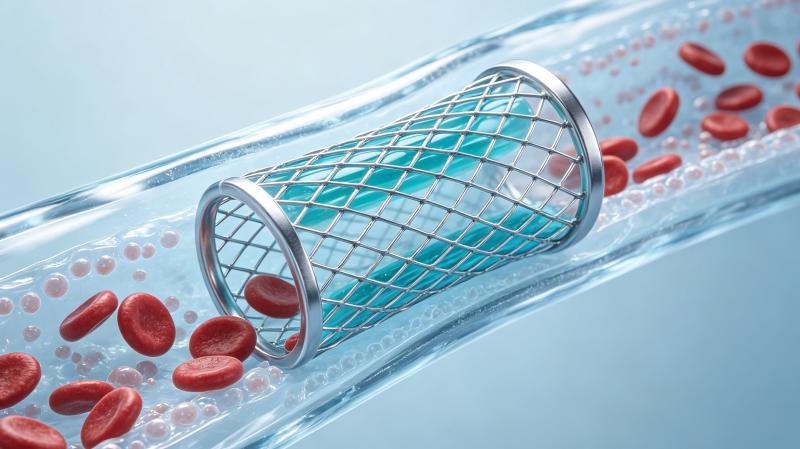
Commonly used active drugs (anti proliferative drugs)
All aimed at inhibiting the proliferation of vascular smooth muscle cells and preventing vascular restenosis:
1. Sirolimus (Rapamycin): mTOR inhibitor, a classic first generation DES drug;
2. Everolimus: a derivative of sirolimus, with good safety and contemporary mainstream DES;
3. Zotacrolimus: Good lipophilicity, conducive to penetration into vascular tissue;
4. Paclitaxel: Used early to inhibit microtubules, it is now less commonly used in coronary stents and more commonly in peripheral blood vessels.
>Logic of action: The drug dissolves from the coating → diffuses into the vascular wall → inhibits excessive smooth muscle proliferation and reduces restenosis within the stent; Do not suppress excessive endothelial cells and expect blood vessels to complete endothelialization and cover the stent.
Polymer carrier material
Permanent polymer
- Polybutyl methacrylate, polyvinylidene fluoride hexafluoropropylene PVDF HFP; Chemically stable, non degradable, and long-lasting.
Biodegradable biopolymers (current mainstream direction)
- PLLA polylactic acid, PLGA polylactic acid hydroxy acetic acid copolymer; The drug is hydrolyzed and degraded into water and carbon dioxide in the body, and gradually disappears completely within several months to 24 months. The DP-DES scaffold directly immobilizes the drug on the surface of the scaffold without a polymer carrier.
Biomimetic phospholipid coating
- Simulate the phospholipid structure of cell membrane, improve blood compatibility, reduce platelet adsorption, and often perform surface modification.
Key performance indicators (key focus of coating process evaluation)
1. Coating adhesion and mechanical stability: During the expansion and expansion process of the stent balloon, the coating should not crack, peel, or peel off; This is the most critical process difficulty of the bracket, as the expansion of the bracket will cause significant deformation.
2. Drug loading and uniformity: The drug is evenly distributed at various positions of the stent beam to avoid excessive/insufficient local drug dosage.
3. Drug release curve: Avoid sudden release; Most DES require continuous drug release for weeks to months, after which the drug is depleted and the stent is fully covered by the endothelium.
4. Blood compatibility: Antiplatelet, low inflammation, and reduced risk of stent thrombosis.
5. Degradation behavior (degradable coating): The degradation rate matches the endothelialization process, and the degradation products do not cause strong inflammation.
Preparation process
1. Ultrasonic spraying (mainstream precision technology)
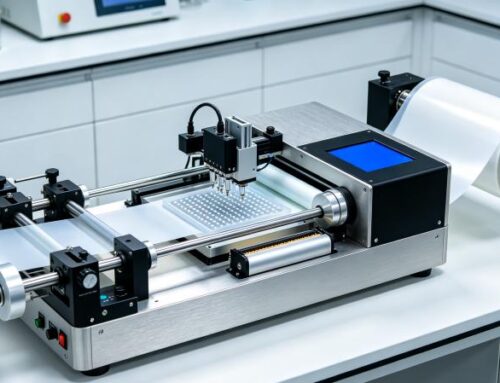
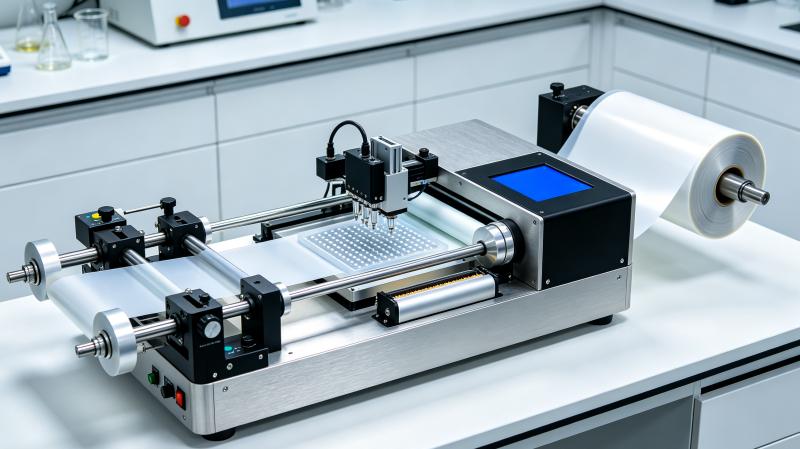
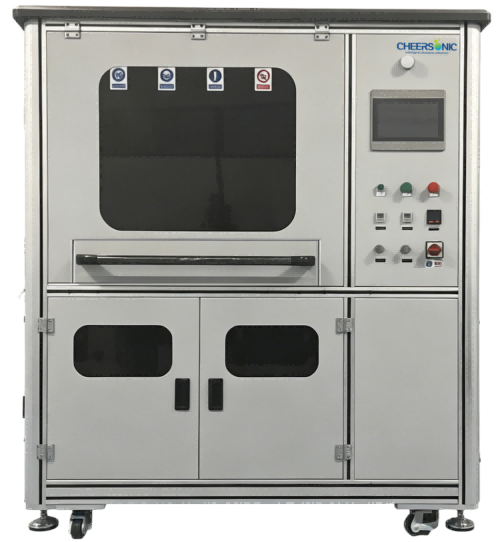
Mix the drug and polymer into a solution, sonicate and spray evenly onto the stent beam; Advantages: The coating is thin, the thickness is controllable, and uniform. The edges and grooves of the stent can also be coated, reducing the aggregation of particles in the coating and lowering the risk of thrombosis; It is an important solution for the preparation of the new generation DES coating.
2. Dip coating: Dip the bracket into the medicine solution and pull it to form a film; The process is simple, but the thickness uniformity is poor, and the edges and corners are prone to material accumulation.
3. Spin coating: Suitable for flat surfaces, with poor applicability for tubular supports.
4. Plasma grafting and vapor deposition: surface modification to create a bottom/anti thrombotic functional layer.
>Advantages of ultrasonic spraying in coronary stent coating: The stent is a hollow mesh structure, and ultrasonic spraying can achieve micrometer level thin coating, avoiding the accumulation of coating in the gaps of the stent. After expansion, it is not easy to crack and fall off. Currently, many new generation biodegradable coatings DES are prepared by ultrasonic spraying.
Clinical related risk points
1. Coating detachment/micro particle detachment: can induce distal microvascular embolism; It is directly related to the spraying process and adhesion.
2. Drug burst release: Early release of large amounts of drugs, toxicity, inhibition of endothelial healing, and increased thrombosis.
3. Long term residual permanent polymer: persistent local chronic inflammation, late stage stent restenosis, and risk of late stage thrombosis.
4. Delayed endothelialization: Excessive drug inhibition prevents endothelial growth on the stent surface, requiring long-term dual drug therapy.
Development Trends
1. Degradable polymer coated DES: After drug release, the carrier completely disappears, leaving only the metal stent.
2. Polymer free drug coated stent (DP-DES): No polymer carrier, drugs are directly anchored to the surface of the metal stent; The drug release is complete without any coating residue.
3. Multi functional coating: It has multiple functions including anti proliferation, anti thrombosis, and promotion of endothelial repair; Drug loaded+heparin/NO donor modified coating.
4. Bio absorbable stent BRS: The stent substrate itself is a biodegradable polymer, and both the coating and substrate are degraded in the later stage.
About Cheersonic
Cheersonic is the leading developer and manufacturer of ultrasonic coating systems for applying precise, thin film coatings to protect, strengthen or smooth surfaces on parts and components for the microelectronics/electronics, alternative energy, medical and industrial markets, including specialized glass applications in construction and automotive.
Our coating solutions are environmentally-friendly, efficient and highly reliable, and enable dramatic reductions in overspray, savings in raw material, water and energy usage and provide improved process repeatability, transfer efficiency, high uniformity and reduced emissions.
If you have any technical questions, customization demands, or procurement inquiries about ultrasonic atomization nozzles, feel free to contact our professional sales and technical team for detailed parameters, customized solutions, and industry application support.
Email: market2@cheersonic.com