
Dismantling Surgical Robots
Dismantling surgical robots: selection of full structural materials, industrial bottlenecks, and collaborative development path of industrial chain
As a high-end minimally invasive diagnostic and therapeutic equipment, surgical robots have a highly biomimetic structure that corresponds to the physiological structure of the human body. The robotic arm forms a supporting skeleton, precision joints are responsible for transmission, end instruments act as operation execution ends, imaging sensing systems achieve visual and tactile perception, and cable circuit modules undertake signal transmission functions. The selection of materials for each component of the entire machine needs to meet multiple strict standards such as high precision, lightweight, biocompatibility, repeated sterilization resistance, and long life. Behind this is the comprehensive support of material science and ultra precision manufacturing technology. This article summarizes the application of materials in various modules of the whole machine, the current core technology bottlenecks in the industry, and the channels for industry collaboration to break through.

Application analysis of materials for various modules of surgical robots
Robot arm skeleton: balancing lightweight and positioning accuracy
The robotic arm is the load-bearing and positioning core of the entire machine, which needs to maintain millimeter level stable operating accuracy while reducing its own weight and inertia offset. The mainstream materials are divided into three categories:
- Aluminum alloy castings: the main structural material for mass production, with low density and mature casting technology, balancing lightweight and manufacturing costs, mostly used for the main support structure of robotic arms;
- Titanium alloy Ti-6Al-4V: applied to the end arm segment that directly contacts the human body, it has excellent resistance to body fluid corrosion and biocompatibility, and is suitable for long-term intraoperative contact needs;
- Carbon fiber composite material: It has outstanding strength advantages and can flexibly adjust the structural stiffness through the layering process. Currently, it is only in the research and development stage, and there are no mature commercial landing products yet.
Precision transmission joint: the core of precision control for the whole machine
The small gap between joints will be magnified several times at the end of the robotic arm, directly causing surgical operation deviation, and requiring extremely high material wear resistance, fatigue resistance, and low friction performance:
- Special alloy steel 40CrNiMoA: used for flexible wheels in micro harmonic reducers, capable of withstanding millions of elastic reciprocating deformations, achieving low backlash and long service life;
- Silicon nitride ceramic bearing Si ∝ N ₄: As a joint shaft support, it has high hardness and low friction coefficient, greatly reducing long-term operating wear;
- Stainless steel wire and tungsten wire rope: As a power transmission medium, tungsten wire is adapted to micro end small transmission channels to transmit motor power from the arm root to the operating end.
End effector: an executing component that comes into direct contact with the human body
Surgical forceps, suturing instruments, electrocoagulation tools, and other materials that come into direct contact with human tissues must meet the requirements of high-temperature sterilization, non cytotoxicity, and adaptability to soft and hard tissue operations:
- Medical stainless steel 316L/17-4PH: a universal material for the instrument body, corrosion-resistant, easy to polish, and suitable for repeated high-temperature sterilization processes;
- Nickel titanium memory alloy: used for flexible interventional instrument tips, with super elasticity and the ability to self recover after significant bending, suitable for minimally invasive operations in natural cavities such as the digestive tract and urinary tract;
- Carbon fiber composite materials: Consistent with the current application status of robotic arm structures, they have significant performance advantages, but have not yet achieved commercial scale.
Imaging and force perception system: intraoperative visual and tactile feedback carrier
Surgical robots rely on optical imaging to obtain spatial images and force sensors to restore tissue tactile sensations. The core raw materials for these two types of devices are as follows:
- Optical imaging module: high-precision optical glass lens assembly, building a binocular 3D endoscope optical path to ensure micrometer level imaging consistency and achieve intraoperative high-definition field of view;
- Force feedback sensing module: The piezoelectric ceramic PZT serves as the sensor core, converting the contact force of small tissues into electrical signals; Silicon based strain gauges are attached to the surface of instruments to capture subtle deformations, assisting in safety control and tactile restoration.
Signal transmission and electronic packaging “nervous system”
Cables, circuits, and insulated enclosures are responsible for transmitting operational instructions and sensing data. Materials must also consider insulation, sterilization resistance, flexibility, and stable dielectric properties
- PEEK Polyether Ether Ketone: Electronic insulation package with high mechanical strength, resistance to high temperature and high pressure sterilization, and stable insulation performance;
- Platinum catalyzed medical silicone: The outer layer of the cable is sealed and wrapped with a soft and biologically safe material that can withstand multiple sterilization cycles without aging;
- LCP flexible substrate: a new generation of alternative material for flexible circuit substrates, with low dielectric constant and high temperature resistance, suitable for high-density micro signal cables.
The localization bottleneck of the five core materials and components in the industry
The current domestic surgical robot industry chain has achieved mass production of basic materials and general components, but there are still systemic shortcomings in high-end miniaturized and high stability products for clinical surgical scenarios, with bottlenecks concentrated in five major areas:
1. Medical micro clean harmonic reducer
The localization level of general industrial grade harmonic reducers has approached overseas standards and can be stably mass-produced; However, there is a significant gap in the adaptation of micro clean reducers for surgical scenarios. There are shortcomings in the formula and heat treatment process of the specialized steel for flexible wheels. The precision and fatigue life of the finished product are 20% -30% lower than similar overseas products, and the consistency of mass production cannot meet the strict admission standards for medical devices.
2. Sterilizable micro force sensor
Micro force sensors that can withstand high temperature sterilization and work stably for a long time are scarce in global supply, and the procurement cost is high. The industry has not yet solved the two core problems of long-term depolarization of piezoelectric materials and the failure of strain gauge packaging protection at the material level. The lack of reliable force feedback function can result in doctors losing tissue touch during surgery, greatly increasing operational risks.
3. Micro scale precision machining of nickel titanium alloy
The domestic supply system for coarse nickel titanium rods, plates, and coarse silk threads is mature; However, the processing technology for ultrafine and micrometer sized nickel titanium pipes required for intervention robots is not perfect, and the size uniformity and yield of mass-produced products are not as good as imported products, directly limiting the speed of localization and landing of flexible minimally invasive instruments.
4. Medical carbon fiber composite structural components
Aviation grade high-grade carbon fiber prepreg is gradually being localized, but its implementation in surgical robot scenarios is still constrained by cost and batch stability. The strength attenuation law of the carbon fiber and titanium alloy composite connection structure after multiple sterilization cycles lacks long-term clinical validation data, which cannot support the overall compliance certification of the machine.
5. High end electronic packaging special polymer materials
The domestic substitution of ordinary medical PEEK raw materials and conventional injection molded parts has been completed; However, ultra-thin LCP film and high-precision thin-walled PEEK shaped parts still rely on imports. The dielectric properties of domestically produced polymer raw materials fluctuate greatly, and the dimensional tolerances of finished products are difficult to control. There is a large space for import substitution of high-end active minimally invasive instruments.
Overall, the above bottlenecks are not caused by a single material or processing procedure, but rather by the combination of raw materials, precision machining, finished product testing, and medical device compliance certification, forming a complete chain of shortcomings. They are also the core obstacles for the industry to upgrade from “mass production” to “high performance and high reliability”.
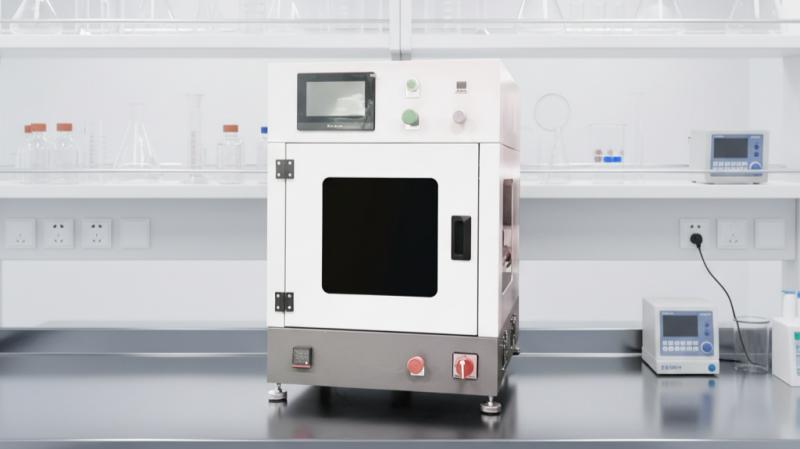
Application of Ultrasonic Spraying in Precision Component and Electrode Processing
Ultrasonic spraying relies on high-frequency vibration to achieve fine atomization of liquids, and relies on low-pressure airflow to achieve soft deposition. It is the preferred process for the preparation of precision components and various electrode coatings, and is suitable for mass production of robot precision components, new energy, and electronic electrodes.
For robot components, this process can achieve insulation, wear-resistant, and anti-corrosion coating coating. The atomized droplets have uniform particle size and can penetrate into irregular structures such as micro joints and small gaps. The coating thickness error is controlled within 5%, and there are no pinholes or edge defects. The entire spraying process has no high-pressure impact and will not scratch ultra-thin metal or carbon fiber substrates, ensuring the dimensional accuracy of mechanical components. At the same time, the material utilization rate exceeds 90%, greatly saving protective coatings.
In the field of electrode preparation, the equipment can atomize precious metal catalytic slurry and conductive carbon slurry to form a uniform and dense catalytic layer on the metal substrate and proton membrane surface. Uniformly distributed active substances fully expose reaction sites, stabilize electrochemical performance, and extend electrode service life. The gentle spraying method will not damage fragile substrates such as membranes and ultra-thin foils, avoiding coating detachment and substrate deformation issues.
This process is suitable for various types of water-based, oil-based, and nanosuspension slurries, with adjustable parameters that can be integrated with automated production lines. It takes into account laboratory sampling and large-scale production, perfectly solving the pain points of high spray loss, uneven coating, and easy damage to precision workpieces in traditional spraying.
About Cheersonic
Cheersonic is the leading developer and manufacturer of ultrasonic coating systems for applying precise, thin film coatings to protect, strengthen or smooth surfaces on parts and components for the microelectronics/electronics, alternative energy, medical and industrial markets, including specialized glass applications in construction and automotive.
Our coating solutions are environmentally-friendly, efficient and highly reliable, and enable dramatic reductions in overspray, savings in raw material, water and energy usage and provide improved process repeatability, transfer efficiency, high uniformity and reduced emissions.
If you have any technical questions, customization demands, or procurement inquiries about ultrasonic atomization nozzles, feel free to contact our professional sales and technical team for detailed parameters, customized solutions, and industry application support.
Email: market2@cheersonic.com