
Development Trends of Miniaturized Wrist Surgical Instruments
Wrist-Mounted Surgical Instruments: Multiple Technological Barriers and Development Directions at the Distal End of the Surgical Robot
In the overall system architecture of a surgical robot, the control console outputs operational commands, the robotic arm provides spatial displacement support, the vision system performs intraoperative scene imaging, and the wrist-mounted instrument is the end-effector that directly enters the body cavity to perform various minimally invasive procedures. This slender instrument tip must independently perform all core surgical actions, including tissue grasping, separation, cutting, needle suturing, and electrocoagulation hemostasis. The limited distal space of just a few centimeters presents multiple technical challenges related to transmission, insulation, structure, materials, and durable sterilization, representing the core barrier to the research and development of the entire surgical robot.
I. Core Structural Advantages of Wrist-Mounted Instruments: Multi-Degree-of-Freedom Wrist Joints Overcome the Limitations of Traditional Endoscopic Surgery
Conventional endoscopic instruments use a straight rod structure with a limited range of motion at the distal end, restricting operational posture within narrow cavities and making suturing and delicate dissections highly challenging. Wrist-type instruments incorporate a bionic wrist joint structure at the distal end of the rod. Utilizing cable pulleys, micro-links, and other transmission structures, the proximal driving force is converted into multi-dimensional movements of the distal end, including pitch, yaw, rotation, and jaw opening and closing, significantly expanding the freedom of manipulation within the body.
The flexible, adjustable distal end structure significantly reduces the difficulty of complex operations such as traction, fine suturing, and deep tissue reconstruction during minimally invasive surgery, resolving the pain points of traditional straight-rod instruments, which are laborious to operate and have limited range of motion. However, to accommodate the size of minimally invasive puncture cannulas, the overall outer diameter of the instrument is strictly limited. All transmission components, insulation layers, support structures, and jaw assemblies must be compressed into a single, narrow cross-section. Increasing the size of any component will squeeze the design space of other functional modules, creating a natural contradiction between miniaturization and multifunctionality.
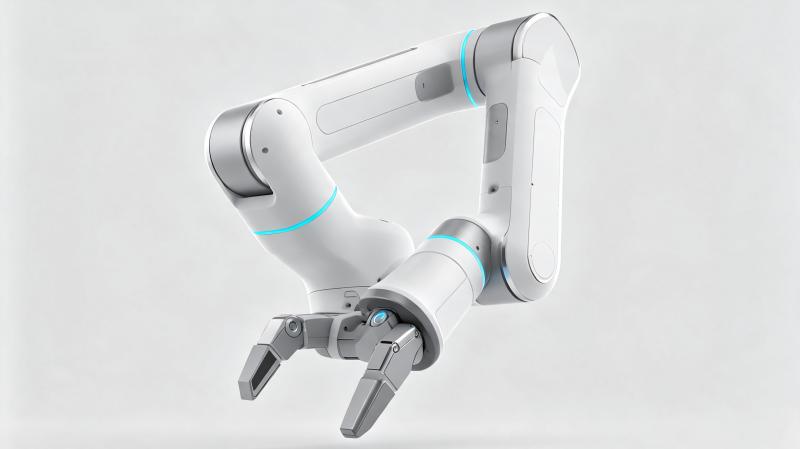
II. Distal Transmission System: Precision and Durability Challenges Arising from Miniature Flexible Transmission
Due to the limitations of the instrument’s distal end size, drive components such as motors cannot be integrated into the distal end. The power source is uniformly located at the proximal end of the instrument or the robotic arm base, relying on ultra-fine tendon cords, cables, and pulley systems to transmit displacement and tension, similar to remotely controlling a miniature forceps with thin wires. This solution addresses the miniaturization needs of mechanical adapters, but suffers from unavoidable nonlinear defects:
1. Motion synchronization deviation: The cable lacks rigidity, and frictional gaps exist in the pulley’s operation. Displacement pulled from the near end cannot be synchronously transmitted to the far end in a 1:1 ratio. Friction, joint gaps, and cable tension lag directly cause end-effector deviation, increasing the difficulty of precise control.
2. Performance degradation with use: Repeated opening and closing, frictional wear, and multiple cleaning and sterilization cycles lead to a continuous decrease in cable tension, accelerated pulley wear, and changes in internal lubrication. This results in reduced clamping force, operational jamming, and increased motion backlash.
The core challenge of a transmission system lies not in smooth operation during a single run, but in maintaining stable motion accuracy after hundreds of repeated uses. Current mainstream transmission solutions include cable pulleys, miniature linkages, and flexible continuums, each with trade-offs in size, flexibility, output force, and lifespan. Product design requires a comprehensive balance among multiple performance indicators.
III. Dual Key Performance Constraints of Jaw and Insulation
Jaw: Balanced Design for Tissue Interaction
The jaw is the component that directly contacts human tissue, and its performance directly determines the safety of surgical procedures:
1. Functional Aspect: The tooth structure, surface roughness, material hardness, and corrosion resistance determine whether slippage occurs during gripping and needle holding, ensuring stable suturing and separation operations;
2. Safety Aspect: The clamping force needs to be precise and controllable, providing sufficient clamping force to fix the tissue and suture needle, while avoiding soft tissue compression damage due to excessive pressure.
Insulation Layer: A Unique Safety Challenge for Energy Instruments
For wrist instruments equipped with electrosurgical functions, the insulation layer is the core safety barrier. It must constrain the current to act only on the target surgical area, preventing accidental current conduction along the rod, joint gaps, or damaged coatings, thus avoiding the risk of intraoperative burns. Insulation design inherently presents contradictions:
– Excessive coating thickness increases the instrument’s outer diameter, reduces joint flexibility, and hinders cannulation.
– Insufficient coating thickness increases the risk of insulation breakdown and leakage.
– Micro-pinholes generated during coating production can lead to insulation failure after long-term use.
Insulation performance verification cannot stop at factory testing. After prolonged bending, friction, and repeated cleaning and sterilization, the insulation layer will show wear invisible to the naked eye. Insulation integrity testing must be performed at the end of the product lifecycle and after each reprocessing.
IV. Full Lifecycle Verification: Durability Challenges from Repeated Use and Reprocessing
The performance degradation of wrist-worn instruments is not a sudden failure, but a gradual deterioration during repeated use and cleaning/sterilization processes. Reliability verification throughout the entire lifecycle is a core design element.
1. Hazards from Unsanitary Cleaning Areas: Numerous gaps exist in the miniature wrist joint, jaw grooves, and internal transmission channels, allowing blood, protein, and tissue debris to easily accumulate. Conventional cleaning processes often fail to completely remove these residues, posing biosafety risks and accelerating component corrosion and jamming.
2. Multi-Step Aging and Wear: The entire process of post-operative cleaning, drying, packaging, and sterilization continuously degrades materials, transmission structures, and insulation layers. The aging effects of different disinfection and sterilization processes on each component of the device require thorough verification.
3. Usage Limit Control: The usage limit marked on the device is not merely a management regulation but a performance red line defined by multiple indicators, including the degree of clamping force attenuation, hysteresis threshold, probability of insulation damage, degree of material corrosion, and accessibility to cleaning.
Product design must incorporate the entire process—from manufacturing and clinical application to post-operative reprocessing—into a unified verification system to ensure operational safety and stable accuracy after multiple reuses.
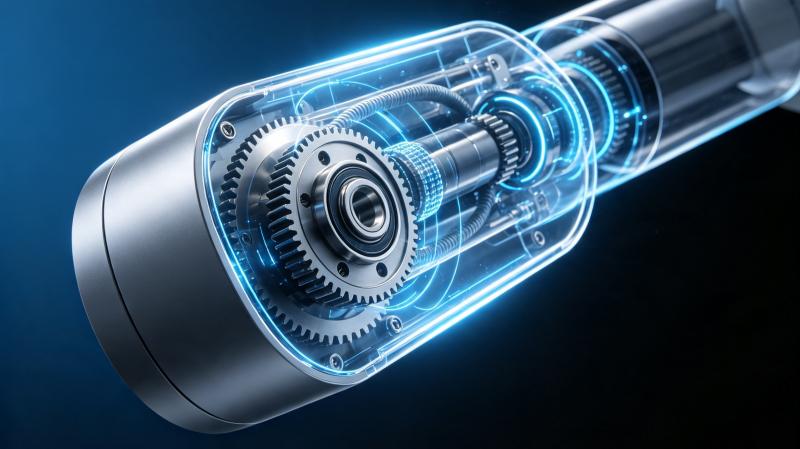
V. Industry Technology Development Trends
1. Dual Iteration of Miniaturization and High Degree of Freedom
Smaller outer diameter instruments can adapt to minimally invasive small-incision procedures, reducing patient trauma. However, the compression of internal space further exacerbates the contradictions between transmission, insulation, structural strength, and service life. Increasing the number of joints can improve the ability to perform deep and complex surgeries, but it also introduces more transmission errors and wear points, significantly increasing the difficulty of durability verification. A balance needs continuous optimization.
2. End-effector Force Sensing Integration
The next generation of wrist-based instruments is upgrading from simple execution tools to intelligent end-effectors with autonomous sensing capabilities. By collecting multi-directional push-pull force data at the tip in real time through built-in sensing modules and transmitting force feedback to the operating end, excessive compression damage to human tissue during surgery can be significantly reduced. Relevant clinical test data show that after incorporating force feedback functionality, the peak force experienced by tissue during tissue separation and interrupted suturing operations can be significantly reduced. Tactile feedback systems have also become a core research and development direction for optimizing human-machine interaction during surgery.
3. A Two-Pronged Approach to Consumables Development:
The development of medical devices has diverged into two routes: disposable components and reusable complete devices. Small components that are difficult to clean, wear out quickly, and have a high risk of insulation failure are designed for single use to reduce safety hazards associated with reuse. High-value, complex main devices are equipped with comprehensive lifespan management and standardized reprocessing verification systems to control clinical usage costs.
4. A Shift in Core Competitive Focus:
Competition in the surgical robot industry is no longer limited to the entire operating platform; the comprehensive capabilities of the supply chain supporting end-effector wrist devices have become a key competitive factor. Breakthroughs in this field do not rely on tackling single components but require establishing a complete industrial closed loop encompassing precision micro-machining, R&D of medical specialty materials, sterilization reliability verification, and clinical data iteration. While mature manufacturing processes in the fields of laparoscopy, endoscopy, and interventional devices can be transferred, the core barriers to long-term stable mass production lie in four areas: highly consistent micro-assembly processes, a full-cycle durability performance database, long-term insulation reliability solutions, and a standardized global medical device registration and verification system.
VI. Conclusion
Wrist-mounted instruments are essentially highly integrated micro-electromechanical systems, integrating multiple functions such as transmission joints, tissue interaction jaws, insulation protection, and durable structures within a confined space of just a few centimeters. Their technological barrier lies not in achieving basic operational functions, but in ensuring that the instrument maintains a stable, precise, and safe working state over the long term, after repeated surgeries, cleaning, and sterilization. The future technological competition in surgical robots will ultimately hinge on the comprehensive R&D and manufacturing capabilities of materials, precision processes, and life-cycle reliability within the confined space of the distal end.
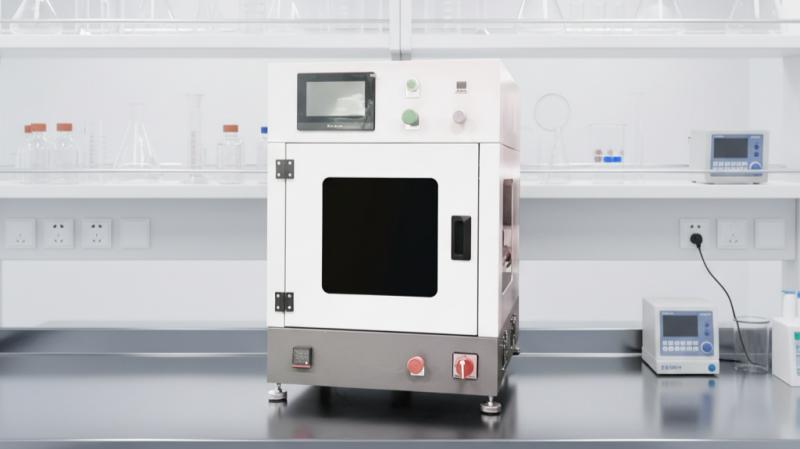
Ultrasonic spraying is the preferred precision process for insulating coatings on micro-precision components. Relying on its gentle and uniform atomization characteristics, it perfectly solves the core pain points of traditional processes, such as excessively thick coatings, pinhole leakage, incomplete coating of irregularly shaped structures, and waste of consumables. Against the backdrop of continuously upgrading demands for instrument miniaturization and high-durability insulation, this process, with its ultra-thin, controllable, full-coverage, and highly reliable coating performance, has become the mainstream technology route for insulation protection in high-precision manufacturing, while simultaneously considering mass production costs, clean production, and long-term stability.
Combining the insulation protection requirements of minimally invasive instruments and microelectronic components with their confined cavities and thin-walled, irregularly shaped structures, this process offers distinct advantages over dip coating and high-pressure air spraying:
Ultra-thin, uniform coating, resolving dimensional contradictions: The thickness can be precisely controlled within 1–50 μm, with thickness errors reduced to within ±2%. Traditional dip coating is prone to excessive thickness on the outer wall and incomplete coating in the inner cavity, while high-pressure air spraying can achieve thickness variations of ±10%. For thin rods, micro-joints, and narrow sleeve structures, a complete insulating film can be formed without increasing the overall outer diameter, perfectly meeting the stringent requirements for coating thinness in miniaturized components.
Pinhole-free, dense film layer, eliminating the risk of leakage: The atomized droplets exhibit strong monodispersity, depositing without gaps or micropores invisible to the naked eye, avoiding the risk of insulation breakdown. The coating is less prone to localized insulation failure after bending, repeated sterilization, and aging, solving the problem of coating cracking and peeling caused by frequent movement of micro-joints, significantly improving long-term electrical safety.
Full coverage of irregular structures, no blind spots or missed areas. The low-pressure, gentle mist can penetrate narrow gaps, inner walls, and multi-fold joint cavities, completely coating even minute gaps as small as 0.2mm. High-pressure spraying’s strong airflow can disperse coating in gaps, while dip coating easily accumulates at corners, causing localized over-diameter and movement jamming. Supports integrated coating of outer surfaces, tubular inner walls, and complex biomimetic joints.
High consumable utilization rate, compatible with high-end insulating coatings. No overspray, minimal scattering, coating utilization rate exceeding 90%, far higher than traditional spraying; high-end insulating raw materials such as polyimide are expensive, this process significantly reduces material loss, reduces waste liquid treatment costs, and reduces volatile solvent emissions, better meeting clean production standards.
Gentle spraying without damaging the substrate. No high-pressure impact or high-temperature atomization throughout the process, thin-walled metals and delicate micro-transmission components will not deform; stable coating adhesion, extremely low peeling rate in cross-cut adhesion tests, withstands multiple high-temperature cleanings and repeated sterilization cycles, and is not prone to peeling or wear over long-term use.
About Cheersonic
Cheersonic is the leading developer and manufacturer of ultrasonic coating systems for applying precise, thin film coatings to protect, strengthen or smooth surfaces on parts and components for the microelectronics/electronics, alternative energy, medical and industrial markets, including specialized glass applications in construction and automotive.
Our coating solutions are environmentally-friendly, efficient and highly reliable, and enable dramatic reductions in overspray, savings in raw material, water and energy usage and provide improved process repeatability, transfer efficiency, high uniformity and reduced emissions.
Chinese Website: Cheersonic Provides Professional Coating Solutions