
Conductive Materials Applied to Flexible Electronic Circuits
With the rapid development of the Internet of Things and wearable technology, flexible electronic devices have gradually become the mainstream development direction in the future electronic field. Among them, flexible circuits based on flexible polymers as substrates and conductive media such as metal films, graphene, and conductive ink are the core components of the development of flexible electronic devices. This type of circuit has the characteristics of light weight, thin thickness, flexibility, bendability, and even stretchability, and has broad application prospects in fields such as smart wearable devices, flexible displays, medical devices, motion monitoring, flexible energy devices, and electronic skin.
Flexible circuits are typically composed of conductors and elastomers, with conductor materials including traditional metal films, conductive silver pastes, transparent conductive oxide inks, new nanocrystalline inks such as metal nanowires, graphene, carbon nanotubes, and fully flexible liquid metals.
Metal thin film
The conductivity of metal thin film is about 10 ⁵ S · cm ⁻¹, making it the preferred conductive material for traditional electronic circuits. However, the elastic modulus of metals is very large (close to 10 ² GPa), so applying metal thin films to flexible and stretchable circuits remains a major technical challenge in this field.
Metal thin films in flexible circuits are usually made of copper (Cu) or gold (Au) as raw materials and deposited onto flexible or hyperelastic substrates through adhesive adhesion, printing, sputtering, electron beam evaporation, and other methods. The substrate of flexible circuit boards is often made of high molecular weight materials with excellent bending properties, such as polyimide plastic, polyetheretherketone, or transparent conductive polyester. Nowadays, with the advancement of wearable technology, flexible circuits are no longer limited to “bendable”, but are developing towards stretchability, compressibility, multi-dimensional bending, and other directions.

Nanocrystalline ink
A typical nanocrystalline ink is made by dispersing nano conductive materials in a solvent. It can be used to prepare flexible circuits through printing, spin coating, spraying, and other methods, without the need for high temperature and vacuum operations, and can effectively save raw materials. Nano conductive materials mainly include transparent conductive oxides (TCOs), metal nanowires (NWs), graphite, carbon nanotubes (CNTs), etc., which can be dissolved in low-cost solvents by a simple method to prepare conductive inks. Due to the extremely small size of nanocrystalline materials, they can not only be used to produce microcircuits, but also meet the special requirements for transparency in optical circuits and transparent devices.
1. Transparent conductive oxide ink
Currently, when preparing indium tin oxide (ITO) conductive films on flexible substrates using vacuum sputtering technology, it is difficult to accurately control the electrode circuit pattern, and the yield is usually less than 30%. Therefore, the development of alternative processes for thin film sputtering deposition and alternative electrodes for traditional ITO conductive films has become an urgent need in the industry.
Transparent conductive oxide ink is an ink material formulated based on common wide bandgap metal oxides such as ITO, fluorine doped titanium oxide (FTO), aluminum doped zinc oxide (AZO), etc. It has good optical transparency and conductivity, and can print smooth, crack free, highly transparent, and highly conductive thin films.
2. Metal nanowire ink
The randomly distributed nanowire network combines high transparency and high conductivity, and is widely used in flexible/stretchable circuits such as wearable electronics, robotic skin, implantable medical devices, flexible and stretchable displays, OLEDs, etc. Among them, metal nanowire ink has great potential for application due to its simple preparation method.
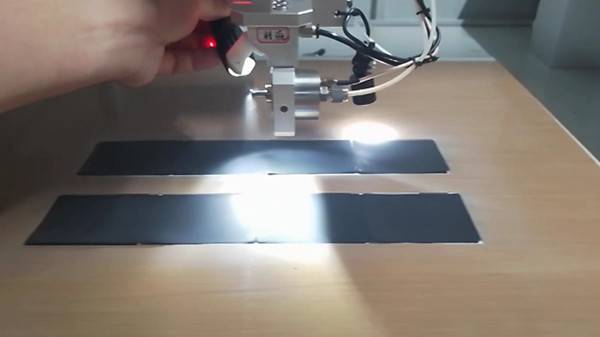
Silver nanowires have good conductivity and flexibility, making them an ideal material for preparing elastic conductors. Chemical reduction is a typical method for synthesizing silver nanowire ink, and the silver nanowires obtained by this method can be dispersed in various solvents such as water, ethanol, isopropanol, etc. The flexible circuit prepared in this way has an initial conductivity of 8130S · cm ⁻¹, and the conductivity can still be maintained at 5285S · cm ⁻¹ after being stretched by 50%.
Copper nanowires are also commonly used metal nanowire materials, but due to their susceptibility to oxidation, their conductivity stability is poor.
3. Graphene ink
Graphene is a two-dimensional crystal formed by tightly packed carbon atoms, which has the characteristics of ultra-thin, ultralight, ultra-high strength, high electrical and thermal conductivity, high transparency, and structural stability. These characteristics make it significantly advantageous in printed electronic products. At present, a large number of studies have made graphene into conductive ink and applied it to inkjet printing technology. By inkjet printing, graphene can be printed on substrates to produce flexible transparent conductive films, sensors, supercapacitors, RF antennas and other electronic devices.
Graphene has excellent conductivity due to the presence of free electrons inside: at room temperature, its electron mobility exceeds 1.5 × 10 ⁴ cm ² V ⁻¹ s ⁻¹, which is higher than that of carbon nanotubes and silicon crystals; The resistivity is only 10 Ω· cm ⁻¹, lower than copper and silver, making it the material with the lowest known resistivity. High conductivity, good stability, and nano layer structure make graphene a high-quality conductive filler. Graphene ink prepared with it not only solves the problem of low conductivity of traditional carbon based ink, but also has good compatibility with printer formulations.
4. Carbon nanotube ink
Carbon nanotubes can be regarded as tubular carbon based nanostructures formed by the curling of single-layer graphene, which have unique advantages such as high carrier mobility, excellent conductivity, and good mechanical flexibility. They are one of the important materials for flexible electronic devices. Under normal circumstances, carbon nanotubes are prone to aggregation, but their dispersion in conventional solvents can be significantly improved through chemical modification or the addition of solubilizing additives such as surfactants, cellulose, and conductive polymers, leading to the preparation of conductive inks.
Liquid metal
Liquid metal based on gallium and gallium alloys, with room temperature fluid characteristics and high metal conductivity, can be used to make flexible metal wires. There are three main ways to prepare liquid metal wires:
Injection method: First, a mold groove that meets the shape requirements of the circuit is made through microelectronics processing and other processes. Then, liquid metal fluid is injected into the mold using a syringe, and finally packaged and formed. The process of this method is relatively complex.
Ultrasonic dispersion method: In liquids such as water and ethanol, liquid metal is dispersed into micrometer sized particles through ultrasonic oscillation, and then directly deposited onto paper substrates or PDMS elastomers to form liquid metal thin films. But the surface of the liquid metal particles formed in this way is usually wrapped with a layer of nanoscale gallium oxide insulation, which needs to be cut through the insulation layer by mechanical stress engraving and other means to expose the internal liquid metal, so as to re form a conductive circuit between the particles, and finally draw the circuit pattern.
Printing method: Due to the high surface tension and poor wettability of liquid metal, it is difficult to directly use it as ink to achieve graphic preparation of flexible circuits through inkjet printing. In response to this issue, the Liu Jing team at Tsinghua University has designed and developed printable liquid metal ink and specialized printing equipment, achieving direct printing of liquid metal on flexible substrates.
Other materials
In addition to the three types of conductive materials mentioned above, there are other materials that can be used to prepare flexible circuits, such as commercial conductive silver paste and conductive ink made by dispersing metal particles in solvents.
Conclusion
Metal thin films and nanocrystalline ink are currently the two most commonly used conductive materials: metal thin films have high electrical conductivity but limited tensile properties, making them suitable for flexible circuit scenarios that do not require stretching or have low stretching rates (<100%).
There are various methods for preparing flexible circuits using nanocrystalline ink, which are easy to operate and cost-effective. However, the disadvantage is that its conductivity is lower compared to metal thin films.
Flexible circuits prepared with liquid metal as ink have the highest conductivity and much lower block resistance than the aforementioned materials, and the fluidity of the liquid metal itself does not limit the tensile properties of the elastomer; However, there are currently few methods for preparing liquid metal flexible circuits, and they must be packaged before use. Further in-depth research is needed in the future.
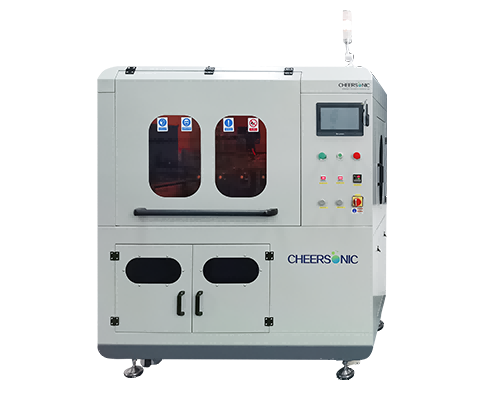
Ultrasonic spraying technology is becoming a key process for manufacturing flexible circuits, especially demonstrating significant advantages in spraying conductive inks such as silver, copper, and graphene.
Unlike traditional spraying, this technology utilizes high-frequency sound waves to atomize ink into micrometer sized, highly uniform fine droplets. This “soft atomization” method can accurately control the thickness and pattern of spraying, forming an extremely thin and uniform conductive film, which is crucial for micro circuits. Meanwhile, as the atomization process does not rely on high pressure, it can greatly reduce the waste of ink caused by splashing, and the material utilization rate can reach over 90%, which is of great significance for expensive conductive inks such as silver and graphene.
In flexible circuit applications, the low-temperature and non-contact characteristics of ultrasonic spraying perfectly match temperature sensitive flexible substrates such as PI and PET. It can easily achieve large-area, customized conductive line coating, presenting the excellent conductivity of silver ink, the cost advantage of copper ink, and the unique flexibility and transparency of graphene ink perfectly.
In summary, ultrasonic spraying technology provides an ideal solution for high-performance and low-cost flexible electronic product manufacturing with its high uniformity, high material utilization, and excellent process control capabilities, effectively promoting the development of cutting-edge fields such as wearable devices and flexible displays.
About Cheersonic
Cheersonic is the leading developer and manufacturer of ultrasonic coating systems for applying precise, thin film coatings to protect, strengthen or smooth surfaces on parts and components for the microelectronics/electronics, alternative energy, medical and industrial markets, including specialized glass applications in construction and automotive.
Our coating solutions are environmentally-friendly, efficient and highly reliable, and enable dramatic reductions in overspray, savings in raw material, water and energy usage and provide improved process repeatability, transfer efficiency, high uniformity and reduced emissions.
Chinese Website: Cheersonic Provides Professional Coating Solutions
