
Composition of Fuel Cell System
Fuel cell power generation requires a relatively complex system. In addition to fuel cell stacks, it also includes fuel supply subsystems, oxidant supply subsystems, water and heat management subsystems, and electrical management and control subsystems. The main system components include air compressors. Machine, humidifier, hydrogen circulation pump, high-pressure hydrogen cylinder, etc. These subsystems and fuel cell stacks (or modules) form a fuel cell power generation system. The complexity of fuel cell systems poses challenges to operational reliability.
Fuel Cell Stack
The fuel cell stack is the core of the fuel cell power system. It generates direct current (DC) through electrochemical reactions in the fuel cell. The current generated by a single fuel cell is less than 1v, therefore, a single fuel cell is usually connected in series to form a fuel cell stack, and a typical fuel cell stack may consist of hundreds of fuel cells. The energy produced by a fuel cell depends on several factors such as fuel cell type, cell size, operating temperature, and gas pressure supplied to the cell.
Fuel Processor
The fuel processor converts the fuel into a usable form for the fuel cell. Depending on the type of fuel and fuel cell, the fuel processor can be a simple bed of sorbent to remove impurities, or a combination of multiple reactors and sorbents.
Power Conditioner
Power regulation includes controlling current characteristics such as current (amperage), voltage, frequency, etc. to meet the needs of the application. Fuel cells generate electricity in the form of direct current (DC). On a DC circuit, electrons only flow in one direction. If a fuel cell is to be used to power a device that runs on alternating current, the direct current must be converted to alternating current.
Air Compressor
Fuel cell performance increases with reactant gas pressure; therefore, many fuel cell systems include an air compressor that increases inlet air pressure to 2 to 4 times the ambient atmospheric pressure. For transportation applications, the compressor should be at least 75% efficient. In some cases, an expander is also included to recover electricity from high-pressure exhaust gas. The expander efficiency should be at least 80%.
Humidifier
The polymer electrolyte membrane at the heart of a PEM fuel cell does not work well when dry, so many fuel cell systems include humidifiers for the air inlets. Humidifiers typically consist of a membrane, which can be made from the same material as PEM. By flowing dry inlet air on one side of the humidifier and moist exhaust air on the other, the water produced by the fuel cell can be recycled to keep the PEM well hydrated.
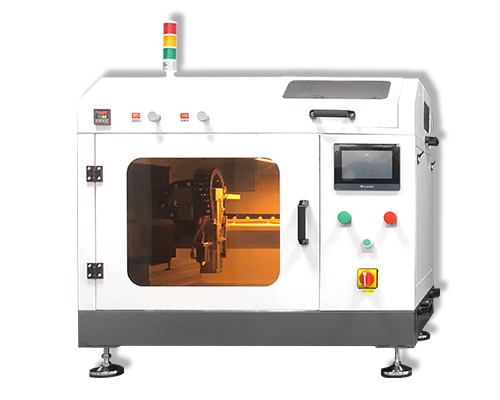
Cheersonic’s fuel cell catalyst coating systems are uniquely suited for these challenging applications by creating highly uniform, repeatable, and durable coatings. Using the company’s patented ultrasonic spray head technology, it can spray uniformly and efficiently on proton exchange membranes and gas diffusion layers. Uniform catalyst coatings are deposited onto PEM fuel cells, GDLs, electrodes, various electrolyte membranes, and solid oxide fuel cells with suspensions containing carbon black inks, PTFE binder, ceramic slurries, platinum and other precious metals. Other metal alloys, including Platinum, Nickel, Ir, and Ru-based fuel cell catalyst coatings of metal oxide suspensions can be sprayed using ultrasonics for manufacturing PEM fuel cells, polymer electrolyte membrane (PEM) electrolyzer, DMFCs (Direct Methanol Fuel Cells) and SOFCs (Solid Oxide Fuel Cells) to create maximum load and high cell efficiency.
The advantages of Cheersonic’s ultrasonic equipment include:
1.Very high Platinum utilization proven in MEA fabrication; as high as 90%.
2.Non-clogging
3.Low-flow spray reduces spillage and air pollution.
4.Continuous or intermittent operation possible
5.Highly porous coatings are extremely durable, preventing cracking or peeling of catalyst layer.
6.No moving parts to wear out
7.Minimal maintenance and downtime.
8.Robust design and materials resist corrosion.
9.Ultrasonic energy disperses the agglomerated particles, producing a homogeneous coating.
Chinese Website: Cheersonic Provides Professional Coating Solutions