
Complete Introduction to High-Pressure Syringe Coating
High-pressure injectors are primarily used for image enhancement and contrast imaging, with instantaneous pressures exceeding 2 MPa. Core components include the PC syringe inner wall, rubber plunger (rubber stopper), and metal plunger. Coatings aim to lubricate, seal, resist contrast agent erosion, control friction, and reduce particulate precipitation.
Mainstream Coating Types and Applications
1. Medical Silicone Oil Coating (PDMS, the traditional mainstream)
Applications: Inner wall of disposable high-pressure syringes, surface of rubber plungers
- Function: Reduces plunger sliding friction, ensures high-pressure, uniform injection speed, and avoids flow rate fluctuations; hydrophobic to prevent contrast agent adhesion to the syringe wall.
- Process: Ultrasonic spray siliconization (baked siliconization)
- Thickness: 100–400 nm ultrathin film
- Advantages: Moderate cost, stable lubrication, biocompatibility; suitable for ethylene oxide sterilization.
> Industry Trends: High-pressure contrast imaging consumables increasingly use baked-cured silicone coatings to replace free liquid silicone oil, reducing migrating microparticles.
2. Fluoropolymer Coatings (Silicone-Free Solution, High-End Focus)
Common Materials: PTFE, ETFE, FEP Fluorine Film/Coating
Applications: Rubber plunger outer layer coating, silicone-free lubricating coating for syringe inner walls
– Core Advantages:
- No silicone oil migration, lower microparticle levels;
- Extremely chemically inert, resistant to iodine contrast agent corrosion;
- Stable low friction, not easily detached during high-pressure reciprocating motion;
- Does not interact with contrast agents.
– Typical Products: Plunger ETFE coating, ultrasonically sprayed fluorine-based lubricating coating.
– Pain Points: Coating costs are higher than silicone coatings, and extremely high requirements are placed on spray uniformity and adhesion.
3. Hydrophilic Lubricating Coating (Limited-Quantity New Solutions)
Substrate: PEG, PVP-based hydrogel coating
- Features: Forms a hydrated lubricating layer upon contact with liquid;
- Limitations: Relatively weak durability under prolonged contact with high-concentration contrast agents and continuous high-pressure extrusion; mostly used in interventional devices, rarely used on a large scale in high-pressure contrast syringes.
4. Metal Push Rod Wear-Resistant Coating (Equipment End, Non-Disposable Consumable)
Suitable for the metal push rod of high-pressure injectors:
- DLC diamond-like carbon coating, Ni-P-PTFE composite coating
- Functions: Self-lubricating, wear-resistant, corrosion-resistant, and does not tear under long-term reciprocating high-pressure operation.
Special Requirements for Coatings under High-Pressure Conditions (Different from Ordinary Pre-filled Injectors)
1. Resistance to High-Pressure Dynamic Friction
Under short-term high-pressure impact (up to 300 PSI+), high-speed reciprocating plunger, the coating must not peel or flake off; detached particles can enter blood vessels and pose a risk.
2. Contrast Agent Compatibility:
Tolerates nonionic contrast agents such as iohexol and iofluidic, without dissolution, adsorption, or yellowing.
3. Highly Uniform Thickness:
Uneven coating thickness causes fluctuations in friction, directly leading to unstable injection flow rate and inconsistent imaging contrast; therefore, mainstream production lines use ultrasonic spraying instead of traditional two-fluid spraying.
4. Biosafety Compliance:
Meets ISO 10993 standards for cytotoxicity, hemolysis, and sensitization; tolerates EO sterilization and irradiation sterilization.
5. Low Precipitation, Low Particulate Matter:
Pharmacopoeia-level insoluble particulate matter is the most important quality control item for high-pressure injector coatings.
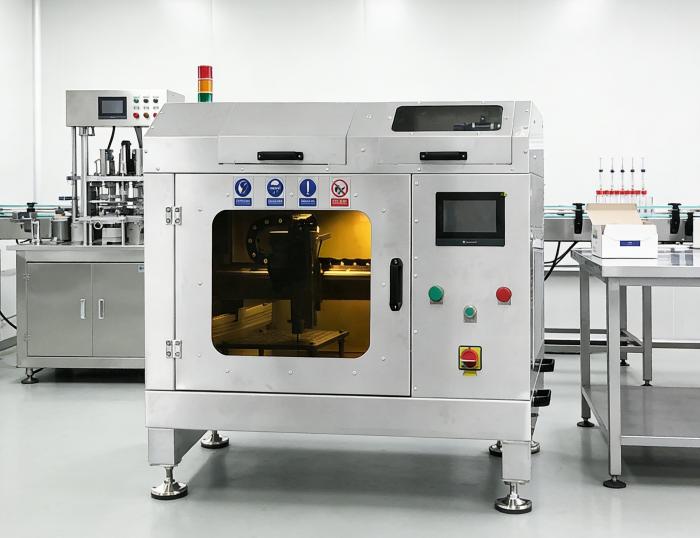
Comparison of Mainstream Preparation Processes
Ultrasonic Spraying (Currently the Preferred Choice for High-End Production Lines)
- Principle: High-frequency ultrasonic atomization, producing soft droplets, with a probe-type nozzle directly coating the inner wall of the syringe.
- Advantages: Nanoscale precision controllable thickness, excellent uniformity, material utilization >90%, minimal overspray; compatible with siliconizing solutions and fluorine-based coating solutions; suitable for mass production in cleanrooms.
- Applications: Siliconization of the inner wall of PC high-pressure syringes, silicone-free lubricating coatings.
Traditional Two-Fluid Air Spraying
High atomization impact, significant differences in coating thickness on the inner wall, excessive silicone oil easily accumulates, higher risk of particulate matter, gradually being phased out.
Vacuum Coating (Parylene)
Excellent barrier protection performance, but insufficient lubrication performance; generally not used as the main lubricating coating, mostly used for corrosion protection of small metal accessories.
Common Pain Points and Solutions
1. Flow rate fluctuation during high-pressure injection
Causes: Uneven coating thickness, localized missing coating, silicone oil agglomeration; Solution: Ultrasonic spraying + plasma pretreatment to improve adhesion.
2. Excessive particulate matter (a key clinical complaint)
Causes: Free liquid silicone oil, poor coating adhesion leading to high-pressure peeling; Solution: Baking and curing silicone/fluorine-based silicone-free coating.
3. Increased friction after long-term storage
Causes: Coating aging, migration; Solution: Optimize curing process, use high molecular weight medical silicone or fluorine-containing coatings.
Brief Selection Reference
– Economical disposable CT high-pressure syringe: Baking-type ultrasonic silicone coating (PDMS)
– High-end DSA, interventional surgery, and scenarios requiring strict particulate control: ETFE plunger coating/ultrasonic spraying silicone-free fluorine-containing lubricating coating
About Cheersonic
Cheersonic is the leading developer and manufacturer of ultrasonic coating systems for applying precise, thin film coatings to protect, strengthen or smooth surfaces on parts and components for the microelectronics/electronics, alternative energy, medical and industrial markets, including specialized glass applications in construction and automotive.
Our coating solutions are environmentally-friendly, efficient and highly reliable, and enable dramatic reductions in overspray, savings in raw material, water and energy usage and provide improved process repeatability, transfer efficiency, high uniformity and reduced emissions.
Chinese Website: Cheersonic Provides Professional Coating Solutions
