
Coatings for Flow Battery Bipolar Plates
Coatings for Flow Battery Bipolar Plates (Focusing primarily on All-Vanadium Redox Flow Batteries, or VRFBs)
Core challenge for bipolar plates: Balancing high electrical conductivity, corrosion resistance, low contact resistance, impermeability to electrolyte, and strong coating-substrate adhesion—all while exposed to highly acidic vanadium electrolyte (2–3 M H₂SO₄) and high oxidation potentials.
> Substrates fall into three categories: metal bipolar plates (316L stainless steel, titanium alloys), carbon-plastic/graphite composite bipolar plates, and pure graphite plates; coating strategies differ significantly depending on the substrate.
Key Coating Performance Indicators
1. Area-specific contact resistance: ≤20 mΩ·cm²; lower resistance yields higher stack efficiency.
2. Corrosion resistance: Stable in sulfuric acid/vanadium ion oxidative environments; corrosion current density <1 μA/cm²; no leaching of metal impurities that could contaminate the electrolyte.
3. Adhesion: No cracking, peeling, or delamination during charge-discharge cycling or thermal expansion/contraction.
4. Density and pinhole-free: Prevents electrolyte penetration to the substrate while maintaining electrical conductivity (must not act as an insulator).
5. Coating thickness: 5–50 μm for carbon-based slurry coatings; tens of nanometers to several micrometers for PVD hard coatings.

Mainstream Coating Material Systems
1) Carbon-based conductive coatings (Most common for carbon-plastic composite bipolar plates; a hot topic for industrialization)
Used on carbon-resin composite bipolar plates to overcome the insulating effect of the resin-rich surface layer and reduce contact resistance with graphite felt.
- Fillers: Carbon nanotubes (CNTs), graphene, graphitized carbon nanofibers (G-CNFs), conductive carbon black, expanded graphite.
- Binders: PVDF, PPS, fluoroelastomer (resistant to strong acids).
- Function: Establishes a conductive network on the surface without altering the mechanical properties or impermeability of the substrate itself.
- Representative example: Cactus-like G-CNF (graphitized carbon nanofiber) coating; penetrates the resin-rich surface layer to significantly reduce area resistance, thereby improving energy efficiency and cycle capacity retention.
2) Hard ceramic/carbon-based PVD coatings (for metal bipolar plates: stainless steel, titanium alloys)
While the metals themselves are highly conductive, they are prone to corrosion and dissolution in vanadium electrolytes; therefore, a dense, conductive protective layer is essential.
- DLC (Diamond-Like Carbon) types (a-C, ta-C, N-DLC): Highly corrosion-resistant and conductive; conductivity must be tuned via doping, as pure DLC is insulating.
- MAX phase Ti₃SiC₂: A conductive ceramic prepared via magnetron sputtering (film thickness: 2–8 μm); resistant to strong acid oxidation; a popular material choice for metal bipolar plates in flow batteries. 3. Metal nitrides (TiN, CrN): Corrosion-resistant; some systems are conductive, though porosity control is required.
> Drawbacks: Expensive PVD equipment; difficulty in achieving uniform film thickness over large-area flow channel structures; high mass-production costs.
3) Conductive polymer coatings (primarily for R&D)
Polyaniline (PANI), PPy, PEDOT-PSS; applied via spraying or electrodeposition.
Advantages: Low-temperature processing. Disadvantages: Insufficient long-term stability in strongly oxidizing vanadium electrolytes; mostly used for laboratory-scale modification rather than in large-scale stacks.
Comparison of Mainstream Preparation Processes
Ultrasonic spraying process: Primarily suited for carbon nanotube and graphene composite slurry coatings; produces film thicknesses in the 5–50 μm range. Key advantages include ultra-thin, uniform coatings capable of fully covering flow channel corners and “dead zones,” low-temperature operation throughout, and compatibility with carbon-plastic composite substrates; overall performance suits both pilot-scale and mass-production scenarios. The only drawback is the need for specific tuning to match the slurry formulation.
Magnetron sputtering (PVD) process: Suitable for hard coatings such as DLC, Ti₃SiC₂, and TiN; film thickness ranges from 50 nm to 8 μm. Coatings produced via this process are highly dense and of excellent purity. Disadvantages include high equipment procurement and maintenance costs, relatively low production capacity, and difficulty in ensuring uniform film thickness across large-area plates.
CVD Process: Primarily used for preparing carbon-based and ceramic coatings, enabling micron-scale deposition. Its greatest advantage is the exceptionally strong adhesion between the coating and the substrate; however, the high deposition temperature makes it incompatible with polymer-based substrates, limiting its applicability regarding substrate materials.
Thermal/Cold Spraying Process: Mainly used for carbide and MAX-phase coatings, achieving film thicknesses ranging from tens to hundreds of microns. The process offers high deposition rates, making it suitable for large-area plate processing; however, the resulting coatings have high porosity, necessitating additional densification post-processing, which increases both processing steps and costs.
Brush and Roll Coating Processes: Suitable for various carbon-based slurry coatings, typically yielding film thicknesses of 10–100 μm. Key advantages include process simplicity and low production costs, making them ideal for mass production; the main drawback is poor coating uniformity within flow channels, often resulting in uneven thickness and localized coating accumulation.
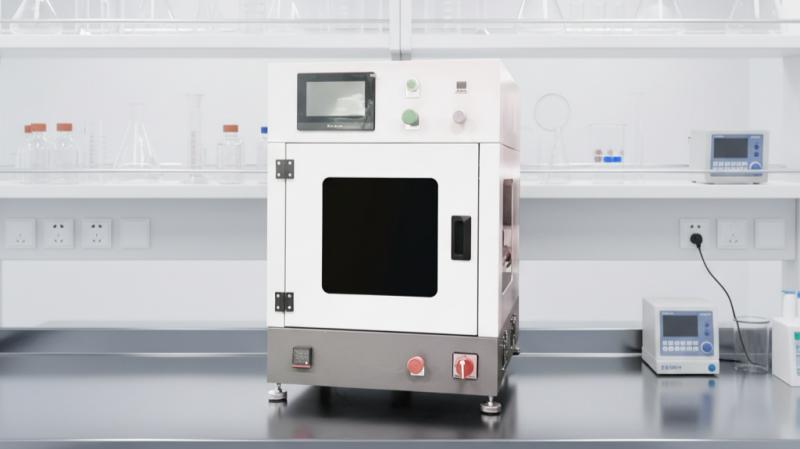
> Ultrasonic spraying is the preferred process for carbon-plastic composite bipolar plate coatings: it enables the application of a uniform carbon coating—without “dead zones”—across the surface of flow-channel-equipped bipolar plates, avoiding defects such as particle agglomeration, thick edges, and pinholes common in traditional air spraying.
Coating Selection Strategies for Two Types of Substrates
Carbon-Resin (Carbon-Plastic) Composite Bipolar Plates (Mainstream Mass-Production Route)
- Issue: A resin-rich insulating layer forms on the surface after molding, resulting in high contact resistance; the bulk material has good acid resistance and requires no anti-corrosion treatment, needing only a surface coating for conductivity enhancement.
- Solution: CNT/graphitized carbon nanofiber + PVDF slurry → Ultrasonic spraying → Drying; optional light hot-pressing to enhance interfacial bonding.
- Objective: Eliminate the insulating effect of the surface resin layer and reduce contact resistance with the graphite felt, while preserving the substrate’s inherent liquid-blocking capability.
Metal Bipolar Plates (Stainless Steel/Titanium)
- Issue: The substrate is susceptible to corrosion by vanadium electrolyte, and the dissolution of metal ions poisons the electrolyte.
- Solution: PVD deposition of Ti₃SiC₂ MAX-phase or doped DLC conductive ceramic coatings; near-zero pinhole density is mandatory to prevent electrolyte-induced pitting and penetration.
- Disadvantages: High cost; currently, metal bipolar plates are rarely used at scale in flow battery stacks and remain largely in the R&D stage.
Pure graphite plates
Excellent inherent conductivity but high brittleness; generally do not require thick coatings, though some undergo surface modification with thin layers of carbon nanomaterials to improve interfacial contact.
Key Failure Modes (Focus Areas for Coating Development)
1. Localized pinholes/micro-cracks in the coating: Electrolyte penetration leads to substrate corrosion and coating blistering or delamination; this issue is particularly critical for metal substrates.
2. Oxidative degradation of the binder by vanadium ions: Binders for carbon-based coatings cannot be standard epoxy resins; acid-resistant binders such as PVDF or fluoroelastomers are preferred.
3. Increase in interfacial contact resistance over cycling: Deterioration of the interface between the coating and graphite felt; the coating requires a certain degree of microscopic roughness.
4. Excessive coating thickness increases total resistance, while insufficient thickness provides inadequate protection; an optimal coating thickness range must be established.
Development Trends
1. Carbon-plastic composite plates + ultrasonic-sprayed carbon-nano-modified coatings: The fastest route to industrialization, balancing cost, corrosion resistance, and low contact resistance.
2. Metal bipolar plates with MAX-phase ceramic coatings: Targeting higher power density stacks while addressing cost and large-area uniformity issues.
3. Gradient composite coatings: A base layer to enhance adhesion and a surface layer offering high conductivity and corrosion resistance, balancing adhesion with electrochemical performance.
About Cheersonic
Cheersonic is the leading developer and manufacturer of ultrasonic coating systems for applying precise, thin film coatings to protect, strengthen or smooth surfaces on parts and components for the microelectronics/electronics, alternative energy, medical and industrial markets, including specialized glass applications in construction and automotive.
Our coating solutions are environmentally-friendly, efficient and highly reliable, and enable dramatic reductions in overspray, savings in raw material, water and energy usage and provide improved process repeatability, transfer efficiency, high uniformity and reduced emissions.
If you have any technical questions, customization demands, or procurement inquiries about ultrasonic atomization nozzles, feel free to contact our professional sales and technical team for detailed parameters, customized solutions, and industry application support.
Email: market2@cheersonic.com