
Benefits of Ultrasonic Heparin Coating
Ultrasonic heparin coating offers the following benefits:
1. Anticoagulant Effect
Effective Prevention of Thrombosis: Heparin is a widely used anticoagulant. When ultrasonically sprayed onto the surface of medical devices to form a heparin coating, it rapidly exerts its anticoagulant effect upon contact with blood. This is crucial for implantable medical devices such as venous stents and heart valves, significantly reducing the risk of thrombosis.
For example, after a heparin coating is sprayed onto a venous stent, heparin can inhibit the activity of clotting factors in the blood, prevent platelet aggregation and fibrin formation, thereby maintaining vascular patency and reducing complications caused by thrombosis.
Improved Biocompatibility of Medical Devices: In addition to its direct anticoagulant effect, the heparin coating can also improve the interaction between medical devices and blood and human tissues, enhancing biocompatibility. This helps reduce inflammatory responses and immune rejection, allowing the medical device to function better in the body.
For example, after heart valve replacement surgery, the heparin coating can reduce the activation of blood components on the valve surface, lower the degree of inflammation, and improve the patient’s quality of life and prognosis.
2. Coating Uniformity and Stability
Ultrasonic spraying technology ensures uniform coating: Ultrasonic spraying technology generates extremely fine droplets that can be evenly distributed on the surface of medical devices, forming a heparin coating with uniform thickness and stable quality. Compared to traditional spraying methods, ultrasonic spraying can better control the thickness and uniformity of the coating, improving its quality and performance.
For example, on small medical devices such as catheters and guidewires, ultrasonic spraying allows for precise coating control, ensuring effective anticoagulation protection at every stage.
Enhanced Coating Adhesion and Stability: During ultrasonic spraying, the droplets impact the medical device surface at high speed, enhancing the adhesion between the heparin coating and the substrate. Simultaneously, the energy of the ultrasound promotes the chemical bonding of heparin molecules to the substrate surface, improving the coating’s stability and durability.
This means that during the use of medical devices, the heparin coating is less prone to peeling or degradation, maintaining its anticoagulation effect and extending the lifespan of the medical device.
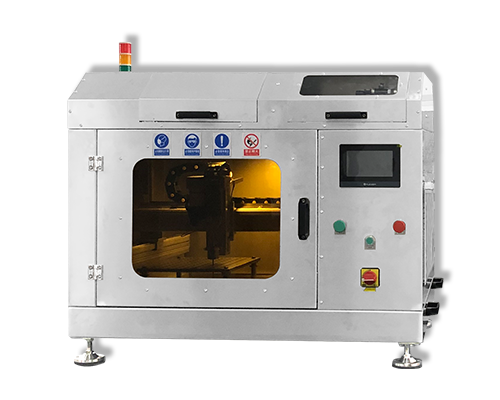
3. Precise Control of Coating Thickness and Drug Release
Adjustable Coating Thickness: Ultrasonic spraying technology allows for precise control of the heparin coating thickness according to different application requirements. By adjusting spraying parameters such as spraying pressure, spraying time, and droplet size, coating thicknesses can be achieved to meet the anticoagulation requirements of various medical devices.
For example, for implantable medical devices requiring long-term anticoagulation, a thicker heparin coating can be selected to ensure a sustained anticoagulation effect; while for short-term use medical devices, such as catheters, a thinner coating can be chosen to reduce costs and potential side effects.
Controlled Drug Release Rate: Heparin coatings not only provide immediate anticoagulation but can also achieve a sustained anticoagulation effect by controlling the drug release rate. Ultrasonic spraying technology can combine heparin with appropriate sustained-release materials to form a coating with controlled-release functionality.
This controlled-release coating allows for adjustment of the heparin release rate as needed, continuously releasing heparin for a period of time after implantation to maintain the blood’s anticoagulant state. This is a very effective treatment method for patients requiring long-term anticoagulation.
4. Improved Production Efficiency and Reduced Costs
Highly Efficient Spraying Process: Ultrasonic spraying technology is characterized by its high efficiency and speed, enabling the coating of medical devices to be completed in a short time. Compared to traditional coating methods, ultrasonic spraying can significantly improve production efficiency and reduce production costs.
For example, in the large-scale production of medical devices such as venous stents, ultrasonic spraying can achieve automated production, increasing production speed and product quality while reducing labor costs and production time.
Reduced Material Waste: Because ultrasonic spraying technology can precisely control the thickness and uniformity of the coating, material waste can be reduced. Compared to traditional spraying methods, ultrasonic spraying can utilize coating materials such as heparin more effectively, reducing production costs.
Furthermore, ultrasonic spraying can reduce environmental pollution because it can use less solvent and paint, reducing emissions of volatile organic compounds.
About Cheersonic
Cheersonic is the leading developer and manufacturer of ultrasonic coating systems for applying precise, thin film coatings to protect, strengthen or smooth surfaces on parts and components for the microelectronics/electronics, alternative energy, medical and industrial markets, including specialized glass applications in construction and automotive.
Our coating solutions are environmentally-friendly, efficient and highly reliable, and enable dramatic reductions in overspray, savings in raw material, water and energy usage and provide improved process repeatability, transfer efficiency, high uniformity and reduced emissions.
Chinese Website: Cheersonic Provides Professional Coating Solutions