
Applying Functional Coatings to Metal and Glass Substrates
Ultrasonic Spray Coating Technology: Applying Functional Coatings to Metal and Glass Substrates
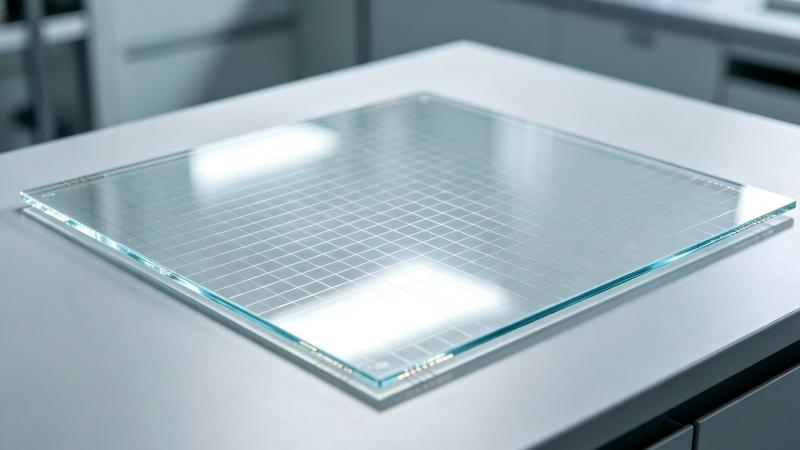
In modern manufacturing, surface treatment technology has become a critical factor in enhancing product performance, extending service life, and improving user experience. For metal and glass substrates—widely used in sectors such as consumer electronics, automotive manufacturing, architectural curtain walls, and precision instruments—the efficient and uniform application of multifunctional coatings has long been a key industry focus. As an advanced coating process, ultrasonic spray technology leverages unique advantages to precisely apply multifunctional composite coatings—offering properties such as dielectric insulation, scratch resistance, anti-reflection, and anti-fingerprint capabilities—onto metal and glass surfaces, thereby driving these industries toward higher performance and greater added value.
Principles and Core Advantages of Ultrasonic Spray Technology
The core technology of ultrasonic spray systems lies in the use of high-frequency acoustic energy to atomize liquids. The central component is the ultrasonic spray nozzle, which houses a piezoelectric transducer. When a high-frequency electrical signal (typically 20 kHz to 120 kHz) is applied to the transducer, it generates mechanical vibrations at the same frequency. These high-frequency vibrations are transmitted via a horn to the atomizing tip at the nozzle’s end, causing the coating liquid to form an extremely thin film on the tip’s surface. Driven by acoustic energy, the liquid film overcomes surface tension and breaks apart into countless uniform, fine droplets—ranging from the micron to the nanometer scale—creating a gentle, low-velocity “mist-like” spray.
Compared to traditional air spraying, spin coating, or dip coating processes, ultrasonic spray technology offers revolutionary advantages:
1. Superior Uniformity and Consistency: Ultrasonic atomization produces a droplet size distribution that is exceptionally narrow, ensuring a highly uniform coating thickness at the microscopic level. This is crucial for the performance of optical coatings (such as anti-reflective films) and functional thin films (such as insulating layers).
2. Exceptional Material Utilization and Efficiency: The spraying process involves virtually no overspray, achieving material utilization rates exceeding 90%. This significantly reduces the consumption of expensive specialty coatings (such as fluorine-based anti-fingerprint coatings) and lowers waste disposal costs.
3. Superior Controllability and Adaptability: By precisely adjusting frequency, amplitude, and liquid flow rate, coating thickness can be flexibly controlled—ranging from hundreds of nanometers to tens of micrometers. The system easily accommodates complex formulations with varying viscosities (from 1 cP to several thousand cP).
4. Gentle Spraying Characteristics: The low-velocity atomized flow exerts minimal impact on the substrate, preventing coating “rebound” or potential damage to fragile bases (such as ultra-thin glass or precision circuits). It also drastically reduces aerosol generation, thereby improving the working environment.
5. Broad Compatibility: Capable of processing a wide range of coating materials—including nanoparticle suspensions, polymer solutions, and sol-gel precursors—this technology provides a platform for developing multifunctional composite coatings.
Multifunctional Coating Solutions for Metal and Glass Substrates
1. Dielectric Insulating Coatings: Creating Reliable Electronic Barriers
In sectors such as consumer electronics (e.g., mobile phone frames and battery casings), power equipment, and automotive electronics, metal components often require insulation to prevent short circuits, electrical leakage, or electromagnetic interference. Ultrasonic spraying enables the uniform application of insulating materials—such as polyimide (PI), polyurethane (PU), epoxy resin, or ceramic-based materials (e.g., alumina sol)—onto metal surfaces like aluminum, magnesium alloys, and stainless steel. The resulting coatings are dense and pinhole-free, offering excellent dielectric strength, breakdown voltage resistance, and high-temperature stability; furthermore, the coatings are extremely thin, ensuring no compromise to the metal’s heat dissipation performance. On glass substrates (such as glass insulators and display backplanes), this technology similarly achieves precision insulation, meeting the demands of highly integrated circuit designs.
2. Scratch-Resistant (Anti-Wear) Coatings: Providing Durable Surface “Armor”
Although metal and glass surfaces possess high hardness, they remain susceptible to scratches during prolonged use. Ultrasonic spraying enables the application of high-hardness, high-toughness nanocomposite coatings—such as organic-inorganic hybrid materials reinforced with silica (SiO₂) or alumina (Al₂O₃) nanoparticles, or UV-curable acrylate systems. These coatings bond firmly to the substrate, significantly enhancing surface pencil hardness (reaching 9H or higher) and wear resistance. They effectively withstand daily friction, cleaning, and scratching by hard objects. Widely used on smartphone casings, watch crystals, automotive window glass, high-end cookware, and architectural curtain wall glass, they help products maintain a “like-new” appearance over the long term.
3. Anti-reflective (AR) coatings: Enhancing optical clarity and energy efficiency
Reducing surface reflection is crucial for display panels (touchscreens, OLED screens), optical lenses, solar photovoltaic glass, and museum display case glass. Ultrasonic spraying is an ideal process for fabricating multilayer, broadband anti-reflective films. By alternately spraying materials with varying refractive indices—such as nanoporous silica, titanium dioxide, or niobium pentoxide—a microscopic gradient refractive index structure can be created on the glass surface. This reduces reflectance in specific wavelength ranges (such as visible light) to below 1%. This process not only significantly boosts light transmission (exceeding 99.5%), reduces glare and ghosting, and improves display contrast and reading comfort, but also enhances the photoelectric conversion efficiency of solar cells.
4. Anti-fingerprint (easy-clean, oleophobic) coatings: Maintaining visual cleanliness and tactile quality
Metal and glass surfaces are highly susceptible to fingerprints and oily smudges, which compromise aesthetics and hygiene. Ultrasonic spraying allows for the precise application of fluorinated compounds (such as perfluoropolyethers or fluorosilanes), oleophobic silica nanolayers, or photocatalytic titanium dioxide coatings. These coatings drastically lower surface energy, causing oil and water droplets to bead up and roll off; fingerprints do not adhere easily and can be wiped away effortlessly. Widely applied to smartphone screens, kitchen appliance panels, elevator interiors, medical device housings, and high-end faucets, these coatings greatly improve the daily user experience and the efficiency of cleaning and maintenance.
Technology Integration and Future Outlook
Even more remarkable is the ability of ultrasonic spraying technology—through the precise design of coating formulations and the optimization of process parameters—to produce composite coatings that integrate multiple functions. For instance, a sol-gel-based nanocomposite coating can simultaneously offer excellent electrical insulation, adequate hardness, moderate anti-reflective properties, and superior oleophobicity. This functional integration simplifies production workflows and reduces costs, representing a key direction for the future of surface functionalization.
Driven by the advancement of Industry 4.0, ultrasonic spraying systems are being deeply integrated with automated production lines, robotics, and in-line monitoring systems (such as optical interference thickness gauges) to enable intelligent, digital, and precision coating manufacturing. Ultrasonic spraying technology demonstrates immense application potential across cutting-edge sectors, ranging from flexible electronics, microelectronic packaging, and biomedical devices to insulation protection for new energy vehicle batteries.
Conclusion
In summary, thanks to its unparalleled uniformity, efficiency, and flexibility, ultrasonic spraying technology has emerged as a state-of-the-art solution for applying high-performance coatings—such as dielectric insulation, anti-scratch, anti-reflective, and anti-fingerprint layers—onto metal and glass substrates. It not only resolves many of the pain points associated with traditional coating processes but also enhances the reliability, aesthetics, durability, and user experience of end products by imparting composite functionalities to the substrates, thereby driving continuous innovation in advanced manufacturing and materials surface engineering. As materials science progresses and processes are further optimized, ultrasonic spraying is poised to play an indispensable role in an increasing number of high-tech industries.
About Cheersonic
Cheersonic is the leading developer and manufacturer of ultrasonic coating systems for applying precise, thin film coatings to protect, strengthen or smooth surfaces on parts and components for the microelectronics/electronics, alternative energy, medical and industrial markets, including specialized glass applications in construction and automotive.
Our coating solutions are environmentally-friendly, efficient and highly reliable, and enable dramatic reductions in overspray, savings in raw material, water and energy usage and provide improved process repeatability, transfer efficiency, high uniformity and reduced emissions.
If you have any technical questions, customization demands, or procurement inquiries about ultrasonic atomization nozzles, feel free to contact our professional sales and technical team for detailed parameters, customized solutions, and industry application support.
Email: market2@cheersonic.com
