
Application of Ultrasonic Coater in Hydrogen Energy Storage
Application of Ultrasonic Coater in Hydrogen Energy Storage Field
Ultrasonic spraying utilizes piezoelectric transducers to convert high-frequency sound waves (20kHz-200kHz) into mechanical vibrations, causing the liquid to form micrometer sized atomized droplets (10-100 μ m) at the nozzle tip. This technology achieves precise coating control through non-contact low-temperature deposition, demonstrating unique advantages in the field of hydrogen energy storage.
Core application scenarios and technological advantages
1. Preparation of solid-state hydrogen storage materials
- Nano catalyst loading
– Atomized deposition of precious metal catalysts (Pt, Ru, etc.) on porous carriers (MOFs/activated carbon)
– The penetration depth of droplets is increased by 3 times, and the metal dispersion is greater than 90% (traditional process<70%)
– Case: Magnesium based hydrogen storage material surface loaded with TiF4 catalyst, dehydrogenation temperature reduced by 40 ℃ - Manufacturing of composite hydrogen storage film
– Construction of Mg Ti MOFs composite structure by multi-layer alternating spraying
– Film thickness control accuracy ± 0.5 μ m, hydrogen diffusion path optimization
2. Manufacturing of high-pressure hydrogen storage containers
- Type IV bottle liner functional coating
– Spray a hydrogen barrier layer (SiO ₂/polyimide nanocomposite coating) on the surface of the plastic liner
– Hydrogen permeability reduced to 1 × 10 ⁻⁶ cm ³/cm ² · s · Pa (improving sealing by 5 times) - Optimization of Carbon Fiber Reinforced Layer Interface
– Uniform spraying of epoxy nanoclay transition layer
– Interlayer shear strength increased by 35%, hydrogen embrittlement resistance life extended by 2 times

3. Organic liquid hydrogen storage catalyst carrier
- Molecular sieve surface modification
– Spraying ruthenium based active components on the surface of zeolite support
– The metal utilization rate reaches 95% (immersion method only 65%), and the catalytic efficiency is increased by 40% - Construction of gradient catalytic layer
– Implement aperture gradient coating (20nm → 5nm) through programming path
– The dehydrogenation reaction rate has been increased to 8.2 mmol/g · min
Industrialization Promotion Path
1. Current technological bottleneck
- Attenuation of atomization efficiency for high viscosity slurry (>500cP)
- Continuous production speed is limited (maximum line speed 2m/min)
- High stability requirements for nanoparticle suspension
2. Innovative solutions
- Multi stage ultrasonic atomization system: series connection of 20kHz/80kHz modules for processing high viscosity materials
- Electrostatic assisted deposition: Combining a 15kV electrostatic field to improve coating adhesion to 99%
- Online particle size monitoring: real-time control of atomization parameters using laser diffractometer
3. Future application directions
- Manufacturing of solid-state hydrogen storage tanks:
– Spraying Ni-P amorphous alloy anti-corrosion layer on the surface of magnesium based alloy (hydrogen corrosion resistance>5000h) - Insulation layer of liquid hydrogen storage tank:
– Vacuum interlayer spraying air gel particles (thermal conductivity < 0.018W/m · K) - Vehicle mounted hydrogen supply system:
– Bipolar plate microchannel superhydrophobic coating (contact angle>160 °)
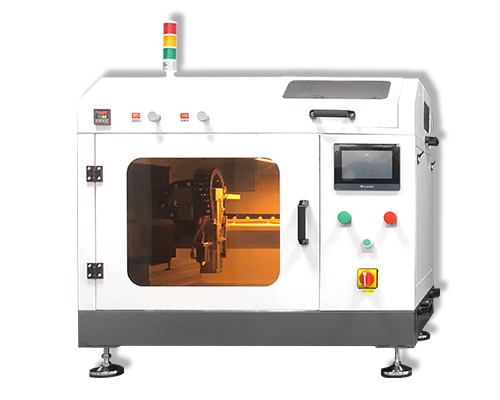
Ultrasonic spraying technology is reconstructing the manufacturing system of hydrogen energy storage materials through micrometer level precise deposition, low-temperature processing characteristics, and multi-layer heterogeneous integration capabilities
1. The catalytic efficiency of solid-state hydrogen storage materials is increased by more than 40%
2. The lifespan of high-pressure hydrogen storage containers is extended by 2 times
3. Reduce the amount of precious metals used in organic hydrogen storage catalysts by 50%
With breakthroughs in supporting technologies such as high-speed multi axis spraying robots and nano slurry stabilizers, this process is expected to achieve a 30% reduction in the manufacturing cost of hydrogen storage materials by 2028, accelerating the industrialization of hydrogen energy.
Ultrasonic spraying utilizes piezoelectric transducers to convert high-frequency sound waves (20kHz-200kHz) into mechanical vibrations, causing the liquid to form micrometer sized atomized droplets (10-100 μ m) at the nozzle tip. This technology achieves precise coating control through non-contact low-temperature deposition, demonstrating unique advantages in the field of hydrogen energy storage. In green hydrogen production, hydrogen is produced by electrolyzing water, producing only hydrogen and oxygen.
Ultrasonic spraying equipment is used in many electrolytic coating applications. The high uniformity of the catalyst layer and the uniform dispersion of suspended particles can create highly efficient coatings for electrolytic cells, whether single-sided or double-sided. In green hydrogen production, hydrogen is produced by electrolyzing water, producing only hydrogen and oxygen. Ultrasonic spraying equipment applies coatings to electrolytic cells in this truly green energy production process.
In the large-scale production of hydrogen fuel cells, it has been verified that ultrasonic spraying equipment is an ideal way to coat PEM electrolysis cells, and it is an ideal choice for spraying carbon based catalyst ink onto the electrolyte membrane. The ultrasonic spraying equipment is fully automated, capable of double-sided coating, and can apply different catalyst formulations to each side of the membrane. The durability and repeatability of coatings have been proven to be superior to other coating methods, typically not only extending the service life of PEM coatings, but also providing higher efficiency.
In carbon capture electrolysis applications, ultrasonic coating equipment applies catalysts to membranes for separating and capturing carbon dioxide before entering the atmosphere. Separation of carbon dioxide from other gases in the exhaust streams generated during industrial processes, such as those from coal-fired and natural gas power plants or steel and cement plants; Intended to reduce carbon emissions in response to global warming. Usually, captured carbon dioxide can be processed into valuable carbon based by-products such as plastics, rubber, or fuels.
About Cheersonic
Cheersonic is the leading developer and manufacturer of ultrasonic coating systems for applying precise, thin film coatings to protect, strengthen or smooth surfaces on parts and components for the microelectronics/electronics, alternative energy, medical and industrial markets, including specialized glass applications in construction and automotive.
Our coating solutions are environmentally-friendly, efficient and highly reliable, and enable dramatic reductions in overspray, savings in raw material, water and energy usage and provide improved process repeatability, transfer efficiency, high uniformity and reduced emissions.
Chinese Website: Cheersonic Provides Professional Coating Solutions
