
Application of Modified Coatings on Surgical Instrument Surfaces
In the operating room under the bright lights, the moment a sharp scalpel slices through the skin, an invisible microscopic battle begins. Tissue debris adheres to the blade like chewing gum, proteins in the blood gradually corrode the metal surface, and each cut is accompanied by a loss of friction. This is not an exaggeration—traditional uncoated surgical instruments can lose more than 40% of their sharpness after repeated use, and surface adhesion is a hidden culprit that prolongs surgical time and aggravates tissue damage. This century-old problem only saw a real turning point with the advent of lubrication and protective coating technology.

A Blade That “Sweats”: The Wisdom of Lubricating Coatings
Imagine what it would be like if the surface of a scalpel had a perpetually moist “ice surface,” allowing tissue to glide across it without any sticking. This is precisely the miracle brought about by diamond-like carbon (DLC) coatings. This microstructure, composed of carbon atoms, possesses both the hardness of diamond and the lubricity of graphite—its coefficient of friction can be as low as 0.05, smoother than ice. When surgeons perform delicate vascular anastomoses, the coating ensures clean and precise cuts, preventing tissue from “clamping” the blade and reducing the risk of postoperative adhesions.
Another revolutionary technology is the liquid-injected lubricating surface. Inspired by the smooth edges of pitcher plants, scientists create porous microstructures on the blade surface and then “lock” medical-grade lubricant within them. As the blade works, the lubricant slowly seeps out, forming a dynamic liquid barrier. This type of coating can reduce cutting resistance by 80%, making it particularly suitable for surgical scenarios like neurosurgery where precise force control is crucial.
The Invisible Armor: The Mission of Protective Coatings
If the lubricating coating makes the scalpel “smooth,” then the protective coating gives it “immortality.” During repeated cleaning and high-temperature sterilization, surgical instruments gradually develop pitting and stress corrosion cracks on their metal surfaces—cracks more than ten times thinner than a human hair, providing ideal hiding places for bacteria.
Titanium nitride ceramic coating is a classic solution in this field. This golden-yellow coating, only three micrometers thick, is six times harder than stainless steel. Like a full suit of armor, it completely isolates the instrument substrate from the external environment. Surgical forceps treated with this method retain their pristine shine even after 2000 high-pressure sterilization cycles. A more advanced molybdenum disulfide composite coating combines corrosion resistance and self-lubrication, ensuring the scissors remain smooth even after 100,000 opening and closing cycles.
From Production Line to Operating Table: A Precise “Surface Engineering” Process
Manufacturing these functional coatings is far from a simple spraying process. In a vacuum chamber, high-energy particles bombard the target material at speeds of hundreds of meters per second, depositing atoms layer by layer onto the blade surface to form a dense film with a thickness error of no more than 0.2 micrometers. The entire process is controlled at temperatures below 150 degrees Celsius to ensure the original heat treatment performance of the instruments remains unaffected. Each batch of products must also pass scratch tests, salt spray corrosion tests, and 100,000 simulated uses before it is “qualified for use.”
The Future is Here: The Vision of Intelligent Coatings
Researchers are now developing “living” coatings with active functions. For example, composite layers containing antibacterial silver ions continuously release bactericidal components during cutting; while responsive coatings automatically adjust surface roughness when they detect changes in blood pH, achieving on-demand lubrication. It is foreseeable that the surfaces of future surgical instruments will no longer be cold, passive metal, but rather a layer of intelligent, adaptive, and multifunctional “active interface.”
From rough steel to silky smooth functional surfaces, coating technology has enabled scalpels and industrial blades to complete a crucial leap in evolutionary history. This is not just about the durability of tools—when every cut is more precise and every second of surgery is safer, the ultimate beneficiaries are those lives lying on the operating table yearning for new life. A thin film in the microscopic world supports a whole new world of medical quality.
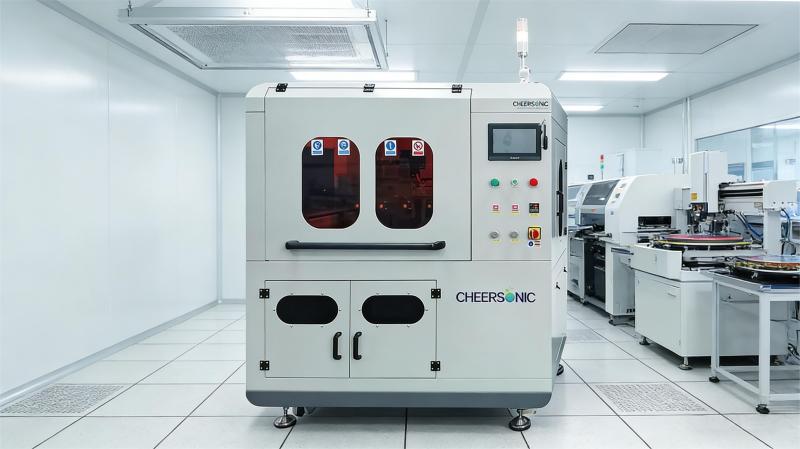
Ultrasonic Spraying Technology: Creating High-Quality Functional Coatings for Surgical Blades
Medical device blades require lubricating and protective coatings to reduce cutting resistance, prevent tissue adhesion, and protect against oxidation and corrosion, thus extending their lifespan. Traditional dip coating, roller coating, and pneumatic spraying suffer from uneven coating, edge buildup, paint waste, and insufficient coating on the cutting edge. Ultrasonic spraying utilizes high-frequency vibration to achieve soft atomization, producing low-speed droplets without splashing or rebound, precisely covering the complex structure of the blade. This technology achieves a coating thickness accuracy of ±0.5 micrometers and a material utilization rate of 90%-99%, balancing cost and environmental friendliness. Now in automated mass production, it can layer different functional coatings, making it suitable for high-end medical blade manufacturing and the preferred process for precision blade coating.
About Cheersonic
Cheersonic is the leading developer and manufacturer of ultrasonic coating systems for applying precise, thin film coatings to protect, strengthen or smooth surfaces on parts and components for the microelectronics/electronics, alternative energy, medical and industrial markets, including specialized glass applications in construction and automotive.
Our coating solutions are environmentally-friendly, efficient and highly reliable, and enable dramatic reductions in overspray, savings in raw material, water and energy usage and provide improved process repeatability, transfer efficiency, high uniformity and reduced emissions.
Chinese Website: Cheersonic Provides Professional Coating Solutions
