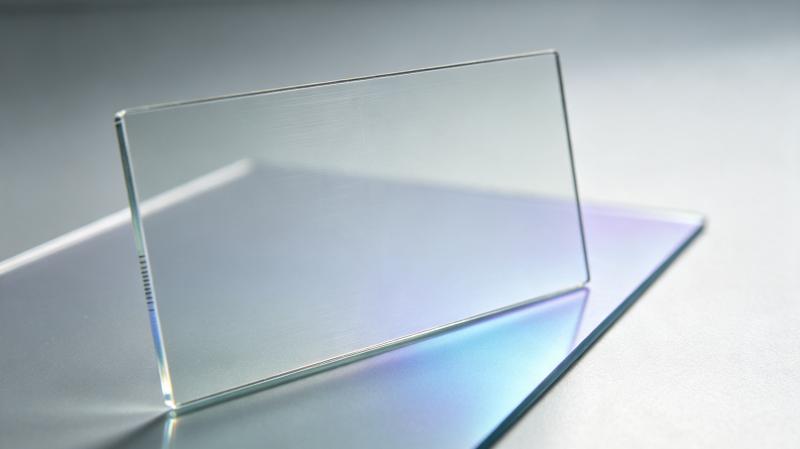
Anti‑Reflective Coating Preparation
Application and Advantages of Ultrasonic Spraying Technology in the Preparation of Anti-reflective Coatings for Silicon Solar Cells
In the current wave of global energy structure transformation, solar photovoltaic, as a clean and renewable energy form, has attracted much attention for its technological development and manufacturing cost control. Silicon-based solar cells, as the mainstream technology in the market, have their photoelectric conversion efficiency and production cost as core factors determining their commercial prospects. In the manufacturing process of solar cells, preparing a high-efficiency, uniform anti-reflective coating on the silicon wafer surface is a crucial step in improving cell performance. Traditional coating preparation technologies, such as centrifugal spin coating and pneumatic spraying, are gradually failing to meet the industry’s extreme pursuit of cost reduction and efficiency improvement due to either significant material waste or insufficient coating uniformity. Against this backdrop, ultrasonic spraying technology, as an advanced precision deposition solution, provides a revolutionary solution for the preparation of anti-reflective coatings due to its unique working principle and excellent process control capabilities.
Technical Principle: Precise Conversion from Electrical Energy to Uniform Droplets
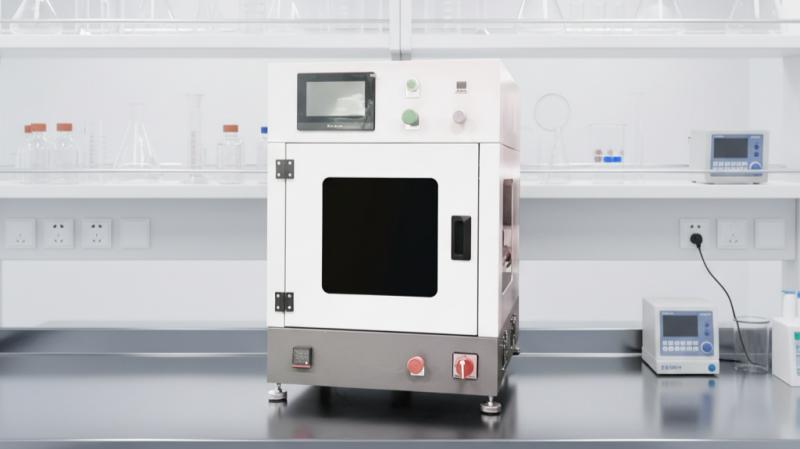
The core of ultrasonic spraying technology lies in its unique atomization principle. Unlike traditional atomization methods that rely on high-speed airflow or mechanical pressure, this technology uses high-frequency electrical signals to drive a piezoelectric transducer, generating mechanical ultrasonic vibrations typically in the range of 20 kHz to hundreds of kHz. This high-frequency vibration is transmitted to a precision nozzle structure, causing it to undergo microscopic longitudinal expansion and contraction. When the coating liquid (i.e., the precursor solution for the anti-reflective coating, such as a sol-gel containing silicon compounds) is delivered to the nozzle tip, it spreads into an extremely thin liquid film on the vibrating surface. Under the influence of ultrasonic energy, the liquid film overcomes its own surface tension and viscosity, and is rapidly torn into tiny, uniform droplets at the micron or even nanometer scale. These droplets are then guided by a mild carrier gas (such as pure nitrogen or dry air) to form a stable, controllable “mist stream,” which is directionally deposited onto the silicon substrate awaiting coating.
This process is essentially the result of mechanical energy directly acting on the liquid, avoiding the violent impact of high-pressure fluids, thus ensuring the uniformity of droplet size and the stability of the atomized state from the source.
Technological Advantages: Enabling Multidimensional Value in High-Efficiency Solar Cell Manufacturing
Applying ultrasonic spraying technology to the preparation of antireflective coatings for silicon solar cells offers comprehensive advantages, directly addressing the urgent needs of modern photovoltaic manufacturing for “higher efficiency, greater cost-effectiveness, and greater controllability.”
1. Superior Coating Uniformity and Consistency
The core function of antireflective coatings is to minimize reflection losses on the silicon wafer surface through the interference effect of light, thereby increasing the generation of photogenerated carriers. The coating thickness and refractive index must be precisely controlled within nanometer-level tolerances. The droplet size produced by ultrasonic spraying is highly uniform, and the amount of mist is stable, ensuring that the amount of coating material deposited on each unit area of the silicon wafer surface is almost identical. This results in minimal coating thickness fluctuations and a uniform refractive index distribution, achieving consistent and optimal antireflective effects on large-area substrates, directly improving the short-circuit current and final photoelectric conversion efficiency of the solar cell.
2. Extremely High Material Utilization and Economic Benefits
In large-scale photovoltaic production, raw material costs are a significant component of the total cost. Traditional spin coating processes can result in over 90% of the expensive coating material being thrown off the substrate during rotation, leading to significant waste. Ultrasonic spraying, on the other hand, is a directional and quantitative deposition technology where almost all atomized material is effectively delivered to the substrate surface. Its material utilization rate can typically reach over 90%, or even higher. This not only significantly reduces the raw material consumption cost per unit of solar cell but also reduces the burden of treating expensive chemical waste, aligning with the principles of green manufacturing.
3. Excellent Process Compatibility and Adaptability
This technology has a wide process window adaptable to solution properties (such as viscosity and solids content), allowing for excellent compatibility with different types of anti-reflective coating material formulations. Furthermore, it is highly compatible with automated production lines, enabling precise path programming (such as grid line scanning and full-coverage spraying), easily handling substrates of various sizes (including the currently mainstream large-size silicon wafers) and shapes. In addition, the gentle atomization process avoids nozzle clogging, reducing equipment maintenance frequency and improving the continuous operation capability and overall output of the production line.
4. Enhancing Underlying Structure and Production Sustainability
Because the atomization process does not require high pressure, the kinetic energy of the droplets reaching the substrate is very low. This is particularly important for silicon wafer surfaces with finely textured structures (typically pyramidal structures), ensuring that the coating perfectly covers every slope and valley of the texture without damaging its microstructure due to droplet impact. Simultaneously, the lower kinetic energy minimizes spray bounce and splashing, further ensuring a clean working environment, reducing the emission of harmful particulate matter in the air, and improving the occupational health of production personnel.
Future Prospects: A Potential Platform for Future Technological Iterations
With the continuous evolution of photovoltaic technology, such as the popularization and iteration of high-efficiency cell technologies like PERC, TOPCon, and HJT, higher demands are placed on surface passivation and anti-reflection structures. The precise control characteristics of ultrasonic spraying technology make it not only suitable for single anti-reflection layers but also have the potential to expand into the preparation of multilayer film structures (such as double-layer anti-reflection films) and composite functional coatings (combining passivation and anti-reflection functions). Meanwhile, on the path towards lower costs and higher efficiency, this technology also demonstrates broad application prospects when combined with advanced battery processes such as gridless and heterojunction technologies.
Conclusion
In summary, ultrasonic spraying technology, through its innovative physical principles, achieves the efficient conversion of liquid materials into ultrafine, uniform droplets. Applying it to the preparation of anti-reflective coatings for silicon solar cells can simultaneously achieve significant improvements in coating quality, material savings, production efficiency, and process compatibility. It is not merely a process upgrade replacing traditional coating methods, but a key enabling technology driving the photovoltaic industry towards higher efficiency and lower costs. With further research and continuous optimization of process parameters, ultrasonic spraying technology will undoubtedly play an increasingly important role in the manufacturing of clean energy.
About Cheersonic
Cheersonic is the leading developer and manufacturer of ultrasonic coating systems for applying precise, thin film coatings to protect, strengthen or smooth surfaces on parts and components for the microelectronics/electronics, alternative energy, medical and industrial markets, including specialized glass applications in construction and automotive.
Our coating solutions are environmentally-friendly, efficient and highly reliable, and enable dramatic reductions in overspray, savings in raw material, water and energy usage and provide improved process repeatability, transfer efficiency, high uniformity and reduced emissions.
If you have any technical questions, customization demands, or procurement inquiries about ultrasonic atomization nozzles, feel free to contact our professional sales and technical team for detailed parameters, customized solutions, and industry application support.
Email: market2@cheersonic.com