
The Application and Preparation Process of Micro-scale Functional Coatings in Aerospace Components
Aerospace equipment operates in extremely complex environments for long periods: intense ultraviolet radiation at high altitudes, drastic temperature variations, high-speed airflow erosion, water vapor and salt fog corrosion, as well as high-temperature impacts around the engine. Even a minor damage on the surface of the component can affect the reliability of the entire aircraft. Micro-scale coating technology, by preparing functional films with a thickness of only a few micrometers to several tens of micrometers on the surface of the component, without changing the original size, weight and mechanical properties of the part, endows the substrate with special properties such as protection, heat insulation, conductivity, drag reduction or sensing, has now become an indispensable core process in modern aerospace manufacturing.
The core advantage of micro-scale coatings lies in lightweighting. The aerospace field has extremely strict requirements for weight reduction. Traditional thick coatings will increase the structural load and change the part’s fit tolerance; while micro-scale films have controllable thickness, the deformation of the workpiece after coating deposition is extremely low, and can be applied to thin-walled, high-precision components such as precision blades, sensor substrates, aircraft skins, and pipe joints. According to the function classification, aerospace micro-scale coatings mainly fall into several categories: anti-corrosion coatings to resist erosion by marine atmosphere and condensation media, extending the lifespan of fuselage structure components; thermal barrier coatings to isolate high-temperature gases and protect turbine components; anti-icing coatings to reduce the adhesion of surface icing and reduce the risk of flight icing; wear-resistant and low-friction coatings are used for bearings, movable hinges, and other moving parts, reducing wear loss.
The preparation process of the coating determines the uniformity, density and adhesion of the film. Besides common methods such as gas-phase deposition and plasma spraying, ultrasonic spraying, with its stable atomization effect, can convert the functional precursor liquid into micro-scale droplets, forming continuous, uniform-thickness ultra-thin coatings on curved, porous or irregular-shaped component surfaces, which is particularly suitable for the preparation of functional films for precision small parts. This process is less prone to particle agglomeration, has good coating consistency, and higher material utilization rate, and has unique value in the direction of preparing sensor protection films and special functional films.
The implementation of aerospace micro-scale coatings requires a strict verification system. The coating is not simply attached to the substrate surface; the interface bonding strength between the coating and the substrate, thermal cycling stability, and fatigue resistance are key assessment indicators. Under repeated temperature changes, the difference in thermal expansion coefficients between the coating and the substrate is prone to cause cracking and peeling, so the formulation design must match the characteristics of the substrate. At the same time, aerospace components have extremely high requirements for impurity control; tiny pores and impurity particles in the coating may become the starting point of failure, which puts very high standards on the production environment, raw material purity, and closed-loop control of process parameters.
In recent years, the industry development direction has focused on multi-functional integrated coatings. A single protective performance has been unable to meet the requirements of the new generation of aircraft. Researchers are developing composite micro-scale coatings with anti-corrosion, hydrophobic, and electromagnetic shielding functions. Such coatings can reduce multiple coating processes and lower the manufacturing cycle. In addition, self-healing micro-scale coatings are also a hot direction: when the coating generates micro-cracks, the pre-set components inside the coating can react and actively fill the damage, delaying component aging and improving the safety of equipment during long-term service.
Of course, micro-scale coating technology still faces challenges. It is difficult to achieve uniform coating on large curved surface components; some high-performance coating raw materials have high costs; the aging laws under long-term high-altitude environments still require a large number of accelerated aging tests and long-term flight data accumulation. With the continuous iteration of precision coating equipment, material formulation, and testing technology, micro-scale films will gradually expand from high-end special components to more aerospace components, continuously supporting the lightweighting, long service life, and high reliability development of aircraft, and supporting the continuous upgrade of aerospace equipment performance.
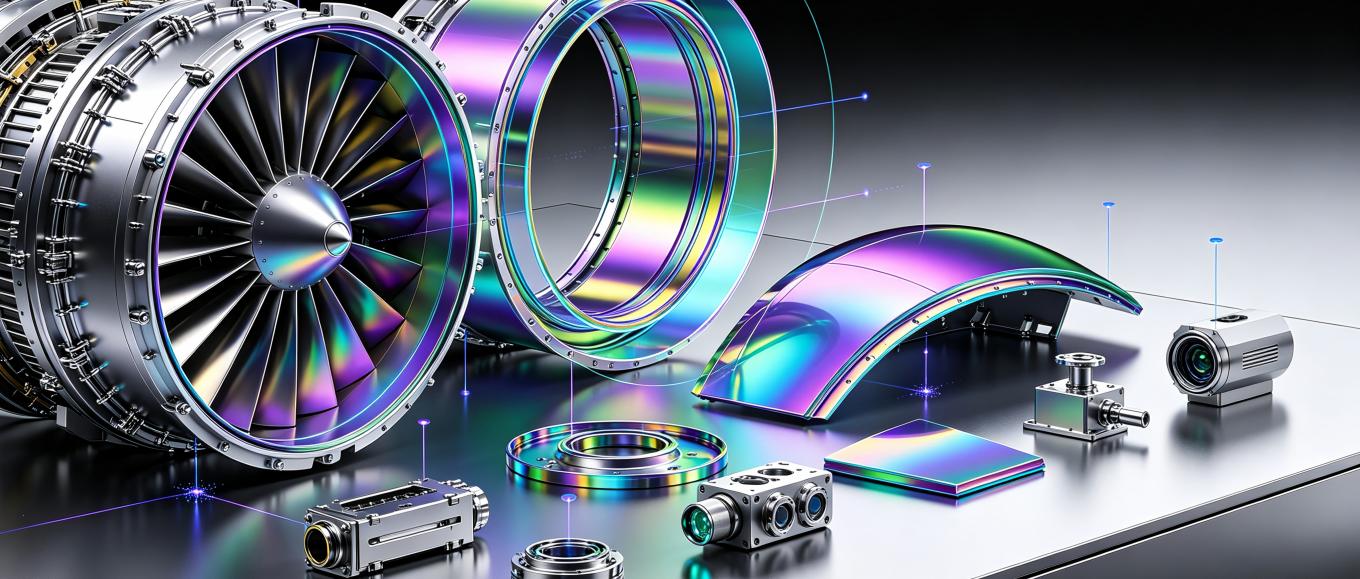
Aerospace / Aviation Coating Technology
Aerospace / Aviation Coating Technology Popularize the aerospace micro-thin [...]
To reach our anytime via email please fill out the form below with your request and a company representative will reply to you. To find your local CHEERSONIC representative to connect directly click your region in the contact drop down menu.

Contact CHEERSONIC For immediate assistance please contact us the corporate headquarters during business hours at 6:00 am – 22:00 pm.
Tel: 0571-87910406
- Mobile: +86 15869049660
- Email: Market2@cheersonic.com
Add: 11-13 Chuangye Road, Changkou, Fuyang, Hangzhou, Zhejiang, China