AEM Water Electrolysis Technology and Ultrasonic Coating
AEM Water Electrolysis Technology and Ultrasonic Coating – Cheersonic
In the global wave of clean energy transition, hydrogen energy has become a core component of the future energy system due to its zero carbon emissions and high energy density. As a key path for green hydrogen production, electrolysis of water for hydrogen production has always focused on the three major goals of “high efficiency, low cost, and long life” in its technological iteration. Anion exchange membrane water electrolysis technology is an important breakthrough in this direction – it uses anion exchange membranes with selective conduction function to construct an efficient electrolysis system, and ultrasonic spraying machines provide key support for the preparation of the core component (anion exchange membrane) of this technology. The two work together to promote the large-scale implementation of green hydrogen production.
The core of anion exchange membrane water electrolysis technology lies in “selective conduction”, and its core component, the anion exchange membrane, is like an “intelligent sieve”, which can accurately release specific anions and strictly block gas mixing. The material of this membrane is based on a polymer matrix, with embedded anion exchange groups such as quaternary ammonium salts. These groups act as “molecular channels”, allowing only the directed migration of hydroxide ions (OH ⁻) generated during the electrolysis process, while forming a physical and chemical barrier against gas molecules such as hydrogen (H ₂) and oxygen (O ₂). When the electrolysis system is powered on, water undergoes a clear electrochemical reaction on both sides of the electrodes: at the anode (oxidation end), water molecules in alkaline environments lose electrons and decompose into oxygen, water molecules, and hydroxide ions (reaction equation: 4OH ⁻ -4e ⁻=O ₂↑+2H ₂ O); At the cathode (reducing end), hydroxide ions combine with water molecules to obtain electrons, generating hydrogen gas and more hydroxide ions (reaction equation: 2H ₂ O+2e ⁻=H ₂↑+2OH ⁻). At this point, the anion exchange membrane will guide the hydroxide ions generated by the cathode to migrate towards the anode, replenishing the ions consumed by the anode while completely blocking the mutual permeation of oxygen from the anode and hydrogen from the cathode. This process not only ensures a hydrogen purity of over 99.99%, but also avoids safety risks that may arise from gas mixing, eliminating complex purification steps for subsequent hydrogen energy storage and utilization.
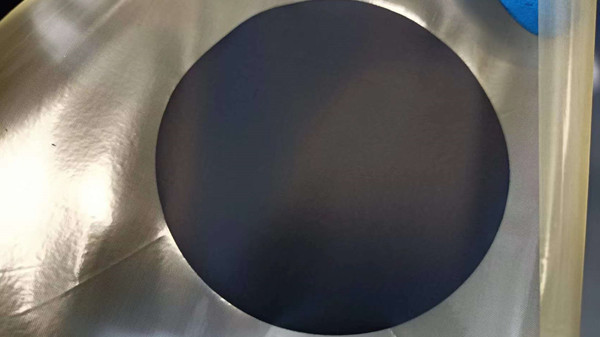
Compared to traditional electrolysis technologies such as proton exchange membrane electrolysis and alkaline electrolysis cells, the economic advantages of anion exchange membrane water electrolysis technology are particularly prominent. On the one hand, it does not rely on precious metals such as platinum and iridium as catalysts, but instead uses abundant and inexpensive non precious metals such as nickel and iron – these metals not only maintain stable catalytic activity in alkaline environments, but also significantly reduce material costs, reducing the catalyst cost of a single electrolysis device by more than 60%. On the other hand, the entire electrolysis system operates in an alkaline environment (usually KOH or NaOH solution), and the electrode and membrane materials are not easily corroded or oxidized. The service life of the equipment can be extended to over 50000 hours, far higher than the 30000 hours of traditional acidic systems, further reducing the cost of equipment replacement and maintenance, truly achieving the technical positioning of “economic and practical”.
The performance of anion exchange membranes directly determines the efficiency and lifespan of the entire electrolysis system, which requires the use of ultrasonic spraying machines to achieve high-precision membrane preparation. The core principle of ultrasonic spraying machine is to use high-frequency ultrasonic vibration (usually frequency of 20kHz-100kHz) to atomize the membrane material slurry (composed of polymer matrix, anion exchange group, solvent, etc.) into uniform droplets at the micrometer or even sub micrometer level, and then deposit the droplets evenly on the surface of the substrate through precise controlled airflow, forming a film layer with controllable thickness and high density. This spraying method has three key values for the preparation of anion exchange membranes compared to traditional scraping and rolling techniques:
Firstly, it can ensure a high degree of uniformity in the thickness of the film layer. The conductivity efficiency of anion exchange membranes is directly related to membrane thickness, and excessive thickness can increase ion migration resistance, leading to an increase in energy consumption; If it is too thin, pinholes may appear, causing gas leakage. The ultrasonic spraying machine can control the film thickness within the range of 10 μ m-50 μ m by adjusting the ultrasonic frequency, spraying speed, and nozzle distance, with a thickness deviation of no more than ± 1 μ m, ensuring efficient ion conduction and gas barrier on every inch of the film surface.
Secondly, it can enhance the dispersibility and adhesion of membrane materials. If the anion exchange groups in the membrane material slurry are unevenly dispersed with the polymer matrix, local “conduction blind spots” will be formed, which will reduce the overall performance of the membrane. The high-frequency vibration of ultrasonic spraying can further disperse the agglomerated particles in the slurry during the atomization process, allowing functional groups to be evenly distributed in the film layer; At the same time, the high-speed impact of atomized droplets can enhance the adhesion between the film layer and the substrate, prevent the film layer from falling off or cracking in alkaline electrolysis environment, and extend the service life of the film.
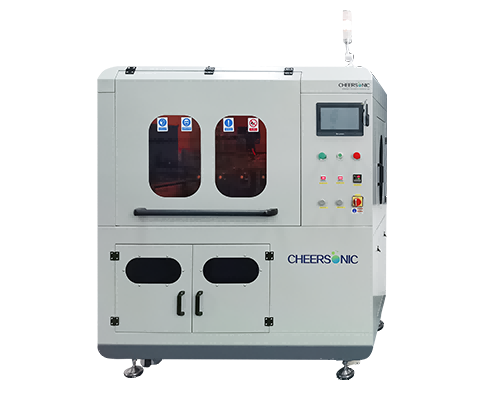
Finally, it can improve material utilization and reduce preparation costs. The material utilization rate of traditional spraying technology is usually less than 50%, and a large amount of slurry is wasted due to uneven atomization; The atomization efficiency of ultrasonic spraying can reach over 90%, and almost all slurries can be accurately deposited on the surface of the substrate, which is highly consistent with the core goal of “low cost” of anion exchange membrane water electrolysis technology, further promoting the commercialization of the entire technology route.
From the perspective of technological collaboration, anion exchange membrane water electrolysis technology solves the problem of “efficiency and cost” in green hydrogen production, while ultrasonic spraying machines provide the preparation guarantee of “high-performance core components” for this technology – the two together form a complete technical chain from core materials to system applications. With the continuous growth of demand for green hydrogen in the hydrogen energy industry, this collaborative model of “technology+equipment” will be further optimized, such as achieving multi-layer composite of membrane functions through ultrasonic spraying machines (such as spraying catalytic layers on the membrane surface to reduce the contact resistance between electrodes and membranes), or preparing thinner and more durable anion exchange membranes through parameter optimization, continuously promoting the energy consumption of hydrogen production through electrolysis of water from the current 4.5 kWh/Nm ³ to below 4.0 kWh/Nm ³, providing key support for the achievement of global carbon neutrality goals.
About Cheersonic
Cheersonic is the leading developer and manufacturer of ultrasonic coating systems for applying precise, thin film coatings to protect, strengthen or smooth surfaces on parts and components for the microelectronics/electronics, alternative energy, medical and industrial markets, including specialized glass applications in construction and automotive.
Our coating solutions are environmentally-friendly, efficient and highly reliable, and enable dramatic reductions in overspray, savings in raw material, water and energy usage and provide improved process repeatability, transfer efficiency, high uniformity and reduced emissions.
Chinese Website: Cheersonic Provides Professional Coating Solutions
