
Advantages of Ultrasonic Spraying for Microlens Coating
In high-end manufacturing sectors including micro-optics, optoelectronics, semiconductor imaging and sensing, the uniformity, thickness precision, surface quality and structural consistency of microlens coatings directly determine the focusing efficiency, transmittance, imaging resolution and long-term reliability of optical components. Conventional coating techniques such as spin coating, dip coating and air-pressure spraying are plagued by inherent bottlenecks in droplet regulation, material compatibility, substrate adaptability and micro-forming precision that are difficult to overcome. Featuring atomization via high-frequency vibration, low-impact deposition, precise flow control and flexible process adaptability, ultrasonic spraying has emerged as the preferred solution for microlens coating fabrication. Its core strengths manifest in ultra-precise spraying, versatile material compatibility, multiple configurable spraying modes, excellent equipment adaptability and superior microlens forming accuracy, fully catering to the industrial mass production requirements of premium micro-optical components.
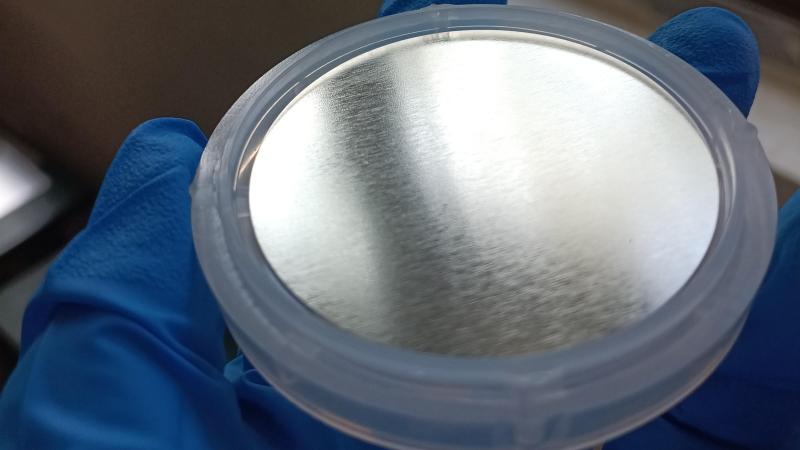
1. High-Precision Spraying: Picoliter-Level Volumetric Control for Exceptional Coating Uniformity
The most prominent merit of ultrasonic spraying lies in its outstanding spraying accuracy and volumetric controllability. This technology employs high-frequency ultrasonic oscillation to atomize liquid optical materials into highly uniform micro-droplets with controllable volumes down to the picoliter scale and a droplet volume coefficient of variation (CV) below 1%, ensuring superior consistency in droplet size, velocity and deposition volume from the source. Unlike conventional pneumatic spraying that tears liquid into droplets with high-pressure airflow, resulting in broad particle size distribution and severe splashing, ultrasonic atomization is a mild physical process that generates droplets with low initial kinetic energy for gentle deposition without causing impact damage to microlens substrates or preformed microstructures.
During microlens coating processes, high-precision ultrasonic spraying enables accurate film thickness regulation ranging from nanometers to sub-micrometers with minimal thickness deviation, eliminating common defects including uneven coating thickness, edge thinning, central accumulation and pinholes. For microlens arrays that demand stringent consistency, picoliter-scale droplet control delivers identical coating thickness, surface curvature and optical parameters across every single lens unit within an array, drastically boosting product yield and the stability of optical performance. In addition, accurate volumetric dosing drastically cuts wastage of costly optical raw materials and delivers superior material utilization versus traditional spraying methods, translating into substantial cost benefits for mass production.
2. Broad Material Compatibility: Wide Viscosity Range to Accommodate Diverse Optical Formulations
Microlens coatings commonly adopt a diverse portfolio of feedstocks including optical adhesives, UV-curable polymers, photosensitive resins, nano-silica dispersions, anti-reflection coatings and hydrophobic & oleophobic functional fluids, which vary drastically in viscosity, solid content and surface tension and impose stringent specifications on coating processes. Ultrasonic spraying boasts exceptional material adaptability, stably processing liquid materials with viscosities spanning 1 to 30 centipoise (cps) under ambient temperature and atmospheric pressure, and being compatible with over 1,000 types of sprayable liquids covering nearly all mainstream microlens coating formulations.
Ambient-temperature spraying prevents thermal degradation, discoloration and performance deterioration of heat-sensitive optical materials, making it particularly ideal for UV-curable, photosensitive polymers and resins with low glass transition temperatures. Ultrasonic spray nozzles consistently atomize and continuously feed both low-viscosity diluted optical glues and medium-to-high-viscosity high-solid-content functional coatings without nozzle clogging, intermittent flow or particle agglomeration. Its wide viscosity tolerance and multi-material compatibility allow quick switching between different coating recipes on a single machine to support the full production workflow from lab-scale trials and pilot optimization to full-volume mass manufacturing, enhancing production line flexibility and speeding up new product iteration.
3. Multiple Spraying Modes: Flexible Forming for Complex Microlens Geometries
Microlenses and microlens arrays feature diversified configurations, ranging from discrete spherical single lenses, linear arrays and planar matrix layouts to large-area uniform coatings, which conventional coating equipment can hardly fabricate with high precision on one standalone unit. Integrated with point-to-point spraying, fine-line spraying and large-area coating functions, ultrasonic spraying systems allow seamless mode switching per customized microlens geometry and coated area requirements, supporting full-range forming from micrometer-scale spot coating to centimeter-level full-surface deposition.
The point-to-point mode is tailored for precision coating on individual discrete microlenses, delivering high positioning accuracy, crisp edges and zero adhesive overflow. The fine-line mode enables continuous fabrication of linear microlens arrays, grating coupling structures and optical waveguide layouts with uniform line width and well-defined borders. The large-area coating mode is applied to deposit uniform base layers, anti-reflection films and protective coatings on panel-level and wafer-scale microlens substrates, yielding smooth coatings free of streaks and orange-peel defects. When paired with high-precision motion platforms, multi-mode ultrasonic spraying achieves non-contact, damage-free and consistent coating on complex curved surfaces, patterned arrays and irregular regions that pose major processing challenges for traditional coating technologies.
4. Excellent Substrate Compatibility: Full Coverage of Rigid & Flexible Substrates for Broad Application Scenarios
Modern micro-optics are trending toward ultra-thinness, flexibility and high integration, expanding applicable substrates from conventional rigid boards to various flexible thin films and raising higher standards for coating equipment’s substrate adaptability. Ultrasonic spraying achieves accurate coating on both rigid and flexible substrates without frequent fixture replacement or extensive parameter recalibration.
Typical rigid substrates include glass slides, silicon wafers, quartz sheets, metal foils and glass wafers for microlenses used in conventional imaging, sensing and illumination applications. Flexible substrates cover PI, PET, TPU and specialty flexible optical films to serve emerging products such as foldable optical paths, flexible sensors and wearable optoelectronic devices. Thanks to low-impact droplet deposition, coated flexible films remain free of stretching, deformation, wrinkling or rupture while preserving uniform coating and intact substrate flatness. Such versatile substrate compatibility extends ultrasonic spraying’s reach across semiconductor optoelectronics, consumer electronics, automotive optics, biomedical sensing and multiple other industries, improving equipment versatility and return on investment.
5. Superior Microlens Fabrication Precision: Controllable Dimension from Microns to Millimeters for High-End Optical Components
Ultrasonic spraying enables high-precision microstructure formation in microlens coating, producing finished lenses ranging in diameter from micrometers to millimeters with superior surface finish and uniform curvature free of manufacturing flaws, fully satisfying production standards for high-end products including micro-optical elements, microlens arrays, fiber couplers, LiDAR lenses and imaging sensors.
Benefiting from picoliter droplet control, homogeneous deposition and low-defect forming, ultrasonically coated microlenses feature low optical transmission loss, stable focusing capability and minimal imaging distortion, effectively improving the resolution and signal-to-noise ratio of assembled optical systems. Compared with spin coating and other conventional processes, ultrasonic spraying is better suited for customized fabrication of uneven-surface, array-structured and profiled microlenses, enabling precise tuning of lens height, radius of curvature, fill factor and focal length to match custom optical design specifications. As a critical manufacturing step that defines core product competitiveness in advanced optoelectronics and high-end precision manufacturing, high-precision microlens coating powered by ultrasonic spraying serves as a foundational technology driving micro-optic development toward higher precision, productivity and cost efficiency.
Conclusion
Ultrasonic spraying stands out in microlens coating with five core competitive edges: exceptional precision, broad material adaptability, flexible process configuration, universal substrate compatibility and superior forming accuracy, effectively resolving longstanding drawbacks of traditional coating techniques and covering the complete industrial chain from R&D prototyping to large-volume production. Driven by booming growth across optoelectronics, semiconductor imaging, automotive LiDAR, AR/VR and biomedical sensing sectors, ultrasonic spraying will continuously unlock its technical potential and fuel the upgrade of microlens manufacturing toward greater precision, efficiency and intelligence.
About Cheersonic
Cheersonic is the leading developer and manufacturer of ultrasonic coating systems for applying precise, thin film coatings to protect, strengthen or smooth surfaces on parts and components for the microelectronics/electronics, alternative energy, medical and industrial markets, including specialized glass applications in construction and automotive.
Our coating solutions are environmentally-friendly, efficient and highly reliable, and enable dramatic reductions in overspray, savings in raw material, water and energy usage and provide improved process repeatability, transfer efficiency, high uniformity and reduced emissions.
Chinese Website: Cheersonic Provides Professional Coating Solutions