Acrylic Surface Spraying
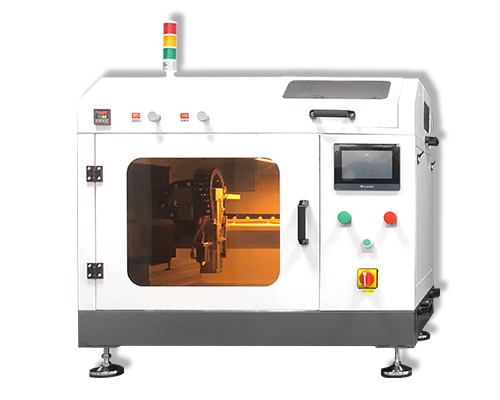
The ultrasonic spraying machine is fully suitable for spraying wear-resistant coatings on acrylic surfaces. Its core advantage is the ability to form a uniform, thin, and dense coating, effectively solving the problems of uneven coating and high waste that may occur in traditional spraying.
The key to this application lies in solving the problems of low surface tension, coating adhesion, and uniformity of acrylic, and the atomization method of ultrasonic spraying can precisely address these challenges.
Core advantage: Why choose ultrasonic spraying machine?
Compared to methods such as air spraying and high-pressure airless spraying, ultrasonic spraying has significant advantages in this scenario
1. Excellent atomization effect: Using ultrasonic vibration (usually 20-180kHz) to atomize the coating into tiny droplets of 1-5 microns, the droplet size is uniform, and a smooth wet film can be formed on the smooth surface of acrylic. After drying and curing, the coating thickness consistency is high (can be controlled within a few microns to tens of microns).
2. High material utilization rate: The atomization process does not rely on high-speed airflow, and the amount of coating rebound and overspray is extremely small. The material utilization rate can reach over 85%, far higher than the 30-50% of traditional air spraying, especially suitable for high cost wear-resistant functional coatings.
3. Good coating density: Small droplets can accumulate more tightly, reducing the pores inside the coating, thereby directly improving the physical properties of the wear-resistant coating, such as hardness and scratch resistance.
4. Low risk of damage: The airflow of ultrasonic spraying is gentle, which will not cause impact damage to relatively brittle substrates such as acrylic, and also avoids coating sagging caused by large airflow.
Key control factors: 4 core points that determine the spraying effect
To achieve the desired wear-resistant coating effect, the following four steps must be strictly controlled:
1. Substrate pretreatment: the foundation for improving adhesion
Acrylic surface is smooth, and direct spraying can easily cause coating peeling. Pre treatment is a key step.
– Cleaning: First, use isopropanol or specialized cleaning agents to remove surface oil stains, dust, and other impurities to avoid affecting coating adhesion.
– Activation: By plasma treatment or corona treatment, the polar groups on the surface of acrylic are increased to enhance surface tension (usually above 40 dynes), thereby strengthening adhesion with wear-resistant coatings.
2. Coating material selection: matching acrylic and ultrasonic characteristics
The wear-resistant coating material needs to meet both the conditions of “high wear resistance” and “compatibility with acrylic”. The common choices are as follows:
UV cured wear-resistant resin: fast curing speed, high hardness (up to 3-5H), good transparency, strong compatibility with acrylic
Organic silicon modified wear-resistant coating: high temperature resistance, good weather resistance, low friction coefficient, and better flexibility than UV resin
Nano ceramic composite coating: The best wear resistance (hardness can reach 6H or above), but the cost is high, and viscosity control is required during construction
3. Process parameter setting: precise control of coating quality
– Atomization pressure: usually set at 0.1-0.3 MPa. If the pressure is too high, it can easily cause secondary fragmentation of the droplets, while if it is too low, the atomization will be insufficient.
– Coating feed rate: Adjust according to the target thickness of the coating (such as 5-20 μ m), generally 0.5-5mL/min. If the speed is too fast, it is prone to sagging, and if it is too slow, the coating will be too thin.
– Spray distance: Control within 10-30cm. If the distance is too close, it may cause local coating accumulation, while if it is too far away, droplets may float and affect uniformity.
– Nozzle movement speed: matches the feed rate, usually 50-200mm/s, to ensure consistent wet film thickness.
4. Curing process: Ensure stable coating performance
– UV curing: If UV coating is used, a suitable power UV lamp (such as 800-1200mJ/cm ²) should be selected according to the coating thickness, and the curing time is usually 3-10 seconds to avoid coating softening due to incomplete curing.
– Heat curing: If thermosetting coatings are used, the baking temperature (usually 60-80 ℃ to avoid high temperature deformation of acrylic) and time (30-60 minutes) should be controlled to ensure thorough curing.
Typical process steps (taking UV wear-resistant coating as an example)
1. Substrate pretreatment: Acrylic parts are sequentially cleaned with alcohol, dried with compressed air, and treated with plasma (treatment time 10-30 seconds).
2. Coating preparation: Mix the UV wear-resistant coating evenly. If the viscosity is high (over 200cP), a special diluent can be added to adjust it to 50-150cP to adapt to ultrasonic atomization.
3. Parameter debugging: Set the atomization pressure to 0.2MPa, feed rate to 2mL/min, spraying distance to 20cm, and nozzle movement speed to 100mm/s. First, test the coating thickness and uniformity on the test plate.
4. Formal spraying: Adopting a reciprocating spraying path to ensure full coverage without omission, usually spraying 1-2 times can achieve the target thickness.
5. UV curing: Immediately after spraying, enter the UV curing oven and irradiate with 1000mJ/cm ² energy for 5 seconds to complete the curing process.
6. Post treatment: Check for pinholes and scratches on the surface of the coating, and perform slight polishing if necessary.
About Cheersonic
Cheersonic is the leading developer and manufacturer of ultrasonic coating systems for applying precise, thin film coatings to protect, strengthen or smooth surfaces on parts and components for the microelectronics/electronics, alternative energy, medical and industrial markets, including specialized glass applications in construction and automotive.
Our coating solutions are environmentally-friendly, efficient and highly reliable, and enable dramatic reductions in overspray, savings in raw material, water and energy usage and provide improved process repeatability, transfer efficiency, high uniformity and reduced emissions.
Chinese Website: Cheersonic Provides Professional Coating Solutions