
Types of Drug Coatings on PTCA Dilatation Balloons
Types of Drug Coatings on PTCA Dilatation Balloons – Cheersonic
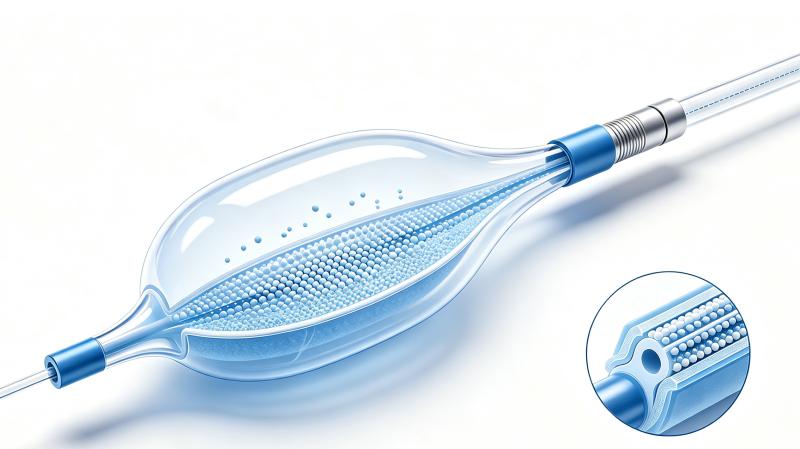
PTCA dilatation balloons are core medical devices for coronary intervention, primarily used for dilating coronary artery stenosis and remodeling blood vessels. They effectively address clinical problems such as coronary artery blockage and insufficient myocardial blood supply. With their advantages of being minimally invasive, highly efficient, and having rapid recovery, they are widely used in the treatment of coronary heart disease and restenosis. The drug coating is the core functional layer of the PTCA dilatation balloon, directly determining the device’s clinical efficacy and safety. This article details the mainstream drug coating types for PTCA dilatation balloons, focusing on Cheersonic ultrasonic spraying technology, and deeply analyzes its core advantages in balloon drug coating preparation, providing technical reference for the refined and large-scale production of high-end medical balloon devices.
I. Mainstream Drug Coating Types for PTCA Dilatation Balloons
The core principle of PTCA drug-coated balloons is to expand the balloon to conform to the vessel wall, precisely releasing the surface drug into the diseased vascular tissue, inhibiting the proliferation of vascular smooth muscle cells, and fundamentally reducing the probability of postoperative restenosis. Currently, clinically mass-produced and applied coatings are mainly divided into three categories, adapted to different vascular lesion scenarios and treatment needs.
Secondly, there are rapamycin (sirolimus) coatings, belonging to a novel immunosuppressive drug coating class. Compared to paclitaxel, it has lower drug toxicity, better biocompatibility, and a longer drug release cycle, enabling long-term regulation of the vascular repair process and reducing vascular inflammation. It is often used in interventional treatments for complex vascular lesions, elderly patients, and patients with sensitive constitutions.
Finally, there are composite functional coatings, composed of anti-proliferative drugs combined with medical-grade hydrophilic excipients and biodegradable polymer materials. This type of coating retains the core therapeutic efficacy while improving the lubricity of the balloon surface, reducing vascular friction damage during intraoperative delivery and dilation. It also allows for precise control of the drug release rate, avoiding adverse reactions caused by sudden drug release. This is currently the mainstream research direction for high-end PTCA balloons.
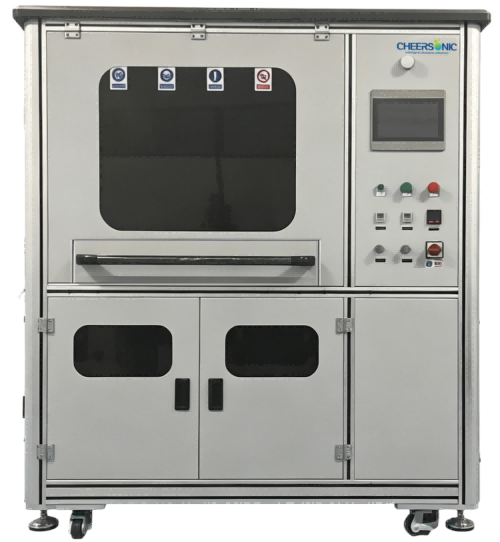
II. Core Advantages of Cheersonic Ultrasonic Spraying for Drug Coating Preparation
Traditional balloon coating preparation often employs dip coating and high-pressure spraying processes, which suffer from numerous drawbacks, including uneven coating thickness, significant drug waste, easy damage to the balloon substrate, and unstable drug efficacy, making it difficult to meet the refined production standards of high-end medical devices. Cheersonic ultrasonic medical device-specific spraying technology is specifically adapted for PTCA expansion balloon coating production, breaking through traditional process bottlenecks and possessing multiple core advantages.
First, extremely high coating uniformity and stable, controllable drug efficacy. Ultrasonic spraying atomizes the drug solution into submicron-sized uniform droplets through high-frequency vibration, eliminating droplet splashing and agglomeration issues. It can precisely cover the surface and fine wrinkles of the PTCA balloon, achieving precise control of nanometer and submicron-level coating thickness. The coating thickness and drug load are highly consistent throughout the process, completely solving the problems of excessively thick or incomplete drug coating in traditional processes, ensuring the uniformity of drug efficacy for each balloon and improving the reproducibility of clinical treatment.
Second, significantly improved drug utilization rate and reduced production costs. Paclitaxel, rapamycin, and other expensive medical drugs have a low material utilization rate (only 30%-40%) compared to traditional high-pressure spraying, resulting in significant raw material waste. Cheersonic ultrasonic spraying utilizes directional deposition technology, ensuring precise droplet settling and eliminating dispersion waste. This achieves a drug material utilization rate of over 90%, significantly reducing the loss of valuable drugs and effectively lowering the cost of large-scale mass production, thus meeting the needs of mass production.
Third, the process is gentle and non-destructive, protecting the performance of the device substrate. The entire spraying process involves no high-pressure airflow impact or mechanical extrusion. The low-temperature atomization process does not damage flexible balloon substrates such as nylon and PEBAX, perfectly preserving the elasticity, toughness, and mechanical properties of the balloon. This avoids problems such as substrate deformation, swelling, and breakage, ensuring the stability of PTCA balloon expansion and rebound during surgery and eliminating the risk of device malfunction.
Fourth, it boasts high cleanliness, meets medical standards, and enables precise mass production. The equipment adopts a closed spraying structure, effectively isolating external impurities and meeting the cleanliness requirements for medical device production. Simultaneously equipped with a digital intelligent control system, it can preset spraying parameters, precisely define coating areas, and controllable start/stop with traceable parameters. This adapts to the refined and standardized mass production requirements of high-end medical balloons, helping companies create high-quality drug-coated PTCA balloon products.
The quality of the drug coating is the core key to the clinical value of PTCA expansion balloons. With the continuous upgrading of interventional medical technology, the market’s requirements for the uniformity, safety, and stability of balloon coatings are constantly increasing. Cheersonic ultrasonic spraying technology, with its core advantages of precise control, high efficiency and energy saving, non-destructive substrate treatment, and clean compliance, perfectly adapts to the preparation needs of various PTCA balloon drug coatings, effectively solving the shortcomings of traditional processes and providing strong technical equipment support for the high-end and large-scale production of medical balloon devices.
About Cheersonic
Cheersonic is the leading developer and manufacturer of ultrasonic coating systems for applying precise, thin film coatings to protect, strengthen or smooth surfaces on parts and components for the microelectronics/electronics, alternative energy, medical and industrial markets, including specialized glass applications in construction and automotive.
Our coating solutions are environmentally-friendly, efficient and highly reliable, and enable dramatic reductions in overspray, savings in raw material, water and energy usage and provide improved process repeatability, transfer efficiency, high uniformity and reduced emissions.
If you have any technical questions, customization demands, or procurement inquiries about ultrasonic atomization nozzles, feel free to contact our professional sales and technical team for detailed parameters, customized solutions, and industry application support.
Email: market2@cheersonic.com
