
Cathodic Protection of Noble Metal Oxide Anodes
Cathodic Protection of Noble Metal Oxide Anodes – Cheersonic
Metal corrosion is a common problem in geotechnical engineering, marine engineering, municipal pipeline networks, and water conservancy facilities. Long-term corrosion can lead to pipe perforation, equipment failure, and a sharp reduction in structural lifespan, resulting in significant safety hazards and economic losses. Cathodic protection technology is currently the most mature and efficient electrochemical protection method for controlling metal corrosion, and it is widely used in corrosion protection projects for various metal structures such as buried pipelines, storage tanks, dock steel structures, and underwater equipment. As the core component of the cathodic protection system, the precious metal oxide anode directly determines the stability, service life, and operating energy consumption of the corrosion protection system, making it a key material in modern long-term cathodic protection engineering.
The core principle of cathodic protection is to construct a stable electrochemical circuit by applying an external current. Using the anode as the conductive positive electrode, a continuous current is output, keeping the protected metal substrate in a cathodic polarized state. This inhibits the metal from losing electrons and undergoing oxidation corrosion, thus eliminating corrosion problems such as rust, pitting, and perforation at their source. Compared to traditional graphite anodes and high-silicon cast iron anodes, precious metal oxide anodes are suitable for a wider range of applications and offer more stable performance. They are perfectly adaptable to most complex working environments, including soil, freshwater, saline water, and seawater, and can meet the long-term cathodic protection needs of different scenarios such as land, underwater, and buried applications. Their versatility and practicality far exceed those of traditional anode materials.
To address the differences in corrosion characteristics and electrochemical reactions across various media environments, noble metal oxide anodes are divided into two main coating systems, precisely adaptable to different operating conditions and serving as a core basis for engineering selection. Among them, the iridium-tantalum system anode is the preferred material for freshwater and soil environments. These environments are dominated by oxygen evolution reactions, with extremely low chloride ion content, and mild corrosive media requiring long-term stable oxidation resistance. The iridium-tantalum coating possesses excellent oxygen evolution catalytic activity and a low oxygen evolution overpotential, enabling stable operation in soil and freshwater conditions. It effectively inhibits anode substrate passivation, continuously outputs uniform current, and is suitable for cathodic protection scenarios such as buried pipelines, freshwater storage tanks, and inland water conservancy steel structures.
In high-chlorine environments such as saline water and seawater, the operating conditions are even more demanding. The large amounts of chloride ions in the water possess extremely high permeability and corrosiveness, making ordinary anodes prone to coating damage and substrate corrosion failure. In these situations, the ruthenium-iridium system anode becomes the optimal choice. This coating system exhibits excellent chlorine evolution catalytic performance and outstanding resistance to chloride ion corrosion, enabling it to withstand continuous erosion from high-salt media. In salt spray and seawater immersion scenarios such as marine aquaculture equipment, offshore platforms, cross-sea steel structures, and coastal pipelines, it maintains stable electrochemical performance, ensuring the continuous and effective operation of the cathodic protection system. The precise matching of the two coating systems to different media conditions is the core reason for the extremely high adaptability of precious metal oxide anodes.
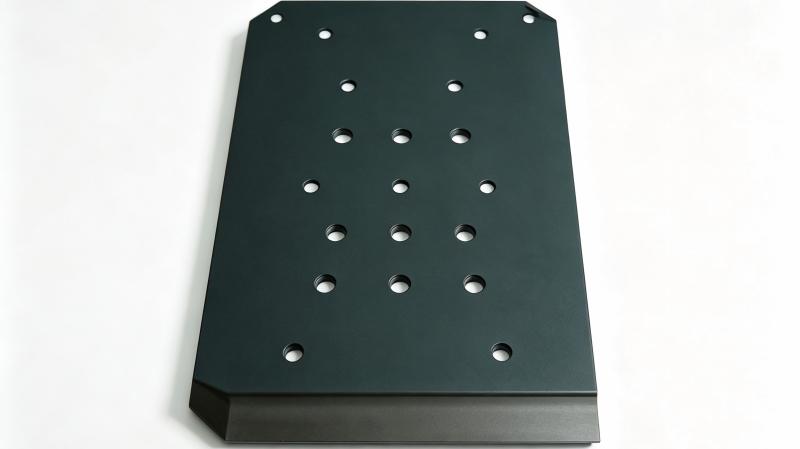
In addition to their precise environmental adaptability, precious metal oxide anodes possess outstanding comprehensive performance, completely overcoming many shortcomings of traditional anodes. Structurally, these anodes are lightweight, facilitating construction, handling, and installation without the need for large hoisting equipment, significantly reducing construction difficulty and costs. Simultaneously, they exhibit excellent mechanical strength, resisting deformation and breakage, and can withstand complex conditions such as underground compaction, water flow impact, and environmental temperature variations. Their strong structural stability makes them suitable for various outdoor and field-based long-term corrosion protection projects.
In terms of electrochemical performance, noble metal oxide anodes exhibit excellent conductivity and extremely high current efficiency. After energization, the current distribution is uniform, resulting in high energy utilization. This allows for rapid and stable polarization of the metal cathode, eliminating problems such as insufficient localized protection and uneven corrosion prevention. Compared to traditional anodes, they consume less energy for the same protective effect, leading to long-term savings in system operating costs and significantly reducing the later-stage operation and maintenance costs of cathodic protection projects. Furthermore, the electrode reaction is stable, with no excess side reactions, preventing pollution of soil and water environments and meeting the requirements of green corrosion prevention projects.
Weather resistance, corrosion resistance, and ultra-long service life are among the core advantages of precious metal oxide anodes. The precious metal oxide coating on the surface of these anodes is chemically extremely stable, possessing exceptional oxidation and corrosion resistance. Whether exposed to acidic or alkaline media in soil, long-term immersion in fresh water, or the strong corrosive effects of seawater and saline water, there will be no issues such as coating peeling, substrate corrosion, or performance degradation. Traditional anodes generally suffer from rapid wear and tear and require frequent replacement, while precious metal oxide anodes eliminate the need for frequent maintenance and repairs, significantly extending their service life. This fundamentally reduces the frequency of equipment downtime, disassembly, and maintenance, greatly enhancing the long-term stability of cathodic protection projects.
In summary, precious metal oxide anodes, with their wide adaptability to various operating conditions, superior structural performance, high electrochemical efficiency, long corrosion resistance and lifespan, and energy saving and consumption reduction, have completely replaced traditional anode materials and become the mainstream choice for modern cathodic protection engineering. By distinguishing between the two major coating systems, iridium-tantalum and ruthenium-iridium, and precisely matching them to different environments, the anode performance can be maximized to achieve targeted anti-corrosion protection, perfectly adapting to the anti-corrosion needs of all scenarios, including terrestrial soil, inland freshwater, coastal saline water, and deep-sea water.
With the continuous development of infrastructure projects, marine engineering, and oil and gas pipeline projects, the demand for long-term corrosion protection and low-consumption operation and maintenance continues to increase, and the application scenarios of high-performance precious metal oxide anodes will continue to expand. Relying on precise working condition adaptability and excellent comprehensive performance, this type of anode continuously provides stable, long-term, and energy-saving cathodic protection for various metal structures, helping the industrial corrosion protection field to reduce costs, increase efficiency, and achieve green and long-term development.
About Cheersonic
Cheersonic is the leading developer and manufacturer of ultrasonic coating systems for applying precise, thin film coatings to protect, strengthen or smooth surfaces on parts and components for the microelectronics/electronics, alternative energy, medical and industrial markets, including specialized glass applications in construction and automotive.
Our coating solutions are environmentally-friendly, efficient and highly reliable, and enable dramatic reductions in overspray, savings in raw material, water and energy usage and provide improved process repeatability, transfer efficiency, high uniformity and reduced emissions.
If you have any technical questions, customization demands, or procurement inquiries about ultrasonic atomization nozzles, feel free to contact our professional sales and technical team for detailed parameters, customized solutions, and industry application support.
Email: market2@cheersonic.com