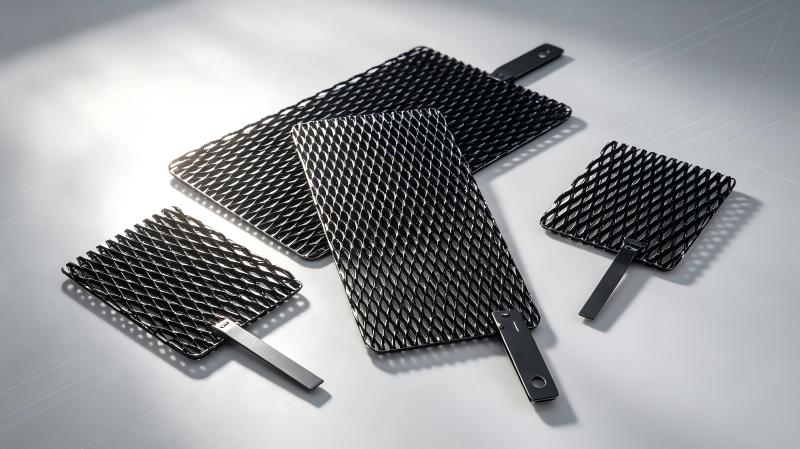
Growth of Carbon Nanotube Films on Foam Nickel
The development of high-performance electrode materials has always been a research hotspot in the fields of new energy storage, environmental detection, and field emission devices. Carbon nanotubes (CNTs) are an ideal choice for electrode materials due to their excellent conductivity, high specific surface area, and stable chemical properties. However, traditional carbon nanotube electrode preparation often relies on complex equipment (such as chemical vapor deposition systems) and requires additional binders or catalysts, which can lead to increased electrode contact resistance and coverage of active sites, limiting their performance. Therefore, exploring simple and efficient methods for preparing carbon nanotube electrodes is of great significance for promoting the implementation of related technologies in the field.
In this study, multi-stage carbon nanotubes were directly grown on foam nickel substrate using organic solution as carbon source by ultrasonic spraying technology, and multi-functional high-performance electrodes were successfully constructed. Ultrasonic spraying technology can realize the uniform coating of organic solution on the surface of foam nickel by virtue of the tiny droplets generated by high-frequency vibration. It does not need high-temperature and high-pressure environment, and is easy to operate with low cost. In terms of organic solution selection, various common organic reagents such as ethanol, methanol, acetone, etc. were compared and studied. It was found that under the condition of no need to introduce deoxygenation gas, ethanol was the best carbon source for the growth of carbon nanotubes. This is because the carbon hydrogen bond energy in ethanol molecules is moderate, and it is prone to mild cracking during ultrasonic spraying, releasing highly active carbon species; At the same time, the polarity of ethanol has a good interaction with the hydroxyl groups on the surface of foam nickel, which can promote the orderly deposition of carbon species on the surface of the substrate, reduce the generation of amorphous carbon and other impurities, and finally form carbon nanotubes with uniform pipe diameter and complete pipe wall structure.

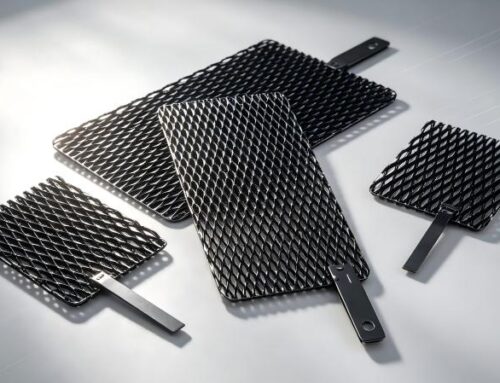
Foam nickel plays a triple key role of “substrate catalyst conductive framework” in the entire electrode system. From the perspective of structure, foam nickel has a three-dimensional porous network structure, with a porosity of more than 90%, which can not only provide sufficient attachment sites for the growth of carbon nanotubes, but also build an open channel structure, which is conducive to electrolyte penetration or gas transmission; In terms of catalytic performance, the nickel element in foam nickel can be used as a catalyst for the growth of carbon nanotubes, without adding additional metal catalyst particles. The nickel atoms on its surface can absorb carbon species generated by ethanol cracking, guide the growth of carbon nanotubes along a specific direction, and form a multi-level branch structure – this multi-level structure is composed of the main carbon nanotubes and branch carbon nanotubes connected with each other, which not only retains the high specific surface area characteristics of carbon nanotubes, but also reduces the conductive dead angle inside the electrode through the overlapping between branches. In addition, there is a strong interface binding between foam nickel and carbon nanotubes. Nickel atoms and carbon atoms of carbon nanotubes can form stable chemical bonds, significantly reducing the contact resistance between the two (the interface contact resistance is lower than 50 m Ω after testing). At the same time, efficient electric conduction and heat conduction are realized, avoiding the problem of resistance increase of traditional electrodes due to the introduction of adhesives.
The foam nickel based multi-stage carbon nanotube electrode showed outstanding performance in several key performance tests. In terms of field emission performance, the tip effect and three-dimensional network structure of multi-level carbon nanotubes work together to facilitate the escape of electrons from the carbon nanotube tip: test results show that its turn-on field (electric field strength at a current density of 10 μ A/cm ²) is only 1.4 V/μ m, and the threshold field (electric field strength at a current density of 1 mA/cm ²) is 2.9 V/μ m, far superior to traditional single-walled carbon nanotube electrodes (usually turn-on field>2.0 V/μ m, threshold field>3.5 V/μ m), which can meet the low-voltage driving requirements of devices such as field emission displays and vacuum electron sources. In the field of heavy metal ion detection, the multi-level structure of the electrode provides a super large specific surface area (BET test result is about 280 m ²/g), which can efficiently adsorb Pb ²+in aqueous solutions; At the same time, the high conductivity of carbon nanotubes accelerates electron transfer on the electrode surface, greatly improving the sensitivity of detection signals. Experimental data shows that the electrode has a linear detection range of 100-400 ppb for Pb ²+, a correlation coefficient (R ²) greater than 0.998, and a detection limit as low as 0.955 μ g/L, which is superior to most carbon based heavy metal sensors and can meet the trace detection standards for Pb ²+in drinking water.
In conclusion, the method of growing multi-stage carbon nanotubes on foam nickel by ultrasonic spraying organic solution has the advantages of simple preparation, low cost and excellent performance. This electrode not only shows great application potential in the field of field emission electron source and heavy metal detection, but also can be extended to supercapacitors, fuel cells and other fields – for example, its multi-level structure and high conductivity can improve the energy storage capacity and charge discharge rate of supercapacitors, while the synergistic effect of foam nickel and carbon nanotubes can enhance the stability of fuel cell catalysts. This new electrode preparation strategy provides new ideas for the large-scale production and multifunctional application of high-performance carbon based electrodes.
About Cheersonic
Cheersonic is the leading developer and manufacturer of ultrasonic coating systems for applying precise, thin film coatings to protect, strengthen or smooth surfaces on parts and components for the microelectronics/electronics, alternative energy, medical and industrial markets, including specialized glass applications in construction and automotive.
Our coating solutions are environmentally-friendly, efficient and highly reliable, and enable dramatic reductions in overspray, savings in raw material, water and energy usage and provide improved process repeatability, transfer efficiency, high uniformity and reduced emissions.
If you have any technical questions, customization demands, or procurement inquiries about ultrasonic atomization nozzles, feel free to contact our professional sales and technical team for detailed parameters, customized solutions, and industry application support.
Email: market2@cheersonic.com