Summary of Pt-based Catalyst Research in Alkaline Hydrogen Oxide Reaction
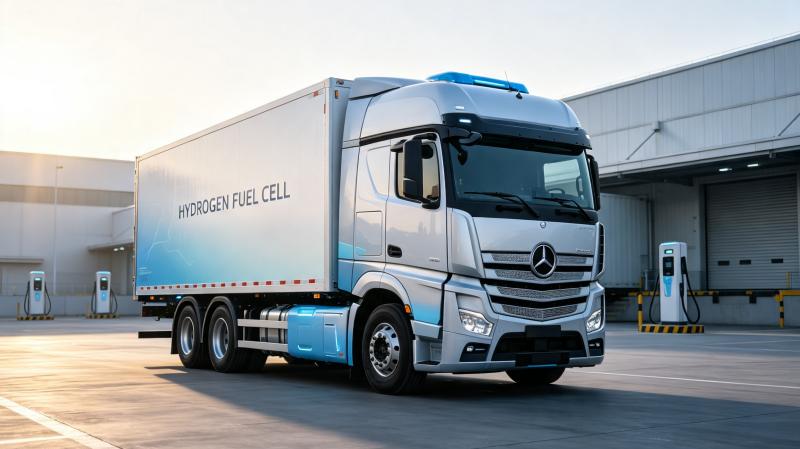
This article focuses on the research of Pt-based catalysts in the alkaline hydrogen oxidation reaction (HOR), systematically reviewing the theoretical mechanisms, material design, and practical applications to provide a reference for the industrialization of hydrogen fuel cells.
From a research background perspective, hydrogen fuel cells are a key technology for carbon neutrality. Anion exchange membrane fuel cells (AEMFCs) have advantages due to their ability to use non-precious metal cathodes and low material costs, but their commercialization is limited by the slow kinetics of alkaline HOR at the anode. Acidic HOR pathways are simple, and Pt-based catalysts have high activity, while alkaline HOR involves multiple steps such as water molecule dissociation and OH⁻ transport, resulting in kinetics 2-3 orders of magnitude lower than acidic pathways. Even with highly active Pt-based catalysts, the exchange current density remains low under alkaline conditions, requiring a nearly 10-fold increase in Pt loading, significantly increasing costs. Therefore, understanding the alkaline HOR mechanism and designing highly active, highly stable, and low-Pt-loading anode catalysts have become core issues for the industrialization of hydrogen fuel cells.

In terms of the fundamental principles of HOR (Hydrogen-Oriented Reaction), alkaline HOR follows the Tafel–Volmer or Heyrovsky–Volmer pathway, with OH⁻ participating in the reaction as free ions or adsorbed OHad. The hydrogen binding energy theory (HBE) and bifunctional theory are the core activity descriptors. HBE determines the difficulty of Had desorption, and the bifunctional theory requires the catalyst to simultaneously possess optimized Had and OHad adsorption sites. pH dependence stems from three points: HBE increases with increasing pH, making Had desorption more difficult; at alkaline conditions, interfacial water molecules exhibit an “H-down” configuration, forming a solvation structure that inhibits Had desorption; and the mode of OH⁻ participation changes with pH, increasing reaction complexity.
Pt-based catalyst design has four main optimization dimensions. Lattice structure modulation optimizes HBE by adjusting the d-band center of Pt through strain effects. For example, epitaxial growth of pseudocrystalline Pt layers on IrPd cores enhances the interaction with H₂O and improves stability. In morphology engineering, the shell thickness of the core-shell structure affects the electronic structure and strain effects. For instance, Ru@Pt catalysts with two Pt shells exhibit optimal HBE and activity in both acid and alkali environments. Alloy effects enhance performance through electronic effects (adjusting the d-band center) and oxyphilic effects (promoting OHad adsorption). For example, in-situ Raman spectroscopy detection of OHad signals in PtRu alloys supports the bifunctional theory. In terms of size effects, 1 nm Pt particles exhibit superior activity. Pt₆ nanoclusters and Pt single-atom catalysts optimize HBE and CO tolerance through ligand effects.
Reaction mechanism studies rely on a combination of theoretical simulation and in-situ characterization. Density functional theory (DFT) calculations can predict HBE (High Energy Beta) and reaction free energy barriers, revealing the correlation between electronic structure and catalytic activity; in-situ Raman spectroscopy can detect OHad signals, providing evidence for bifunctional theory; in-situ infrared spectroscopy can distinguish Had species at different sites; and X-ray absorption spectroscopy is used to analyze the atomic coordination environment and electronic states of the catalyst.
In actual AEMFC performance, the peak power density of the Pt/C anode is 0.6 W·cm⁻², while PtRu/C can reach 1.0 W·cm⁻²; the PmPt@IrPd/C catalyst, with a Pt loading of only 0.009 mg·cm⁻² (approximately 1/10 of conventional Pt/C), achieves a high power output of 1.27 W·cm⁻², far exceeding the US Department of Energy’s 2021-2023 target.
While current research has made progress, challenges remain: there is no consensus on the mechanisms involved; the dominance of HBE and bifunctional theories, and the stability of OHad, are controversial; carbon support corrosion and Pt dissolution and aggregation in alkaline media lead to insufficient catalyst stability; the cost of precious metals remains a barrier to industrialization; and catalysts have weak resistance to poisoning and are susceptible to impurities such as CO and H₂S. Future research needs to develop precise in-situ characterization techniques, construct realistic theoretical models, explore non-precious metal alternatives, advance integrated membrane electrode design, and combine artificial intelligence and high-throughput computing to accelerate catalyst development.
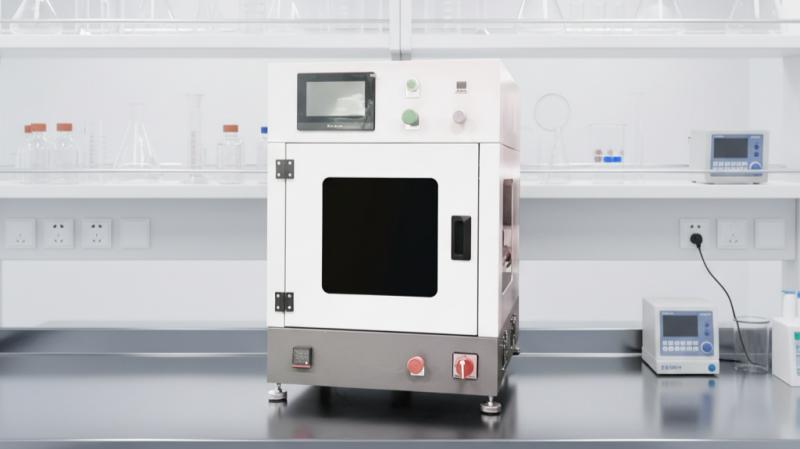
Recognized across the renewable energy industry for precision ultrasonic coating technology, the solution improves efficiency, lifespan, and cost‑effectiveness in clean‑energy devices. Unlike high‑temperature thermal spray coating methods that apply thick metallic or ceramic layers, ultrasonic coating technology enables low‑energy, precision deposition of thin functional films for renewable energy applications such as hydrogen electrolyzers, fuel cells, solar panels, advanced batteries, and transparent conductive oxides (TCOs).
With more than four decades of experience in thin‑film deposition, scalable coating platforms built around proprietary ultrasonic nozzles enable breakthroughs in the production of durable catalyst materials used in green hydrogen generation, functional thin‑film solar energy coatings, and next‑generation PEM and SOFC fuel cell coating technologies. These coating systems help manufacturers and researchers achieve consistent, repeatable results while supporting global advancements in renewable energy.
About Cheersonic
Cheersonic is the leading developer and manufacturer of ultrasonic coating systems for applying precise, thin film coatings to protect, strengthen or smooth surfaces on parts and components for the microelectronics/electronics, alternative energy, medical and industrial markets, including specialized glass applications in construction and automotive.
Our coating solutions are environmentally-friendly, efficient and highly reliable, and enable dramatic reductions in overspray, savings in raw material, water and energy usage and provide improved process repeatability, transfer efficiency, high uniformity and reduced emissions.
If you have any technical questions, customization demands, or procurement inquiries about ultrasonic atomization nozzles, feel free to contact our professional sales and technical team for detailed parameters, customized solutions, and industry application support.
Email: market2@cheersonic.com