DEB Balloon Coating Process
DEB Balloon Coating Process | Dip Coating and Ultrasonic Spray Coating Technology Comparison
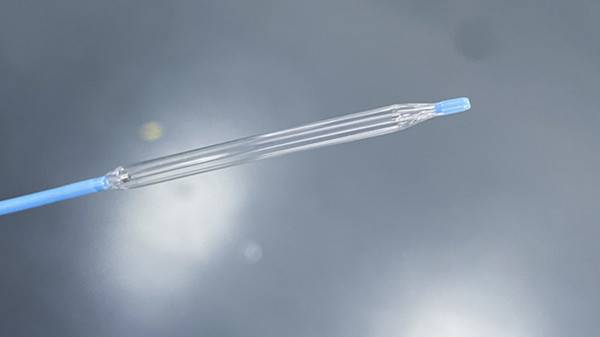
Drug Eluting Balloon (DEB) is an interventional medical device with a drug coating on the surface of the balloon. At the moment of vascular dilation, the drug is rapidly transferred to the vessel wall, inhibiting excessive intimal hyperplasia and reducing the risk of restenosis. There is no residual stent metal.
>Core logic: Balloon dilation instantly completes drug delivery, the drug is quickly taken up by the blood vessel wall, the balloon is withdrawn, and there is no implant left in the body.
Composition of coating system
1. Therapeutic drugs
- Mainstream: Paclitaxel, the most mature, inhibits smooth muscle cell proliferation and migration;
- New generation: Rapamycin/Sirolimus and its derivatives (Zotacrolimus, Everolimus), immunosuppressive, anti proliferative, and have better safety in the late stage.
2. Carrier matrix (excipient, crucial)
The adhesion of pure drug crystals is poor, and the drug is easily detached during inflation and expansion. The carrier is used to bind the drug and control the efficiency of drug transfection into the blood vessel wall.
- Ionic carrier: Iopromide, Ioxanol (contrast agent, widely used in clinical DEB, hydrophilic, rapidly dissociates and releases drug crystals upon contact with blood)
- Polymer carriers: PLA, PLGA, PVP, chitosan, etc., can regulate drug release kinetics; Partially degradable.
>Key indicators: drug loading, drug crystal particle size, drug transfection rate, pre release loss (drugs cannot be dropped before entering the bloodstream)
3. Base balloon substrate
Most of them are PET/PeBax polymer balloon substrates, and the surface of the substrate is treated with plasma to enhance the adhesion of the coating.
Coating process route
1. Dip coating (mainstream commercial process)
The balloon is inflated to a semi expanded state, immersed in a drug carrier solution, pulled and dried under low-temperature vacuum, and the target drug loading is repeatedly achieved.
Advantages: Mature technology, suitable for batch production; Disadvantage: It is difficult to control the uniformity of coating thickness.
2. Ultrasonic Spray Coating (emerging technology)
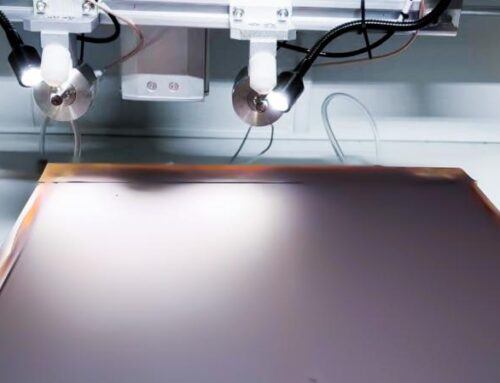
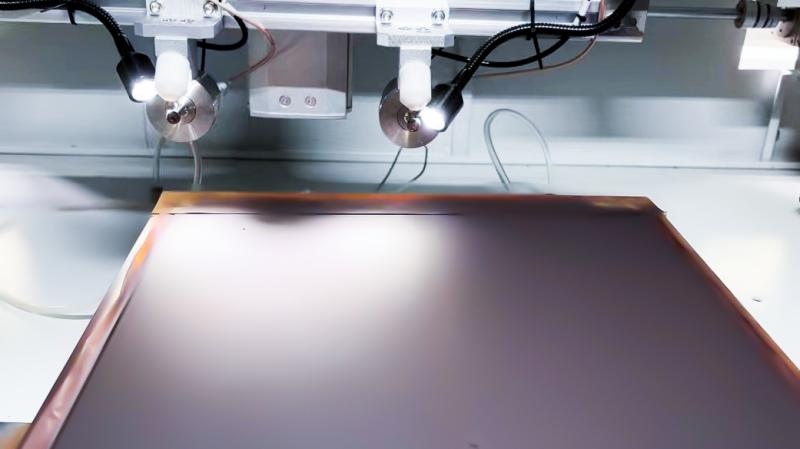
Ultrasonic atomization atomizes the drug carrier solution into micrometer sized droplets, which are accurately sprayed onto the surface of a rotating balloon. The coating is uniform, the thickness is controllable, the particles are controllable, the corners are not easily too thick, and the drug loss is low. It is very suitable for DEB precision coating.
>Advantages: Accurate control of drug crystal morphology; Reduce large particles and lower the risk of distal embolism; It can be adapted to small-scale research and development, pilot testing, and mass production, and is a popular process for the development of the new generation of DEB.
3. Spraying drying curing
After spraying, dry under low temperature vacuum and avoid high temperature to prevent drug degradation.
Key performance indicators (DEB coating core assessment points)
1. Drug loading: ng/mm ², drug content per unit balloon surface area;
2. Drug transfer efficiency: After the balloon is attached to the wall, how much drug actually enters the blood vessel wall;
3. Pre detachment loss: During the process of delivering the balloon through the blood vessel, the proportion of drug detachment due to blood flushing (too high detachment can cause distal microvascular embolism);
4. Drug crystal morphology: Crystal size is crucial, as particles that are too large can easily become embolic;
5. Coating adhesion: The coating does not peel off significantly during bending, pushing, and expansion processes;
6. Stability: During the storage period, the drug does not degrade and the coating does not peel or crack.
Clinical application scenarios
– Lower limb peripheral arterial disease PAD (femoral popliteal artery, etc., with the highest use of DEB)
– Coronary small vessel disease, in stent restenosis ISR (coronary DEB)
– Arteriovenous fistula vascular pathway stenosis
DEB coating pain points
1. Early clinical attention to the risk of late mortality with paclitaxel promotes the industry’s shift towards the rapamycin family DEB;
2. Drug loss during delivery and risk of distal embolism;
3. Minor fluctuations in coating process can directly alter clinical outcomes, and high consistency of process is required;
4. The combination of drugs, carrier ratios, and drying processes together determine the crystal morphology, which is a barrier to development.
Summary of the Value of Ultrasonic Spraying in DEB Coatings
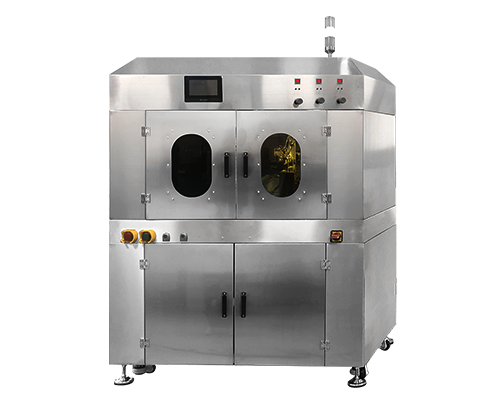
Ultrasonic spraying can achieve:
- Thin and uniform drug loaded coating;
- Controllable drug crystallization;
- Reduce drug detachment during the delivery phase;
- Compatible with PET/PeBax balloon substrate;
- Quickly iterate the formula during the R&D phase and scale it up to mass production.
About Cheersonic
Cheersonic is the leading developer and manufacturer of ultrasonic coating systems for applying precise, thin film coatings to protect, strengthen or smooth surfaces on parts and components for the microelectronics/electronics, alternative energy, medical and industrial markets, including specialized glass applications in construction and automotive.
Our coating solutions are environmentally-friendly, efficient and highly reliable, and enable dramatic reductions in overspray, savings in raw material, water and energy usage and provide improved process repeatability, transfer efficiency, high uniformity and reduced emissions.
If you have any technical questions, customization demands, or procurement inquiries about ultrasonic atomization nozzles, feel free to contact our professional sales and technical team for detailed parameters, customized solutions, and industry application support.
Email: market2@cheersonic.com