Coating Solutions for Functional Thin Films on Optical Lenses
Ultrasonic Spraying | Precision Coating Solutions for Functional Thin Films on Optical Lenses
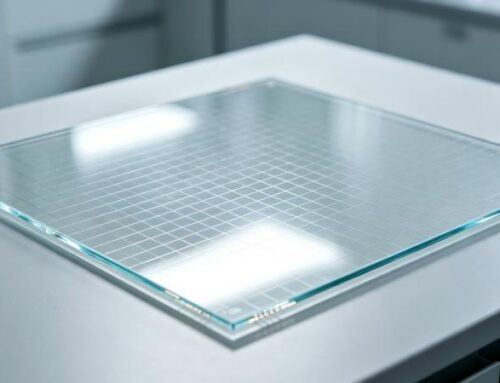
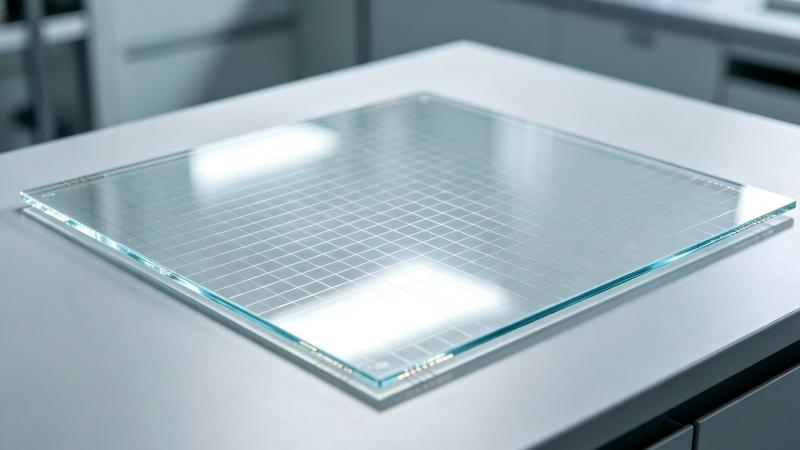
Ultrasonic spraying technology enables the application of precision functional and decorative optical coatings onto lenses, mirrors, and various optical components. Based on the principle of ultrasonic atomization, it achieves uniform coating deposition on curved and complex-shaped substrates. The technology offers precise control over coating thickness, significantly reduces material waste, and is suitable for scenarios ranging from laboratory R&D to industrial mass production, consistently delivering high-quality optical thin films.
Unlike traditional processes such as dip coating, spin coating, and vacuum sputtering, ultrasonic spraying utilizes an open-system operation that integrates directly into automated production lines without requiring sealed vacuum chambers. It is particularly well-suited for liquid coating formulations and serves as an effective complement or cost-effective alternative to traditional methods, balancing coating quality with production costs.
Key Optical Coating Applications
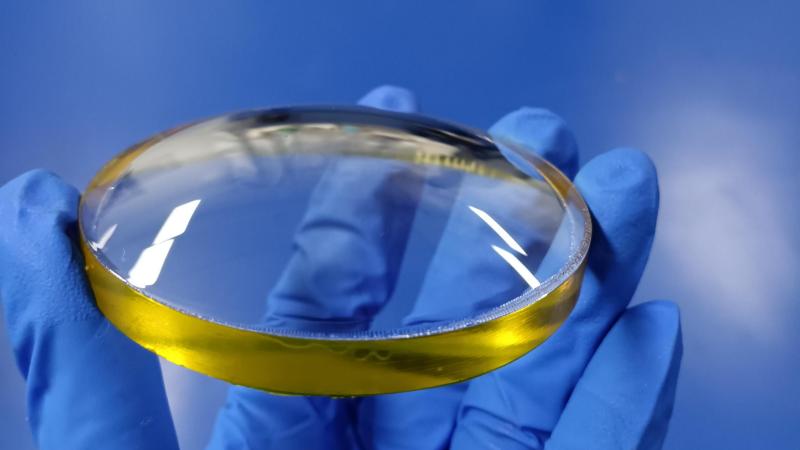
The ultrasonic spraying process is suitable for applications requiring high performance, durability, and repeatability in optical coating. It enables the precise deposition of single-layer and multi-layer optical films and is widely used for the surface modification of uncoated optical components, achieving high-performance surface characteristics at a moderate processing cost.
Key coating types include:
- Anti-fingerprint and anti-stain protective coatings
- Hard, wear-resistant, and scratch-resistant protective coatings
- Anti-glare optical coatings
- Anti-fog functional coatings
- UV-blocking protective coatings
- Standard coatings and electrochromic functional coatings
- Liquid mirror coatings and various other functional surface films
Optical Photoresist Patterning and Deposition Process
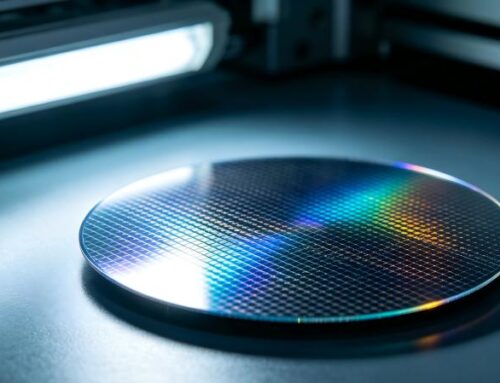
In the patterning and selective coating stages of precision optical manufacturing, ultrasonic spraying enables the uniform deposition of photoresist onto lenses and mirror substrates. It accommodates a wide range of substrate specifications, from miniature precision lenses and micro-optical devices to large-format mirrors and optical sheets. This process ensures uniform photoresist film thickness prior to exposure and development, meeting the stringent precision processing requirements of advanced optical devices.
This photoresist deposition process offers several technical advantages:
- Compatible with substrates featuring varying degrees of curvature, enabling repeatable and uniform thin-film coverage.
- Precise control over film thickness, ensuring consistent and stable results during patterning.
- Low-stress deposition process, suitable for the fabrication of high-precision, high-sensitivity optical components.
- High material utilization, effectively reducing mass production costs and facilitating large-scale manufacturing.
Compatible Substrate Types
The ultrasonic lens coating process offers exceptional compatibility with mainstream optical substrates; a single process system supports the fabrication of diverse optical products and manufacturing workflows.
Compatible substrates include:
- Polycarbonate substrates (lightweight and durable).
- Conventional optical plastic substrates.
- High-impact-resistant, thin, and lightweight specialty optical substrates.
- High-refractive-index optical plastic substrates.
- Optical glass substrates (offering high optical clarity and excellent wear/scratch resistance).
- Polarized lens composite substrates.
Application Areas and Mass Production Capabilities
This spray coating process is suitable not only for consumer eyewear lenses but also for the manufacture of various precision optical components. Applications span multiple fields, including precision optical lenses, microscope objectives, telescopes, binoculars, camera lenses, specialized optoelectronic devices, and industrial- or research-grade optical components.
For the mass production of eyewear and sunglass lenses, the process accommodates functional coatings on high-curvature, bifocal, and multi-zone lenses, bringing the precision thin-film capabilities of industrial optics to the consumer outdoor and ophthalmic lens sectors.
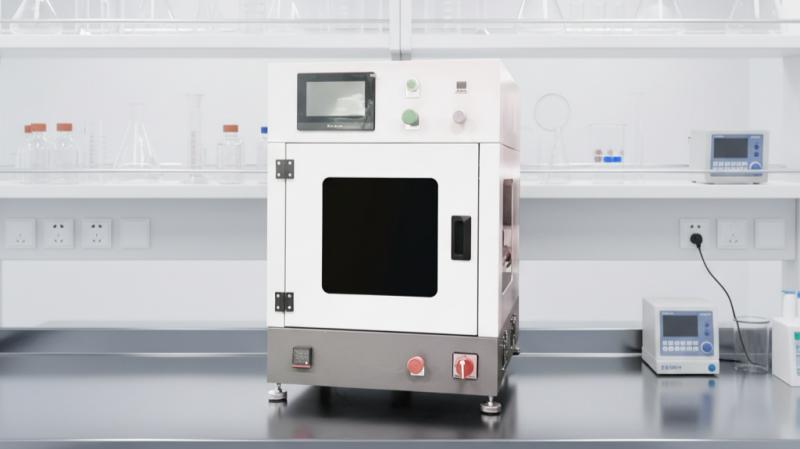
In terms of mass production efficiency, the ultrasonic spray process overcomes the batch-processing limitations of vacuum coating equipment, enabling continuous operation. It forms uniform films on complex curved surfaces and irregular optical structures, ensuring consistent coating quality across batches and allowing for seamless scaling from laboratory trials to industrial mass production. Compared to traditional dip-coating and dehydration methods, it significantly reduces material waste and improves cost-effectiveness, providing a stable, efficient, and economical precision coating solution for modern optical manufacturing.
About Cheersonic
Cheersonic is the leading developer and manufacturer of ultrasonic coating systems for applying precise, thin film coatings to protect, strengthen or smooth surfaces on parts and components for the microelectronics/electronics, alternative energy, medical and industrial markets, including specialized glass applications in construction and automotive.
Our coating solutions are environmentally-friendly, efficient and highly reliable, and enable dramatic reductions in overspray, savings in raw material, water and energy usage and provide improved process repeatability, transfer efficiency, high uniformity and reduced emissions.
If you have any technical questions, customization demands, or procurement inquiries about ultrasonic atomization nozzles, feel free to contact our professional sales and technical team for detailed parameters, customized solutions, and industry application support.
Email: market2@cheersonic.com