
Antibacterial Coating for Medical Devices
Ultrasonic Spraying Technology: Building an Antibacterial Protective Barrier for Medical Devices
In medical settings, microbial contamination on device surfaces is a significant risk of cross-infection. From frequently used surgical instruments to patient monitor panels that come into prolonged contact with patients, even the smallest bacterial or viral residues can threaten patient safety. To address this issue, ultrasonic spraying machines, with their precise and controllable coating capabilities, have become a key technology for depositing antibacterial coatings on medical device surfaces. Among these, silver ion-based and copper ion-based coatings are the two most widely used coating materials due to their excellent antibacterial properties.

The core advantage of ultrasonic spraying machines lies in their unique atomization and coating principle. Compared to traditional spraying technologies, it uses high-frequency vibration to transform antibacterial coating materials into micron-sized droplets. Guided by airflow, these droplets can evenly cover the surface of medical devices, achieving comprehensive coating even in complex structures such as instrument gaps and edges. This coating method not only avoids the problems of coating buildup and missed areas that are common in traditional spraying, but also allows for precise control of the coating thickness—adjustable as needed from a few micrometers to tens of micrometers. This ensures antibacterial efficacy without affecting the normal function of the equipment, such as maintaining the grip feel of surgical instruments or hindering the clarity of the monitor screen.
As the core components of the antibacterial coating, silver ions and copper ions have different focuses in their antibacterial mechanisms, yet are equally effective. Silver ions can disrupt the bacterial cell membrane, causing leakage of cell contents, while also inhibiting enzyme activity within bacteria, preventing their metabolism and reproduction. This achieves a killing effect on a variety of common pathogenic bacteria, including Gram-positive and Gram-negative bacteria. More importantly, the antibacterial effect of silver ions is long-lasting; even with slight wear on the coating surface, ions are slowly released, maintaining long-term antibacterial capability. Copper ions, on the other hand, are known for their rapid onset of action. They can quickly bind to bacterial proteins, disrupting their structural stability. Especially when dealing with microorganisms that have slight resistance to silver ions, copper ion-based coatings can play a good supplementary role. Furthermore, copper ions are a trace element essential for the human body. When used at appropriate concentrations, they are less irritating to human tissues, making them more suitable for use on the surfaces of medical devices that frequently come into contact with human skin.
In practical applications, the combination of ultrasonic spraying technology and silver/copper ion-based coatings has been applied to various types of medical devices. For metal instruments such as surgical scissors and hemostats, the coating adheres tightly to the metal surface and remains stable after high-temperature sterilization, preventing the antibacterial components from becoming ineffective during sterilization. For plastic devices such as ventilator tubing and infusion set interfaces, the low-impact coating method of ultrasonic spraying prevents scratches on the plastic surface due to excessive force, while the coating’s flexibility can accommodate slight deformation of the plastic, preventing cracking and peeling. For implantable medical devices such as cardiac stents, silver/copper ion-based coatings, after special process modifications, also possess both biocompatibility and antibacterial properties, helping the device integrate into human tissue while preventing the risk of infection at the implantation site.
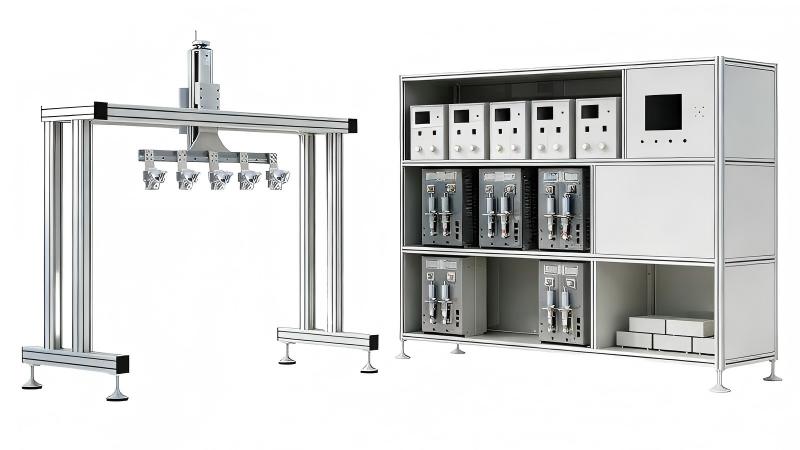
The value of this technological combination lies not only in improving medical safety but also in reducing medical costs. On the one hand, antibacterial coatings reduce the frequency of equipment replacement due to contamination, extending its service life; on the other hand, they reduce the incidence of cross-infection, decreasing treatment costs and hospitalization time caused by infection. As the medical industry’s requirements for infection control continue to increase, the technology of applying silver and copper ion-based coatings using ultrasonic spraying machines is becoming an important part of the manufacturing and maintenance process of medical equipment, building a safer and more reliable protective barrier for patients and medical staff.
About Cheersonic
Cheersonic is the leading developer and manufacturer of ultrasonic coating systems for applying precise, thin film coatings to protect, strengthen or smooth surfaces on parts and components for the microelectronics/electronics, alternative energy, medical and industrial markets, including specialized glass applications in construction and automotive.
Our coating solutions are environmentally-friendly, efficient and highly reliable, and enable dramatic reductions in overspray, savings in raw material, water and energy usage and provide improved process repeatability, transfer efficiency, high uniformity and reduced emissions.
If you have any technical questions, customization demands, or procurement inquiries about ultrasonic atomization nozzles, feel free to contact our professional sales and technical team for detailed parameters, customized solutions, and industry application support.
Email: market2@cheersonic.com