
Ultrasonic Atomization Nano‑Ceramic Coating for PC Mobile Back Cover
In modern electronic device manufacturing, surface functional coating technology is commonly used to enhance product appearance and extend its lifespan. Among these processes, uniformly spraying a transparent nano-ceramic protective layer has become a key step. This process uses precision equipment to construct an extremely thin and dense transparent protective film on the substrate surface, providing both scratch resistance and long-lasting gloss retention, significantly improving the product’s appearance durability and user experience.
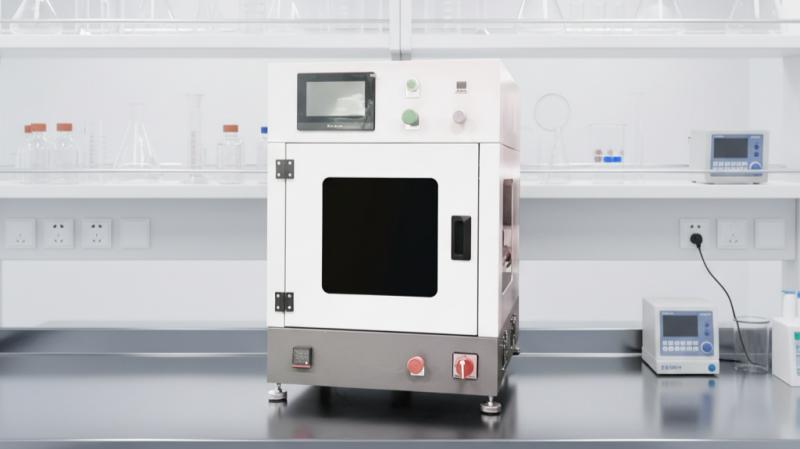
To achieve this process, advanced ultrasonic atomization nano-ceramic coating spraying equipment is required. This equipment uses high-frequency vibration waves to atomize liquid ceramic composite materials into micron-sized particles, forming a uniformly thick functional film on the substrate surface through a precisely controlled spraying system. Specifically, in the surface treatment process of mobile phone back covers, this equipment is mainly used to construct a transparent protective layer on the outer surface of the casing. Its core function is to effectively prevent scratches and wear during daily use, while its high light transmittance and high hardness characteristics allow the product to maintain its initial visual gloss and tactile quality over a long period.
Currently, mobile terminal device back covers widely use various polymers as the base material. Common material categories include engineering plastics such as polypropylene (PP), polyethylene (PE), polyvinyl chloride (PVC), and polycarbonate (PC). Each material has its own characteristics: polypropylene excels in its good chemical stability and plasticity; polyethylene possesses excellent impact resistance and flexibility; PVC stands out in terms of cost control and processing adaptability; and polycarbonate, with its comprehensive performance advantages, has become the most widely used choice in the industry.
The dominance of polycarbonate in the manufacturing of mobile device casings is primarily due to its superior physicochemical properties. Firstly, this material has excellent heat resistance, maintaining dimensional stability over a wide temperature range and effectively preventing deformation caused by changes in ambient temperature. Secondly, it achieves a good balance between mechanical strength and toughness, withstanding the mechanical stresses of daily use without excessively affecting the wireless signal transmission performance of the device—a characteristic particularly important for maintaining communication quality. Furthermore, polycarbonate itself possesses excellent light transmittance and dyeability, allowing manufacturers to achieve a wide variety of color designs and surface treatments while maintaining the material’s inherent advantages.
In terms of surface treatment processes, the coating effect of nano-ceramic protective layers is closely related to the characteristics of the substrate. For plastic substrates such as polycarbonate, precise control of spraying parameters, including atomization particle size, spray pressure, moving speed, and curing conditions, is required to ensure ideal adhesion between the protective layer and the substrate. This transparent protective film must not only completely cover the fine structure of the substrate surface at the microscopic level but also maintain sufficient optical transparency to avoid affecting the original color presentation and texture of the product.
From a technological development perspective, the application of ultrasonic atomization spraying technology has brought the uniformity control of nano-scale ceramic coatings to a new level. Compared with traditional spraying processes, this technology can achieve more precise film thickness control, avoiding surface defects such as sagging and orange peel. Simultaneously, the self-leveling properties and high surface energy of nano-scale ceramic materials enable them to automatically repair microscopic unevenness, forming a continuous and complete protective interface. This integrity of the microstructure is the technological foundation for achieving long-lasting scratch resistance and durable gloss maintenance.
With the continuous advancement of materials science and surface engineering technology, the performance standards of functional transparent protective coatings are also constantly improving. Future technological development will focus on further enhancing the environmental adaptability, self-healing capabilities, and compatibility with new substrates of the coating. Through continuous optimization of process parameters and material formulations, this surface treatment technology is expected to find applications in a wider range of industrial sectors, providing reliable technical support for improving the quality of various consumer electronics products.
About Cheersonic
Cheersonic is the leading developer and manufacturer of ultrasonic coating systems for applying precise, thin film coatings to protect, strengthen or smooth surfaces on parts and components for the microelectronics/electronics, alternative energy, medical and industrial markets, including specialized glass applications in construction and automotive.
Our coating solutions are environmentally-friendly, efficient and highly reliable, and enable dramatic reductions in overspray, savings in raw material, water and energy usage and provide improved process repeatability, transfer efficiency, high uniformity and reduced emissions.
If you have any technical questions, customization demands, or procurement inquiries about ultrasonic atomization nozzles, feel free to contact our professional sales and technical team for detailed parameters, customized solutions, and industry application support.
Email: market2@cheersonic.com