
Do you know all these facts about release agents?
A release agent is a functional medium applied between the mold and the molded product. It effectively prevents adhesion between the two, facilitating easy demolding. This substance has good chemical stability and is not easily dissolved even when in contact with chemical components in the resin, such as styrene and amines. At the same time, release agents exhibit excellent heat resistance and mechanical stress adaptability, and are not prone to decomposition or loss due to high temperatures or pressure. They adhere firmly to the mold surface without transferring to the workpiece, thus not affecting subsequent spraying or other secondary processing operations. With the widespread application of molding processes such as injection molding, extrusion, calendering, compression molding, and lamination, the usage of release agents is increasing significantly. In short, a release agent is a release coating applied between two surfaces that are prone to sticking, ensuring smooth separation and keeping the surfaces clean and glossy.
Application Fields of Release Agents
Release agents are widely used in various molding processes, including metal die casting, polyurethane foaming and elastomer manufacturing, fiberglass-reinforced plastic (FRP) molding, thermoplastic injection molding, vacuum thermoforming, and profile extrusion. In some molding applications, other additives such as plasticizers may migrate to the interface, where they need to be removed with the help of a surface release agent.
Overview of the Mechanism of Action
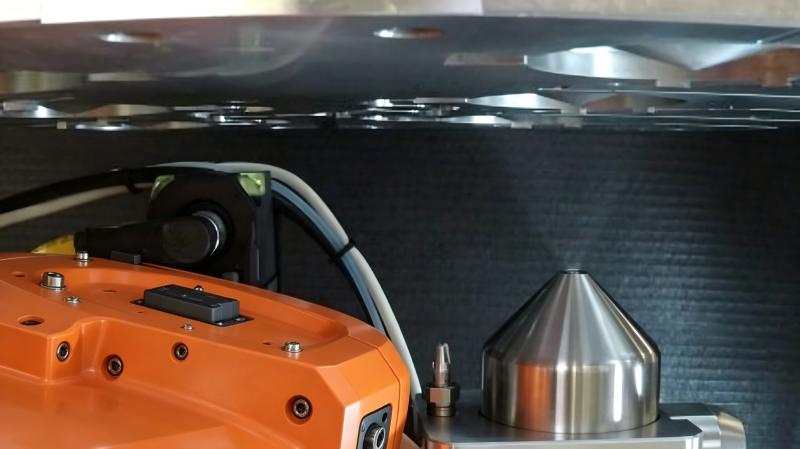
From a mechanistic perspective, a release agent should have sufficient tensile strength to resist wear caused by repeated contact with the molding resin, especially when mineral fillers or glass fiber reinforcements are present. Its chemical stability ensures that it does not dissolve when in contact with various resin components. In addition, the release agent must possess good heat resistance and stress resistance, not easily decompose or deplete, and ensure that it adheres only to the mold surface without contaminating the product, thereby not affecting subsequent processing steps.
Working Principles of Release Agents
1. Its polar chemical bonds interact with the mold surface to form a renewable adsorption film.
2. The siloxane bonds in polysiloxanes have weak dipole characteristics, allowing them to align directionally on the mold surface and form extended chain structures.
3. The surface is densely covered with alkyl groups; the release effect improves with higher alkyl density. However, excessive steric hindrance can restrict chain extension, thereby weakening the release performance.
4. The molecular weight and viscosity of the release agent also affect its performance. Low-molecular-weight substances have good spreadability but poorer heat resistance.
Classification of Release Agents
1. By application method: Internal release agents and external release agents.
2. By service life: Conventional type and semi-permanent type.
3. By form: Solvent-based, water-based, solvent-free, powder, and paste release agents.
4. By active ingredients:
– Silicone types: Siloxane compounds such as silicone oil, silicone resin, and methyl silicone oil.
– Wax types: Including animal and vegetable waxes, synthetic paraffin wax, polyethylene wax, etc.
– Fluorine types: Such as polytetrafluoroethylene (PTFE), offering excellent release properties and low mold contamination.
– Surfactant types: Including metallic soaps and nonionic EO/PO derivatives.
– Inorganic powder types: Such as talc, mica, clay, etc.
– Polyether types: Commonly used in rubber processing where silicone is restricted.
5. Other types:
– Water-based release agents containing masking agents.
– Durable release agents combining silicone oil and silicone resin.
– Multi-layer composite release agents.
– Reactive release agents that form a film through chemical reaction.
These release agents each have their own characteristics and can be selected according to specific application needs, for example as anti-stick coatings, release paper treatments, label protection, and various other industrial uses.
Performance Criteria for Release Agents
The core function of a release agent is to ensure that molded parts can be smoothly and completely removed from the mold, resulting in products with smooth surfaces and accurate shapes, while also extending mold service life. The main performance requirements include:
1. Good release effect (lubricity), capable of forming a uniform film on molds with complex shapes.
2. Long-lasting release performance.
3. Ensuring a smooth product surface that does not easily attract dust.
4. Not affecting subsequent processes such as electroplating, printing, or bonding.
5. Easy to apply.
6. Excellent heat resistance.
7. Anti-contamination properties.
8. Helping to improve molding efficiency.
9. High physicochemical stability, not readily reacting with other compounding ingredients.
10. Safety characteristics such as low odor, low toxicity, and non-flammability.
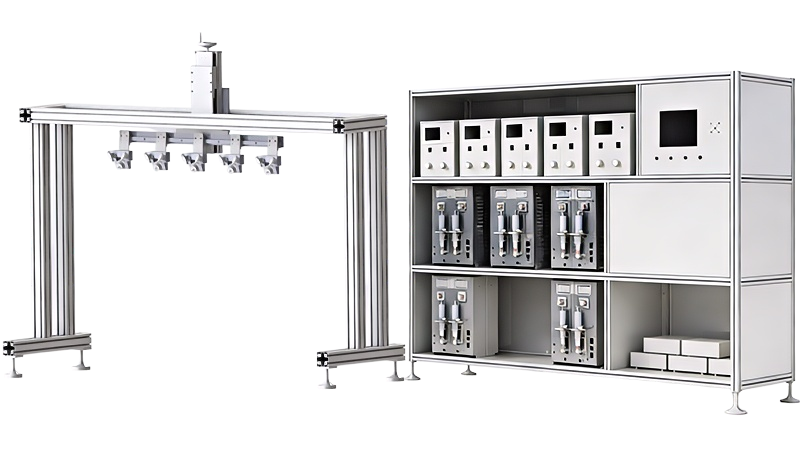
Clear-on-Clear Plastic Laser Welding Liquid Deposition System
Ultrasonic nozzles used for spraying release agents on injection molds are typically integrated with robotic arms to achieve fully automated spraying. These critical coatings enable easy demolding of cured parts during production and effectively protect molds in high-frequency injection cycles. Release agent coatings are usually applied after a certain number of injection cycles, with the frequency depending on process requirements. Ultrasonic spraying systems can be easily integrated with injection molding equipment to meet demanding release applications, especially for molds with complex geometries and fine clearances. Various spray pattern designs are available to accommodate products of different sizes and shapes.
Using ultrasonic spraying technology for optimized deposition of injection mold release agents offers the following significant advantages:
– Increased production efficiency
– Shortened cycle times
– Improved product surface quality
– Reduced scrap rates
– Minimized residue buildup on molds and tooling
– Reduced (minimized) pinhole defects
– Significantly improved flow characteristics of the release agent due to extremely small droplet sizes
– Extended mold service life
– Optimized maintenance schedules (less frequent maintenance)
– Reduced product defects
– Savings of 50% to 75% in release agent consumption
About Cheersonic
Cheersonic is the leading developer and manufacturer of ultrasonic coating systems for applying precise, thin film coatings to protect, strengthen or smooth surfaces on parts and components for the microelectronics/electronics, alternative energy, medical and industrial markets, including specialized glass applications in construction and automotive.
Our coating solutions are environmentally-friendly, efficient and highly reliable, and enable dramatic reductions in overspray, savings in raw material, water and energy usage and provide improved process repeatability, transfer efficiency, high uniformity and reduced emissions.
Chinese Website: Cheersonic Provides Professional Coating Solutions