
Ultrasonic Graphene Spraying for PEMFC & AEMFC Electrodes
Ultrasonic Graphene Spraying for PEMFC & AEMFC Electrodes | Cheersonic
Proton exchange membrane fuel cells (PEMFCs) and anion exchange membrane fuel cells (AEMFCs), as core components of clean energy conversion devices, rely heavily on electrode performance to determine battery efficiency and cost. Low-Pt-loading PEMFC cathodes face the problem of low Pt utilization, while non-precious metal electrodes in AEMFCs are limited by insufficient conductivity. Ultrasonic graphene coating technology offers an effective solution to these two bottlenecks. The high conductivity and high specific surface area of graphene, combined with the precise film formation advantages of ultrasonic coating, can significantly optimize the electrode microstructure and construct a highly efficient conductive network.

Ultrasonic coating technology, through high-frequency vibration, achieves uniform dispersion and tight bonding of graphene on the electrode substrate, a feat difficult to achieve with traditional coating methods. Traditional coating techniques easily lead to graphene agglomeration, forming conductive dead zones, while the cavitation effect generated by ultrasonic vibration can break up graphene agglomerates and simultaneously promote molecular-level contact between graphene sheets and the electrode substrate. During the coating process, ultrasonic energy can also regulate the thickness of the graphene coating, avoiding increased mass transfer resistance due to excessive coating thickness, thus laying a structural foundation for electrode performance optimization.
For low-Pt loading PEMFC cathodes, ultrasonically coated graphene can construct a “Pt-graphene” dual conductive network, significantly improving Pt utilization. With low Pt loading, Pt nanoparticles tend to be isolated, resulting in discontinuous conductive pathways. By introducing graphene into the cathode catalyst layer through ultrasonic coating, the graphene sheets can connect isolated Pt nanoparticles, forming continuous conductive channels and reducing charge transfer resistance. Experimental data show that the low-Pt cathode using ultrasonically coated graphene exhibits a more than 40% reduction in surface resistivity compared to the uncoated sample, a 35% increase in current density at 0.8V, and maintains its original performance even with a 50% reduction in Pt content.
In AEMFC non-precious metal electrodes, ultrasonically coated graphene can effectively compensate for the poor conductivity of non-precious metal catalysts. While non-precious metal catalysts such as Fe-N-C materials are inexpensive, their conductivity is only 1/100th that of traditional Pt-based catalysts, severely limiting electrode output power. Combining ultrasonically coated graphene with the Fe-N-C catalyst leverages the high conductivity of graphene to rapidly transfer electrons generated in the catalytic reaction, while its porous structure provides channels for electrolyte permeation. Tests show that the conductivity of the composite electrode is eight times that of the pure Fe-N-C electrode, and the peak power density of the battery exceeds 300 mW/cm², reaching 85% of that of commercially available Pt-based electrodes.
Precise control of ultrasonic coating parameters is crucial for achieving optimal graphene coating performance. Too low a coating power leads to uneven graphene dispersion, while too high a power may damage the electrode substrate structure. Research found that when the ultrasonic power is controlled between 150-200 W and the coating speed is 5-8 mm/s, the sheet resistance of the graphene coating is the lowest, at only 0.8 Ω/sq. Furthermore, the concentration of the graphene dispersion and the number of coating passes also affect coating performance. A 2 mg/mL dispersion, after two coating passes, can form a uniform coating with a thickness of approximately 50 nm, balancing conductivity and mass transfer.
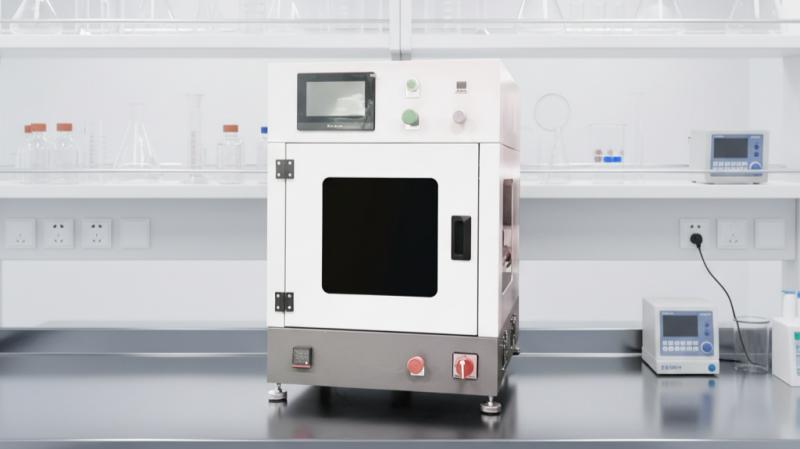
This technology not only improves electrode performance but also possesses industrialization potential. The ultrasonic coating equipment has a simple structure and is easy to operate, compatible with existing fuel cell production lines, requiring no large-scale equipment modifications. Simultaneously, the cost of graphene materials is decreasing year by year; combined with the application of low-Pt and non-precious metal catalysts, the overall manufacturing cost of fuel cells can be significantly reduced. In the future, by optimizing the graphene surface modification process and further enhancing its synergistic effect with catalysts, it is expected to achieve further breakthroughs in the electrode performance of PEMFCs and AEMFCs, promoting the commercialization of fuel cell technology.
About Cheersonic
Cheersonic is the leading developer and manufacturer of ultrasonic coating systems for applying precise, thin film coatings to protect, strengthen or smooth surfaces on parts and components for the microelectronics/electronics, alternative energy, medical and industrial markets, including specialized glass applications in construction and automotive.
Our coating solutions are environmentally-friendly, efficient and highly reliable, and enable dramatic reductions in overspray, savings in raw material, water and energy usage and provide improved process repeatability, transfer efficiency, high uniformity and reduced emissions.
Chinese Website: Cheersonic Provides Professional Coating Solutions
