
Ultrasonic Coating Polymer-Coated Separators
Ultrasonic Coating Polymer-Coated Separators | Cheersonic
Polymer-coated separators use ultrathin polyethylene (PE) membranes or ceramic-coated separators as substrates, and are formed by precision coating to create a polymer coating containing PVDF (polyvinylidene fluoride) or PMMA (polymethyl methacrylate). Polymer coatings optimize the interface structure between the electrode and the separator, improve electrical and safety performance, and are widely used in 3C and power battery fields. Among these, ultrasonic coating technology, with its unique atomization and coating advantages, has become one of the core processes for preparing high-performance polymer-coated separators, significantly improving coating quality and overall separator performance.
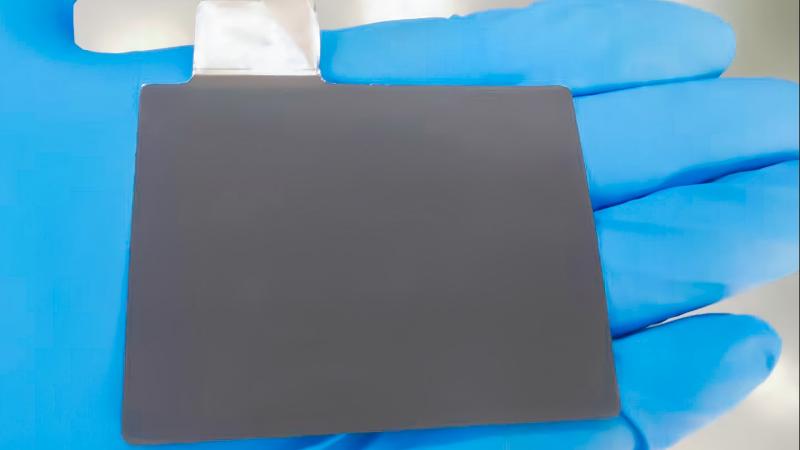
From the perspective of substrate selection, ultrathin PE membranes and ceramic-coated separators are two mainstream substrate types, each possessing structural characteristics suitable for ultrasonic coating processes. Ultrathin PE membranes typically use porous polyolefin materials with a porosity generally not less than 40% and a thickness controlled between 8-25 micrometers. Their excellent mechanical toughness and air permeability provide a basic channel for ion transport. Ceramic-coated separators involve pre-coating traditional polyolefin separators with nano-alumina or boehmite ceramic materials, offering superior high-temperature stability and effectively resisting localized high temperatures during battery operation. This provides a stable substrate for subsequent polymer coating. Both types of substrates can achieve uniform polymer coating adhesion through ultrasonic coating processes without damaging the original substrate structure due to high-frequency vibration.
The core advantage of ultrasonic coating lies in its precise and controllable coating preparation capability. Its working principle utilizes an ultrasonic generator to convert electrical energy into high-frequency mechanical vibrations of 20-40kHz, atomizing PVDF or PMMA coatings into uniform droplets of 5-10 micrometers without pressure impact. Precise airflow control then uniformly deposits these atomized droplets onto the substrate surface. Compared to traditional coating processes, ultrasonic coating thickness tolerance can be controlled within ±5%, far superior to the ±15% deviation range of traditional processes, enabling the preparation of ultra-thin coatings of 0.5-5 micrometers. Meanwhile, this process boasts a material utilization rate exceeding 85%, effectively reducing coating waste and preventing defects such as coating edge buildup and pinholes. It ensures a surface roughness Ra ≤ 0.05μm, guaranteeing the original air permeability of the diaphragm remains unaffected.
The compositional design of the PVDF and PMMA coatings further enhances diaphragm performance. PVDF coatings often employ a composite design of lamellar and spherical structures, forming a three-dimensional network structure through plasticizer swelling and drying curing. This significantly increases the contact area between the coating and the substrate, maintaining coating adhesion while reducing binder usage (2-5wt%) and preventing pore blockage caused by excessive binder. PMMA coatings, with their excellent electrolyte wettability, rapidly absorb electrolyte to form a gel electrolyte layer, improving ion conduction efficiency. Furthermore, 5-30wt% filler and appropriate binder can be added to the coating as needed to further optimize its mechanical strength and thermal stability, ensuring the coated diaphragm maintains structural integrity after drying and curing at 40-100℃.
Polymer coatings achieve a dual improvement in electrical and safety performance through interface optimization. Regarding interface structure optimization, PVDF and PMMA coatings enhance the adhesion between the separator and the electrode, reducing electrode misalignment and displacement during battery charging and discharging, thus lowering the risk of short circuits, especially suitable for battery structures without rigid casings, such as pouch batteries. In terms of electrical performance improvement, the network structure formed by the coating, in synergy with the substrate pores, constructs efficient ion channels, reducing battery internal resistance and increasing the cycle life of batteries using this type of separator by more than 50%, with significantly optimized rate performance. In terms of safety performance, the polymer coating and ceramic substrate form dual protection, enabling the separator to maintain structural stability at 180°C, avoiding short circuits between the positive and negative electrodes caused by melting and shrinkage. Simultaneously, the coating effectively isolates excessive reactions between the electrolyte and electrode materials, improving the battery’s thermal runaway threshold.
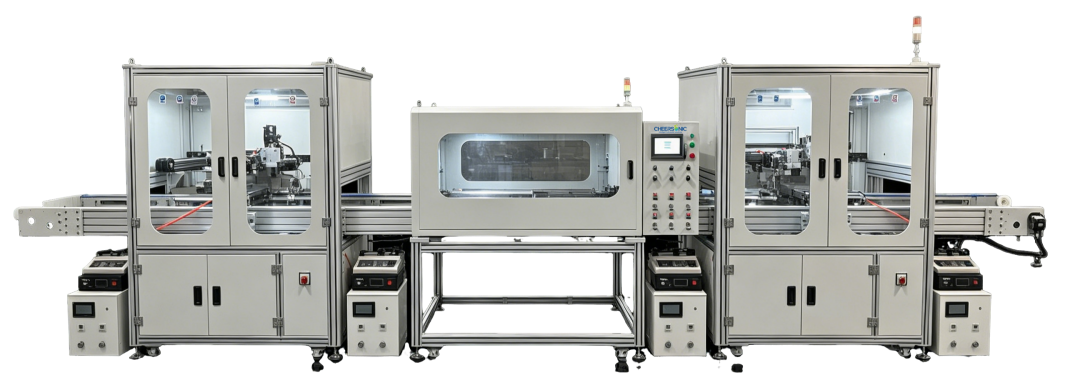
Based on these advantages, ultrasonically coated polymer-coated separators have achieved widespread application in the 3C and power battery fields. In 3C digital batteries, their thinness and excellent cycle performance meet the miniaturization and long battery life requirements of mobile phones, laptops, and other devices. In the field of power batteries, their high-temperature stability and high-rate adaptability support the rapid charging and discharging and safe operation of electric vehicles, while also mitigating battery expansion during cycling and extending battery life. Furthermore, this type of separator can be extended to applications such as energy storage batteries, adapting to wide-temperature operating environments and long-term stable operation requirements.
In summary, the synergistic application of ultrasonic coating technology with PVDF and PMMA coatings significantly improves the preparation precision and overall performance of polymer-coated separators. By rationally selecting substrate materials and optimizing coating components and coating parameters, this type of separator achieves precise control over interface structure, electrical properties, and safety performance, providing crucial support for the high-performance development of 3C and power batteries. In the future, with continuous process optimization, its application scenarios and performance advantages will be further expanded.
About Cheersonic
Cheersonic is the leading developer and manufacturer of ultrasonic coating systems for applying precise, thin film coatings to protect, strengthen or smooth surfaces on parts and components for the microelectronics/electronics, alternative energy, medical and industrial markets, including specialized glass applications in construction and automotive.
Our coating solutions are environmentally-friendly, efficient and highly reliable, and enable dramatic reductions in overspray, savings in raw material, water and energy usage and provide improved process repeatability, transfer efficiency, high uniformity and reduced emissions.
Chinese Website: Cheersonic Provides Professional Coating Solutions
