
Anticoagulant Ultrasonic Coating for Blood Purification Membranes
In the field of blood purification therapy, improving the biocompatibility of filter membrane materials is one of the core challenges. Among these challenges, constructing a stable and uniform bioactive coating on the membrane surface, especially endowing it with highly efficient anticoagulant properties, is a key technical path to prolong treatment time and improve patient safety. Ultrasonic coating technology, as an emerging precision surface engineering technology, shows great application potential in achieving this goal, particularly in firmly and uniformly fixing natural anticoagulants such as heparin onto the surface of ultrafiltration membranes.
Technical Principle: Physicochemical Synergistic Effects Surpassing Traditional Coatings
Traditional coating methods, such as impregnation or spraying, often rely on intermolecular physical adsorption or simple electrostatic interactions, resulting in inherent limitations such as uneven coating, weak adhesion, and easy detachment of active substances. Ultrasonic coating technology cleverly utilizes the “acoustic cavitation” effect generated by ultrasound in liquid media. When high-frequency ultrasound acts on a coating solution containing heparin, a large number of microbubbles are instantly generated, grow, and violently collapse in the liquid. This process releases enormous energy, creating an extreme high-temperature, high-pressure environment locally, and generating intense microjets and strong mechanical agitation.
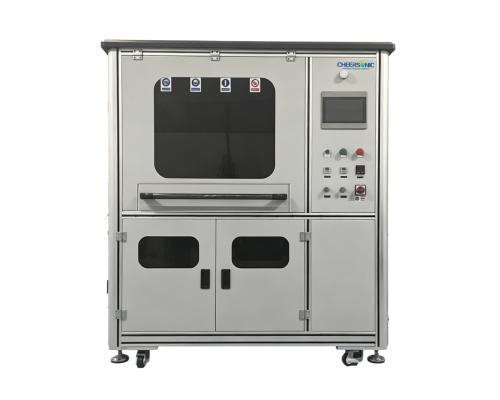
This unique physical environment optimizes the coating process on several levels: First, the intense microjets and agitation ensure that heparin molecules are fully dispersed in the solution and drive them to penetrate deep into the complex three-dimensional microporous structure of the membrane material, achieving a three-dimensional, full-coverage coating from the membrane surface to the internal pores, avoiding the coating dead zones or uneven surface coverage problems that are common in traditional methods. Second, the instantaneous energy provided by the cavitation effect helps activate chemical groups on the membrane material surface and may promote stronger physical anchoring between heparin molecules and the membrane surface or even trigger local chemical reactions, thereby significantly enhancing the adhesion of the coating layer.
Performance Advantages: Constructing a High-Efficiency Anticoagulant Interface
Applying ultrasonic technology to heparin coating brings a qualitative improvement to the performance of blood purification filter membranes.
1. Coating Uniformity and Stability: Based on the “bottom-up” coating mechanism of acoustic cavitation, a uniform thickness and dense structure of heparin molecular layers can be constructed. This uniformity ensures a consistent and excellent anticoagulant response across the entire filtration surface when the membrane comes into contact with blood, effectively preventing localized thrombus formation. Simultaneously, due to enhanced adhesion, the coating exhibits a lower elution rate under long-term blood flow shear stress and repeated cleaning and disinfection processes, guaranteeing the safety of the treatment cycle and extending the membrane’s lifespan.
2. Bioactivity Retention and Blood Compatibility: The ultrasonic coating process can typically be completed under mild chemical conditions and within a short time, which helps to maximize the preservation of the native conformation and bioactivity of heparin molecules. Heparin immobilized on the membrane surface can continuously and effectively catalyze antithrombin III in the blood, neutralizing various coagulation factors and thus efficiently inhibiting the coagulation cascade. This not only significantly improves the membrane’s blood compatibility and reduces the systemic dosage of anticoagulants during treatment but also correspondingly reduces the risk of bleeding, which is particularly important for patients with bleeding tendencies.
3. Minimal Impact on Intrinsic Membrane Properties: Unlike some drastic chemical grafting modifications, ultrasonic coating, as a surface treatment technology primarily based on physical processes, focuses its action mainly on the surface and near-surface regions of the membrane, having minimal impact on the bulk structure of the membrane substrate material, such as porosity, pore size distribution, and mechanical strength. This ensures that the filter membrane achieves excellent anticoagulant performance while fully preserving its core solute removal efficiency and ultrafiltration performance.
Application Prospects and Challenges
Currently, this technology is moving from the laboratory to large-scale production. The challenge lies in the need for precise control of multiple parameters, including the frequency, power, and duration of ultrasonic waves, as well as the physicochemical properties of the coating solution, to achieve a balance between optimal coating effects and potential damage to the polymer matrix structure. Furthermore, how to integrate this technology with online monitoring systems to achieve precise quality control in industrial production is also a key focus of future research.
Looking ahead, ultrasound-based precision coating technology is not limited to heparin, but can also be extended to the immobilization of other bioactive molecules (such as lysozyme and antimicrobial peptides), providing a powerful technological platform for the development of next-generation multifunctional, high-throughput, and highly safe blood purification filtration membranes.
About Cheersonic
Cheersonic is the leading developer and manufacturer of ultrasonic coating systems for applying precise, thin film coatings to protect, strengthen or smooth surfaces on parts and components for the microelectronics/electronics, alternative energy, medical and industrial markets, including specialized glass applications in construction and automotive.
Our coating solutions are environmentally-friendly, efficient and highly reliable, and enable dramatic reductions in overspray, savings in raw material, water and energy usage and provide improved process repeatability, transfer efficiency, high uniformity and reduced emissions.
Chinese Website: Cheersonic Provides Professional Coating Solutions
