
Ultrasonic Coating of Bi/Multi-Metal Catalysts
Ultrasonic Coating of Bi/Multi-Metal Catalysts: Enabling Precise CO₂ Electrocatalytic Methanol Production
Driven by the “dual carbon” goal, the electrocatalytic conversion of CO₂ into high-value-added methanol has become a core pathway for carbon recycling. The bottleneck of this technology lies in achieving precise product control—both overcoming the activation challenge of stable chemical bonds in CO₂ molecules and suppressing side reactions such as the hydrogen evolution reaction (HER). The combination of ultrasonic spraying technology for coating bi/multi-metal catalysts, through synergistic innovation in process and materials, provides an effective solution to this pain point.
Traditional coating processes often lead to catalyst agglomeration and insufficient exposure of active sites, while ultrasonic spraying technology completely changes this situation. Its core advantage lies in using high-frequency sound waves to atomize the catalyst precursor into 50-200 nm nanometer-sized droplets. These uniform droplets achieve atomic-level precise coating on the electrode surface, forming a dense coating with controllable thickness. Experiments show that this process can increase the utilization rate of bimetallic catalysts to 95% and reduce the reaction overpotential by 10-15% compared to traditional methods, laying a structural foundation for precise catalysis from the preparation stage.
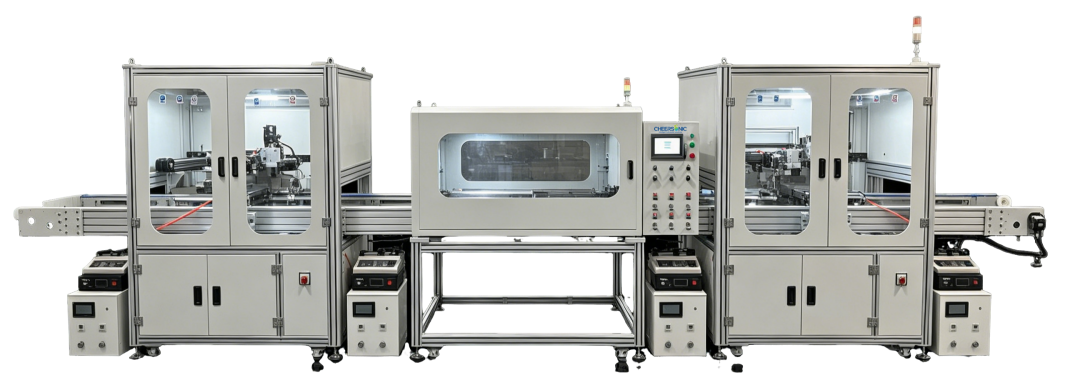
The synergistic effect of components in bimetallic/multimetallic catalysts enhances precise conversion at the reaction mechanism level. Single metal catalysts struggle to simultaneously achieve CO₂ activation and intermediate regulation, while copper-based alloys with metals such as zinc and tin can optimize catalytic performance through electronic structure reconstruction. For example, the Co₃InC₀.₇₅ bimetallic carbide catalyst exhibits a synergistic effect that enables a methanol selectivity of 70.1%, with stable performance after 100 hours of continuous operation. Ultrasonic coating technology ensures the uniform distribution of these metal components at the nanoscale, preventing active site failure due to segregation and ensuring that every metal atom participates in synergistic catalysis.
This synergistic effect is particularly crucial in controlling the reaction pathway. The electroreduction of CO₂ to methanol involves multiple proton-electron transfers, and the adsorption strength of the *CO intermediate directly determines the product outcome—too weak an adsorption facilitates CO formation, while too strong an adsorption hinders subsequent hydrogenation. An ultrasonically coated Cu-Zn-Sn trimetallic catalyst, by modulating the d-band center of copper with zinc atoms, maintains the *CO adsorption energy within the optimal range of -0.81 eV, while tin atoms lower the *CO protonation barrier to 0.52 eV. This precise modulation improves the methanol Faradaic efficiency by 35% compared to traditional coating methods, while significantly reducing the formation of byproducts CO and H₂.
This technology combination also optimizes the electrode reaction microenvironment. The porous coating formed by ultrasonic spraying constructs a highly efficient three-phase interface, promoting CO₂ mass transfer and inhibiting electrolyte over-wetting. Combined with the microenvironmental modulation capabilities of bimetallic catalysts—such as cobalt-based catalysts modified with quaternary ammonium groups that repel H₃O⁺ and enrich CO₂—a methanol Faradaic efficiency of 61.5% is still achieved under acidic conditions (pH≈1), overcoming the dependence of traditional systems on alkaline environments.

Currently, this technology has shown industrialization potential, but challenges remain regarding long-term stability and cost control. In the future, by using machine learning to screen for the optimal metal ratio and combining it with intelligent control of ultrasonic spraying process parameters, it is hoped that a balance can be achieved between catalyst performance and preparation cost. This technological approach not only provides an efficient solution for CO₂ resource utilization, but also promotes the field of electrocatalysis from experience-based optimization to a systematic innovation stage of “material design-process control-precise performance matching”.
About Cheersonic
Cheersonic is the leading developer and manufacturer of ultrasonic coating systems for applying precise, thin film coatings to protect, strengthen or smooth surfaces on parts and components for the microelectronics/electronics, alternative energy, medical and industrial markets, including specialized glass applications in construction and automotive.
Our coating solutions are environmentally-friendly, efficient and highly reliable, and enable dramatic reductions in overspray, savings in raw material, water and energy usage and provide improved process repeatability, transfer efficiency, high uniformity and reduced emissions.
Chinese Website: Cheersonic Provides Professional Coating Solutions
