
Ultrasonic spraying machine for AZ9260 photoresist
Ultrasonic spraying machine for AZ9260 photoresist – Cheersonic
In core fields such as semiconductor manufacturing, photomask fabrication, and precision electronic component processing, photolithography is a crucial step in achieving pattern transfer and ensuring device precision. AZ9260 photoresist, as a high-performance positive photoresist, has become a core material for mid-to-high-end photolithography applications due to its excellent photosensitivity, wide process window, and strong etching resistance. AZ9260 photoresist belongs to the high-end AZ series, is sensitive to 365nm I-line exposure, and can cover a thickness of 1-5μm. It combines good substrate adhesion and development rate, enabling precise submicron-level pattern transfer. It is widely used in semiconductor discrete devices, photomask etching, and microelectromechanical systems (MEMS) applications, and is an indispensable key consumable in semiconductor manufacturing. Traditional spraying processes struggle to meet the precision coating requirements of AZ9260 photoresist, often resulting in defects such as uneven adhesive layers, pinholes, and edge buildup. Cheersonic ultrasonic spraying machines, with their core advantages of high precision, low damage, and high adaptability, perfectly meet the spraying needs of AZ9260 photoresist, providing core equipment support for improving the quality and efficiency of semiconductor photolithography processes and enabling large-scale mass production. This helps companies overcome process bottlenecks and enhance product competitiveness.
The characteristics of AZ9260 photoresist and the requirements of photolithography processes impose extremely stringent standards on the spraying process. As a positive photoresist, AZ9260, after exposure via the I-line, allows the exposed areas to be rapidly dissolved by the developer, while the unexposed areas form a resistant film. Its core coating requirements focus on three main aspects: First, a uniform and dense coating requires precise control of the film thickness, adapting to a coating range of 1-5μm with a deviation ≤±0.1μm and uniformity exceeding 98%. This avoids defects such as pinholes, bubbles, and paste agglomeration, ensuring sharp edges and precise linewidth in the lithographic pattern, meeting sub-micron resolution requirements, and laying the foundation for subsequent etching processes. Second, low-damage coating, with AZ9260 photoresist providing a counter-damage coating. The AZ9260 photoresist is sensitive to impact and high temperatures, requiring a gentle, non-impact, and heat-free spraying process to avoid damaging the molecular structure of the adhesive layer and its adhesion to substrates such as silicon wafers and sapphire. This prevents issues like adhesive layer peeling and pattern deformation during development and etching, while also meeting the clean lithography requirements for semiconductors. Thirdly, it is precise and controllable, enabling selective coating and accurate adaptation to substrates of different sizes. It avoids critical areas such as electrodes and bonding regions, preventing poor development caused by coating buildup. It is also compatible with AZ9260 slurry systems of varying viscosities and solid contents, balancing coating efficiency and process consistency to meet the demands of large-scale mass production.
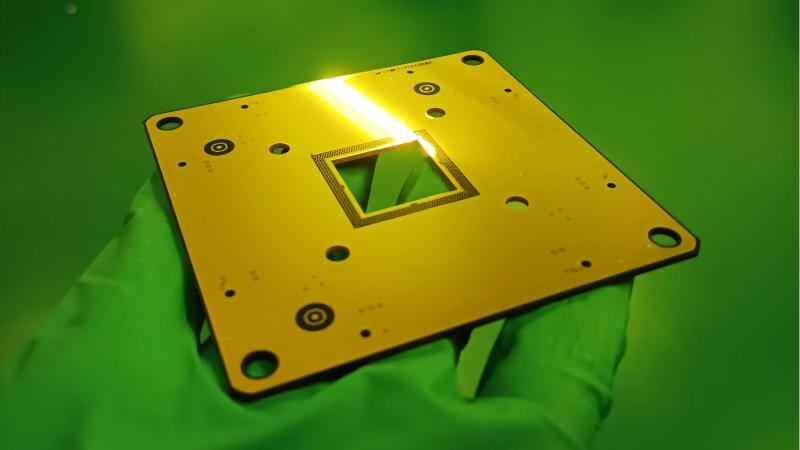
Traditional AZ9260 photoresist spraying processes (spin coating, air spraying, and manual coating) have many shortcomings, making them difficult to adapt to its precision characteristics and the needs of large-scale mass production. Spin coating suffers from uneven coating distribution, often exhibiting a “beaded edge effect” (thickening at the edges and thinning at the center), resulting in material utilization of less than 40% and significant waste of AZ9260 photoresist. Furthermore, high-speed rotation can cause displacement and damage to minute substrates, and parameter adjustments are cumbersome and inefficient. Air spraying relies on high-pressure airflow atomization, leading to uneven droplet size, pinholes, and bubbles. High-pressure impacts can damage the film’s density, causing decreased lithography resolution and incomplete development. Additionally, high-pressure airflow can introduce impurities, affecting chip cleanliness and failing to meet the stringent impurity requirements of semiconductor lithography. Manual coating is inefficient, resulting in poor coating uniformity and consistency, prone to missed areas and build-up, and subject to substrate contamination. It is only suitable for small-batch laboratory research and development, unsuitable for mass production.
Cheersonic ultrasonic spray coating machine addresses the characteristics and pain points of AZ9260 photoresist by specifically optimizing high-frequency atomization technology and combining it with key aspects of lithography processes to create a customized solution, completely breaking through the bottlenecks of traditional processes. The equipment converts industrial frequency electricity into a 40-150kHz high-frequency electrical signal via an ultrasonic generator. This signal is then converted into high-frequency mechanical vibration by a piezoelectric ceramic transducer. Utilizing the ultrasonic cavitation effect, the vibration deagglomerates particles in the AZ9260 photoresist, forming uniform droplets of 0.1-5 micrometers. The fine and uniform atomized particles perfectly meet the submicron coating requirements. Guided by a low-pressure carrier gas, the droplets gently deposit on the substrate surface. The entire process is free of high-pressure impact and high-temperature generation, maximizing the preservation of the AZ9260 photoresist’s photosensitivity and adhesion, preventing damage to the substrate, and effectively eliminating defects such as pinholes, bubbles, and build-up. This results in a dense, uniform, and smooth high-quality photoresist layer, laying a solid foundation for subsequent exposure, development, and etching processes, ensuring the accuracy and stability of the photolithography pattern.
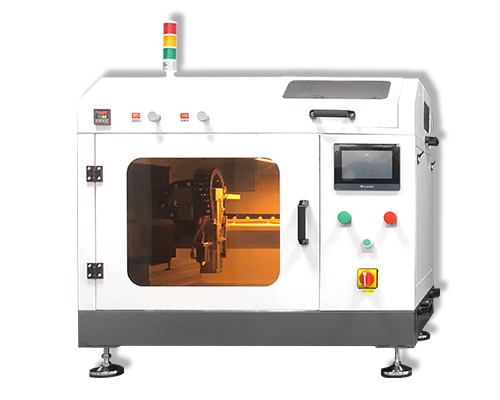
For the spraying needs of AZ9260 photoresist, Cheersonic ultrasonic spraying machines demonstrate four core advantages, helping companies improve mass production efficiency and quality. Firstly, it boasts extremely high coating precision, allowing for precise control of the resist layer thickness and distribution with a deviation of ≤±2% and uniformity exceeding 98%, ensuring the accuracy of the photolithography pattern and adapting to different thickness coating requirements for AZ9260, effectively suppressing development defects. Secondly, it features low-damage coating, with low-pressure gentle atomization technology avoiding damage to the resist properties and substrate, enhancing the adhesion between the resist layer and the substrate, reducing mass production defect rates, and meeting the high reliability requirements of semiconductor photolithography. Thirdly, it offers high material utilization, reaching over 95%, significantly reducing AZ9260 photoresist waste and substantially lowering production costs, aligning with the concept of green and low-carbon production. Fourthly, it offers excellent mass production adaptability, supporting automated continuous spraying and cleanroom adaptation, seamlessly integrating into large-scale semiconductor production lines, adapting to the process requirements of different sized substrates and AZ9260 photoresist, and solving the problems of low efficiency, high waste, and poor consistency of traditional processes.
Currently, Cheersonic ultrasonic coating machines are widely used in the coating of AZ9260 photoresist, covering core areas such as semiconductor discrete devices, photomask fabrication, and MEMS devices. This helps companies solve the pain points of traditional coating processes and achieve breakthroughs in the quality improvement and mass production of AZ9260 photoresist coating. As a leading company in the field of ultrasonic electronic equipment, Cheersonic Ultrasonic has been deeply involved in semiconductor photolithography coating for many years, keeping abreast of industry technology trends and providing customized coating solutions. These solutions cover the entire process, including equipment selection, process parameter optimization, and AZ9260 paste adaptation, helping customers fully leverage the core advantages of this photoresist model. In the future, Cheersonic Ultrasonic will continue to optimize equipment performance to meet the demands of photolithography processes becoming more refined and efficient, injecting strong momentum into the high-quality development of the semiconductor industry.
About Cheersonic
Cheersonic is the leading developer and manufacturer of ultrasonic coating systems for applying precise, thin film coatings to protect, strengthen or smooth surfaces on parts and components for the microelectronics/electronics, alternative energy, medical and industrial markets, including specialized glass applications in construction and automotive.
Our coating solutions are environmentally-friendly, efficient and highly reliable, and enable dramatic reductions in overspray, savings in raw material, water and energy usage and provide improved process repeatability, transfer efficiency, high uniformity and reduced emissions.
Chinese Website: Cheersonic Provides Professional Coating Solutions
