
Spraying Organic Thin Film
Spraying Organic Thin Film – organic thin-film – Cheersonic
Organic thin films have numerous applications in the medical field, including:
1. Drug Delivery and Controlled Release Systems:
– Sustained-Release Film Coating: Covering the surface of drug tablets or capsules with an organic thin film allows for control over the rate and timing of drug release. For example, some enteric coating materials remain stable in the acidic environment of the stomach but dissolve in the alkaline environment of the intestines, enabling precise drug release within the intestines, reducing stomach irritation, and improving therapeutic efficacy.
– Implantable Drug Delivery Devices: Organic thin films containing drugs are prepared as implants and inserted into specific locations within the body, such as subcutaneous tissue, muscle, or near diseased tissue, achieving long-term, stable drug release. This method avoids frequent dosing, improves patient compliance, and is often used to treat chronic diseases or cancer.
2. Medical Sensors:
– Biosensors: Organic thin-film transistors can be used as biosensors to detect various substances in the body, such as blood sugar, cholesterol, and proteins. The principle is that biomolecules interact with the organic semiconductor layer, causing changes in the transistor’s electrical properties; detecting these changes determines the concentration of the biomolecules. – Pressure Sensors: Organic thin-film pressure sensors can be attached to the skin or implanted in the body to monitor changes in physiological parameters such as blood pressure, intraocular pressure, and intracranial pressure. These sensors offer advantages such as flexibility, high sensitivity, and fast response, enabling them to accurately reflect changes in physiological pressure in real time.
3. Tissue Engineering and Regenerative Medicine:
– Scaffold Coatings: Spraying or depositing organic thin films on the surface of tissue engineering scaffolds can improve their biocompatibility and cell adhesion, promoting cell growth and differentiation. For example, in bone tissue engineering, scaffolds coated with organic thin films containing bioactive molecules can guide bone cell growth and bone tissue regeneration.
– Nerve Repair: Organic thin films can be used to prepare nerve conduits or nerve repair membranes, providing support and guidance for the regeneration of damaged nerves. These films possess good flexibility and biocompatibility, mimicking the growth environment of nerve cells and promoting the growth of nerve axons and the recovery of nerve function.
4. Medical Protection and Isolation:
– Surgical Films: Disposable surgical films used during surgery can prevent bacterial infection of the skin around the surgical incision, while also reducing fluid splashing and tissue adhesion during the procedure. These films are typically made of organic materials such as polyethylene and polypropylene, offering excellent waterproof and breathable properties.
– Protective Masks: The filter layer of these masks utilizes organic film materials, such as meltblown fabric, to effectively filter bacteria, viruses, and particulate matter from the air, protecting the respiratory health of healthcare workers and patients.
5. Medical Imaging and Diagnosis:
– Contrast Agent Carriers: Organic films can serve as carriers for contrast agents, improving their stability and targeting. In medical imaging techniques such as magnetic resonance imaging and computed tomography, using organic films containing contrast agents can enhance image contrast and improve diagnostic accuracy.
– Optogenetics Research: Organic electroluminescent films can be used in optogenetic research, studying nerve function and nervous system diseases through light stimulation of nerve cells. These films are flexible, bendable, and biocompatible, allowing them to adhere closely to nerve tissue for precise light stimulation.
About Cheersonic
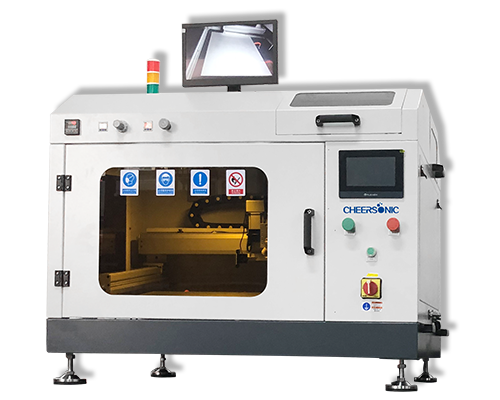
Cheersonic is the leading developer and manufacturer of ultrasonic coating systems for applying precise, thin film coatings to protect, strengthen or smooth surfaces on parts and components for the microelectronics/electronics, alternative energy, medical and industrial markets, including specialized glass applications in construction and automotive.
Our coating solutions are environmentally-friendly, efficient and highly reliable, and enable dramatic reductions in overspray, savings in raw material, water and energy usage and provide improved process repeatability, transfer efficiency, high uniformity and reduced emissions.
Chinese Website: Cheersonic Provides Professional Coating Solutions
