
Ultrasonic Spray Silicone Oil for Insulin Pump Reservoir
Ultrasonic Spray Silicone Oil for Insulin Pump Reservoir – Cheersonic
As the key equipment of continuous subcutaneous insulin infusion, the performance of insulin pump directly affects the treatment effect and quality of life of diabetes patients. As the core component of insulin pumps, the internal frictional resistance of the drug storage container is an important factor affecting infusion accuracy, residual medication, and mechanical reliability. In recent years, the use of ultrasonic spraying technology to form a uniform silicone oil drag reducing coating on the inner wall of the drug storage container has provided an innovative solution to this engineering problem.
Friction resistance: an invisible challenge to the performance of drug storage devices
During the operation of traditional insulin pump reservoirs, there is sliding friction between the piston and the inner wall. This frictional resistance can lead to multiple problems: firstly, it increases the load on the drive motor, affecting the linearity and accuracy of the infusion flow rate, especially in the case of micro basal rate infusion, where errors may be amplified; Secondly, the “stick slip” phenomenon caused by friction may cause infusion pulses, affecting blood glucose stability; Finally, greater friction will increase the residual medication, resulting in expensive insulin waste. In addition, long-term friction may also generate particles, although modern materials have greatly reduced this risk, it is still a design consideration factor. Therefore, reducing the friction coefficient of the inner wall of the drug storage container has become an important engineering goal to improve the overall performance of the insulin pump.
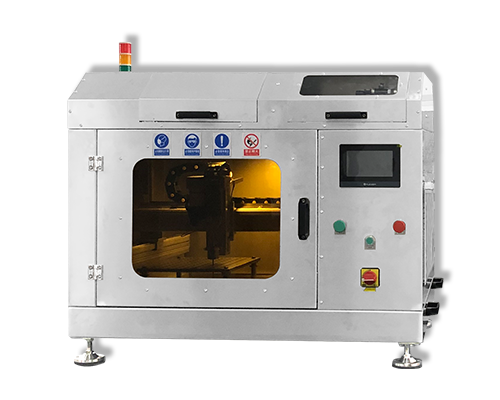
Ultrasonic spraying: precise and controllable coating process
Ultrasonic spraying technology utilizes high-frequency sound wave energy to atomize liquid silicone oil into micrometer sized uniform droplets, which are then directionally deposited on the inner wall of the drug storage container under the action of a carrier gas. This technology has significant advantages compared to traditional immersion coating or air spraying:
1. Excellent uniformity: The droplets generated by ultrasound have uniform size and concentrated distribution, which can form a thin film with consistent thickness on the surface of complex cavities, avoiding local accumulation or weak points.
2. Precise and controllable: By adjusting the ultrasonic frequency, flow rate, and spraying trajectory, the coating thickness can be precisely controlled (usually up to sub micron level), achieving the balance between optimal drag reduction effect and minimum oil agent usage.
3. High efficiency and low consumption: The spraying process has strong targeting, high material utilization, reduces waste of silicone oil, and avoids cleaning problems caused by excessive spraying.
4. Gentle process: The low-temperature atomization process will not cause thermal stress on the polymer materials of the drug storage device (such as medical polypropylene, COC, etc.), ensuring the integrity of the components.
Silicone oil coating: a safe and effective drag reducing medium
Medical grade silicone oil (polydimethylsiloxane) has become an ideal drag reducing coating material due to its unique physicochemical properties:
* Biocompatibility: Long term use for lubrication of medical devices, in compliance with relevant pharmacopoeias and ISO 10993 biosafety requirements, and rigorously validated for insulin compatibility.
* Chemical inertness: Stable in nature, does not react with insulin, and does not affect the stability of the drug solution.
* Durable lubrication: Through physical adsorption and appropriate cross-linking, it can firmly adhere to the inner wall of plastic, maintain lubrication performance during long-term infusion, and reduce the risk of coating detachment caused by friction.
* Drag reduction mechanism: The silicone oil coating forms a stable fluid dynamic pressure film at the friction interface, converting the solid dry friction between the piston and the inner wall of the reservoir into internal friction between liquid molecules, significantly reducing the friction coefficient.
Process implementation and quality control
In actual production, this process needs to be carried out in a clean environment and includes key steps:
1. Surface pretreatment: The inner wall of the drug storage container needs to undergo strict cleaning, plasma treatment, or moderate surface roughening to improve the adhesion and uniformity of the silicone oil coating.
2. Spray parameter optimization: Based on the size and shape of the drug storage container, determine the optimal ultrasonic power, atomization rate, spray distance, scanning speed, and curing conditions through experimental design (if mild heat treatment is required to promote adhesion).
3. Coating characterization: Interference microscopy, white light confocal microscopy, and other techniques are used to detect the uniformity of coating thickness; Evaluate the drag reduction effect through a friction coefficient tester; Conduct simulated infusion experiments to verify long-term reliability.
4. Strict verification: After the coating is completed, particle detection, extractable analysis, insulin stability testing, and biosafety evaluation are required to ensure compliance with medical device regulatory requirements.
Clinical value and prospects
The application of ultrasonic spray silicone oil coating in drug storage devices can bring significant clinical benefits:
* Improving infusion accuracy: Lower starting and running friction, especially conducive to precise delivery of small doses, and improving blood glucose control levels.
* Reduce residual medication: Reduce piston movement resistance, make injection more thorough, and improve insulin utilization.
* Enhance reliability: Smooth motion reduces component wear, potentially extending pump lifespan and reducing the risk of mechanical failure.
* Improving user experience: may allow for the use of smaller and quieter drive motors, which can help with device miniaturization and quietness.
In summary, the application of ultrasonic spraying technology in the preparation of silicone oil coating on the inner wall of insulin pump storage devices is an innovative process that integrates precision engineering, material science, and clinical needs. It precisely addresses the friction challenges inside the drug storage container by providing an ultra-thin, uniform, and sturdy drag reducing layer, significantly improving the accuracy, efficiency, and reliability of insulin infusion while ensuring safety. With the continuous optimization of process parameters and the improvement of quality control system, this technology is expected to become one of the standard processes for manufacturing high-performance insulin pump drug containers, providing better treatment experience for diabetes patients. In the future, further exploration of environmentally friendly coating materials and development of online real-time monitoring systems to achieve intelligent manufacturing will be a development direction worth paying attention to in this field.
About Cheersonic
Cheersonic is the leading developer and manufacturer of ultrasonic coating systems for applying precise, thin film coatings to protect, strengthen or smooth surfaces on parts and components for the microelectronics/electronics, alternative energy, medical and industrial markets, including specialized glass applications in construction and automotive.
Our coating solutions are environmentally-friendly, efficient and highly reliable, and enable dramatic reductions in overspray, savings in raw material, water and energy usage and provide improved process repeatability, transfer efficiency, high uniformity and reduced emissions.
Chinese Website: Cheersonic Provides Professional Coating Solutions
