
Preparation of Titanium Based Lead Dioxide Anode
Preparation of titanium based lead dioxide anode by Cheersonic ultrasonic spraying and its application in wet metallurgy
In the wet metallurgy process of non-ferrous metals, the performance of anode materials directly affects current efficiency, product quality, and production costs. Although traditional lead alloy anodes have lower costs, they suffer from problems such as high oxygen evolution overpotential, poor mechanical strength, easy deformation, and lead pollution. Titanium based lead dioxide anodes have gradually become an ideal choice to replace traditional lead anodes due to their excellent conductivity, corrosion resistance, and electrocatalytic activity. In recent years, ultrasonic spraying technology has been applied to the preparation of titanium based lead dioxide anode coatings due to its advantages of uniform coating preparation and good controllability, bringing new technological breakthroughs to the field of wet metallurgy.
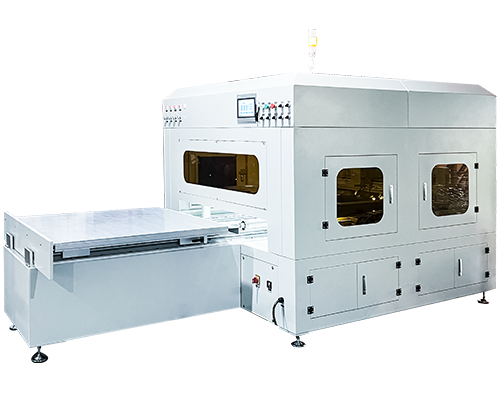
Ultrasonic spraying technology utilizes the cavitation effect generated by high-frequency sound waves to atomize the precursor solution into micrometer sized droplets, which are then transported to the heated titanium substrate surface through a carrier gas and undergo thermal decomposition reaction to form an oxide coating. Compared with traditional methods such as brush coating and electrodeposition, ultrasonic spraying can prepare lead dioxide coatings with uniform thickness, strong adhesion, and controllable surface morphology. The key parameters of this technology include ultrasonic frequency, spraying rate, substrate temperature, and precursor concentration. By optimizing these parameters, lead dioxide coatings with high specific surface area and excellent electrocatalytic performance can be obtained. In addition, introducing an intermediate layer of iridium tantalum oxide or tin antimony oxide between the titanium substrate and the lead dioxide coating can effectively prevent passivation of the titanium substrate and prolong the service life of the anode.
During the preparation process, surface pretreatment of the titanium substrate is first required, including mechanical polishing and chemical etching, to increase surface roughness and remove oxide films. Then, the solution containing lead salts is atomized by an ultrasonic nozzle and deposited on a heated titanium substrate, which is then transformed into lead dioxide through high-temperature pyrolysis. Repeat the spraying and pyrolysis process until the desired thickness is achieved. Finally, annealing treatment is carried out to eliminate internal stress and improve the crystallinity of the coating. The lead dioxide anode prepared by ultrasonic spraying technology has high adhesion strength between the coating and the substrate, large electrochemical active area, and significantly reduced oxygen evolution overpotential.
In the field of hydrometallurgy and electro deposited metals, titanium based lead dioxide anodes have shown significant advantages. Taking electroplated copper as an example, in copper sulfate solution, the anode has a high oxygen evolution overpotential, which can effectively suppress side reactions and improve current efficiency. Meanwhile, its excellent corrosion resistance ensures the long-term stable operation of the anode under strong acidic conditions, reducing the frequency of anode replacement and maintenance costs. In the process of nickel electroplating, the lead dioxide anode can resist the erosion of fluoride and chloride ions, avoiding the lead pollution problem caused by pitting corrosion of traditional lead anodes and improving the purity of nickel products. For cobalt electroplating, the low overpotential characteristic of the anode reduces the cell voltage and saves energy consumption. In the high-energy process of zinc electroplating, the application of lead dioxide anode significantly reduces the energy consumption of the electroplating process and improves economic benefits.
Compared with traditional lead alloy anodes, titanium based lead dioxide anodes have the following technical advantages: firstly, the oxygen evolution overpotential is reduced by about 300-500 millivolts, which can reduce the energy consumption of the electro deposition process by 10% -15%; Secondly, it has high mechanical strength, is not easily deformed, and can be made into various shapes to adapt to different electrolytic cell structures; Again, it does not contain toxic lead elements, avoiding heavy metal pollution and meeting green environmental protection requirements; Finally, the service life is long, reaching over 12 months under typical hydrometallurgical conditions, which is 2-3 times longer than traditional lead anodes.
Although significant progress has been made in the preparation of titanium based lead dioxide anodes using ultrasonic spraying, there are still some challenges to be faced. Such issues as cracking and peeling of coatings during long-term operation, reduction of lead dioxide under high temperature conditions, and cost control in large-scale production. Future research should focus on optimizing the microstructure of coatings, developing new composite interlayer materials, exploring multi-component doping modifications, and establishing a more comprehensive database of preparation process parameters.
In summary, ultrasonic spraying technology provides an effective way to prepare high-performance titanium based lead dioxide anodes, which have broad application prospects in the wet metallurgical electro deposition process of non-ferrous metals such as copper, nickel, cobalt, and zinc. With the continuous maturity of preparation technology and the gradual reduction of process costs, titanium based lead dioxide anodes are expected to replace traditional lead anodes on a large scale, promoting the development of the wet metallurgy industry towards high efficiency, energy conservation, and environmental protection.
About Cheersonic
Cheersonic is the leading developer and manufacturer of ultrasonic coating systems for applying precise, thin film coatings to protect, strengthen or smooth surfaces on parts and components for the microelectronics/electronics, alternative energy, medical and industrial markets, including specialized glass applications in construction and automotive.
Our coating solutions are environmentally-friendly, efficient and highly reliable, and enable dramatic reductions in overspray, savings in raw material, water and energy usage and provide improved process repeatability, transfer efficiency, high uniformity and reduced emissions.
