
Ultrasonic Spraying of Ir-Based Composite Coatings for Ti Anodes
Cheersonic Ultrasonic Spraying of Ir-Based Composite Coatings for Ti Anodes: precise preparation and analysis of new energy value
Iridium based multicomponent composite coating titanium anode, as the core functional material in the field of electrolysis, uses titanium as the substrate and iridium based multicomponent oxide as the coating, which combines high catalytic activity and strong corrosion resistance. It is a key consumable for new energy scenarios such as proton exchange membrane electrolysis of water for hydrogen production and advanced photovoltaic coating preparation. Ultrasonic spraying technology, with its high-precision atomization and controllable deposition characteristics, has become the preferred solution for the large-scale preparation of this type of anode coating, effectively solving the pain points of uneven coating, high loss of precious metals, and poor batch consistency in traditional processes, and promoting the dual upgrading of anode performance and industrial efficiency.
Core Structure and Material Logic
The iridium based multi-element composite coating titanium anode consists of a three-layer structure consisting of a titanium substrate, a transition intermediate layer, and an iridium based multi-element catalytic layer, with each layer working together to ensure the comprehensive performance of the anode. The titanium substrate is made of industrial pure titanium, which is treated with sandblasting, etching, and cleaning to form a rough surface, providing sufficient bonding sites for the coating. Its good mechanical strength and corrosion resistance can support long-term operation under working conditions. The transition intermediate layer is prepared by thermal decomposition method, mostly consisting of metal oxides such as tantalum and tin. It serves as a “bridge” between the substrate and the catalytic layer, alleviating the interface stress caused by the difference in thermal expansion coefficient and avoiding the coating from cracking and falling off in high-temperature electrolytic environment.
The catalytic layer is the core of the anode performance, using iridium as the main component, combined with multi-element composite designs such as tantalum and manganese. Iridium oxide has excellent oxygen evolution catalytic activity and chemical stability, making it the active core of coatings; Tantalum oxide can enhance the corrosion resistance and structural stability of coatings, and inhibit the dissolution and loss of iridium; Doping with transition metals such as manganese can optimize the lattice structure, increase the number of oxygen vacancies and active sites, and improve catalytic efficiency while reducing the amount of iridium used. This diverse composite design balances activity, lifespan, and cost, meeting the demand for efficient and low consumption anode materials in the field of new energy.
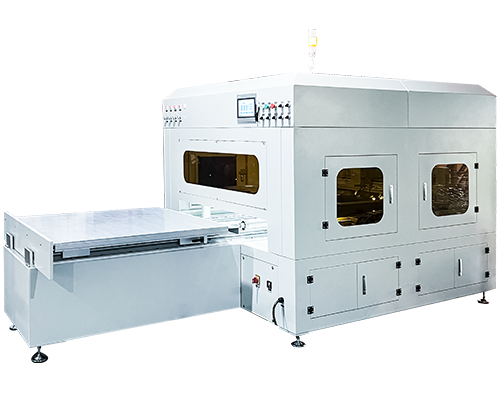
Ultrasonic spraying preparation process
Ultrasonic spraying relies on high-frequency ultrasonic vibration to achieve precise atomization and deposition of slurry, with no contact and low damage throughout the process, suitable for the precise preparation requirements of iridium based multi-component composite coatings. The core process is divided into three major steps: slurry preparation, atomization deposition, and sintering solidification.
The slurry preparation needs to be adapted to high acidity and high oxidation conditions, and is divided into non precious metal bottom slurry and iridium based precious metal top slurry. The bottom slurry uses transition metal sulfides and oxides as catalysts, mixed with perfluorosulfonic acid ionomers, deionized water, and organic solvents. It is dispersed by ultrasound to break down particle aggregation and form a uniform suspension with a thickness controlled between 20-200nm. The top slurry uses iridium based catalyst as the core, and mixes tantalum source, manganese source, and auxiliary components in proportion to achieve uniform dispersion of multiple elements through ultrasound stirring, ensuring consistency of coating composition. The thickness is controlled at 4-8 μ m, and the iridium loading can be accurately controlled to 0.1-0.7mg/cm ², far lower than traditional processes.
During the atomization deposition stage, the ultrasonic transducer converts electrical energy into high-frequency vibrations of 20-100kHz, causing the slurry to break into uniform droplets of 5-50 μ m. The droplet size distribution is narrow and the kinetic energy is low, avoiding damage to the substrate and splashing of raw materials. By precisely controlling the ultrasonic power, slurry flow rate, spraying speed, and substrate movement trajectory, liquid titration deposition can be achieved, and the coating uniformity can reach ± 5%, completely solving the problems of edge thickness and local accumulation in traditional spraying. Paired with a vacuum heating system, the substrate can be fixed to prevent deformation due to water absorption swelling, ensuring the stability of the coating structure.
The sintering and solidification process is carried out at a high temperature of 450-600 ℃ for 10-40 minutes, allowing the metal salts in the slurry to undergo thermal decomposition reactions and transform into crystalline or amorphous oxides, forming a dense and firm composite coating. Multiple coating sintering cycles can gradually accumulate coating thickness, avoiding uneven composition caused by a single thick coating, and ultimately obtaining iridium based multi-component composite coating titanium anodes with uniform thickness, strong adhesion, and no pinhole defects.
Core technological advantages
Accurate and controllable coating performance
Ultrasonic spraying achieves precise control of coating thickness, composition, and loading capacity in all dimensions. The thickness can be flexibly customized from nanometer to micrometer level, and the minimum iridium loading capacity can reach 0.01mg/cm ². The distribution of multiple elements is uniform without agglomeration. The coating uniformity is significantly improved, the active sites are fully exposed, and the electron and proton conduction paths are unobstructed. Under the same amount of iridium, the catalytic activity is increased by 10% -15% compared to traditional processes. The current density can reach 4A/cm ² at 2V voltage, meeting the requirements of high-power electrolysis conditions. At the same time, low defect coatings can avoid local corrosion and stress concentration, greatly enhancing the long-term stability of the anode, and can operate stably for over 400 hours at a current density of 2A/cm ².
Maximizing the utilization rate of precious metals
The utilization rate of precious metal catalysts in traditional spraying technology is only 20% -30%, and a large amount of raw materials are wasted due to splashing. However, ultrasonic spraying adopts directional deposition mode, without excessive spraying loss, and the catalyst utilization rate can exceed 80%, reaching over 95% in high-end scenarios. This advantage significantly reduces the consumption of iridium resources, alleviates the cost pressure of scarce precious metals, and reduces the environmental pressure caused by raw material waste, which is in line with the green development concept of the new energy industry.
Process adaptability and mass production capability
Ultrasonic spraying is compatible with all scenarios of laboratory research and industrial production. During the research and development stage, the slurry formula and process parameters can be quickly adjusted, the optimal coating scheme can be screened, and technology iteration can be accelerated; During the mass production stage, a multi nozzle collaborative and reciprocating substrate conveying system is equipped, with a spraying rate of up to 0.8m ²/h and an annual production capacity of over 120000 pieces, supporting the large-scale production of gigawatt level electrolytic cells. The equipment can adapt to stable atomization of high viscosity and solid particle containing slurries, with large aperture nozzles effectively avoiding blockages and low maintenance costs. The fully automated control system ensures batch consistency and promotes the rapid transformation of technological achievements into industrial production capacity.
Adapt to diverse application scenarios
The iridium based multi-element composite coating titanium anode prepared by this technology can be widely used in fields such as proton exchange membrane electrolysis of water for hydrogen production, advanced coatings for perovskite photovoltaics, and electrode preparation for hydrogen fuel cells. In the scenario of hydrogen production through electrolysis of water, low oxygen evolution overpotential (0.15-0.25V) and high current efficiency (97% -99%) can significantly reduce hydrogen production energy consumption; In the field of photovoltaic coatings, uniform and dense iridium based coatings can improve light absorption efficiency and device stability, and facilitate the commercialization of new photovoltaic technologies such as perovskite. At the same time, the coating is resistant to high concentrations of chloride ions and a wide pH range (0-14), making it suitable for complex working conditions such as seawater electrolysis and chemical wastewater treatment.
Industrial value and development prospects
The application of ultrasonic spraying iridium based multi-component composite coating titanium anode is promoting three major breakthroughs in the new energy electrolysis industry. One is to break through the bottleneck of large-scale cost reduction, by precisely controlling the load capacity and high utilization rate, the cost of iridium based anodes can be reduced by about 15%, solving the pain point of high initial costs in the new energy industry. The second is to improve the operational efficiency of the equipment. The low overpotential coating reduces electrolytic energy consumption, and the high stability coating extends the service life of the equipment. Under normal operating conditions, the anode life can reach 15000-30000 hours, and in high-end scenarios, it can exceed 30000 hours, reducing operation and maintenance costs. The third is to expand the application boundaries, adapt to the needs of multiple fields such as hydrogen energy, photovoltaics, and energy storage, provide core material support for green hydrogen preparation and advanced energy device manufacturing, and accelerate the energy transformation process.
In the future, with the continuous optimization of ultrasonic spraying technology and the continuous innovation of iridium based multi-component composite coating formulations, the anode performance will be further improved and the cost will continue to decrease. At the same time, this technology will be deeply integrated with the manufacturing of new energy equipment, promoting the development of industries such as electrolytic water hydrogen production and photovoltaic coating preparation towards high efficiency, green, and scale, providing key technical support for global energy transformation, and helping to achieve the “dual carbon” goal.
The combination of ultrasonic spraying technology and iridium based multi-element composite coating titanium anode is not only an innovation in material preparation technology, but also an important driving force for the upgrading of the new energy industry. Through precise, efficient, and environmentally friendly preparation solutions, this technology is driving iridium anodes from the laboratory to industrial applications, injecting core power into the high-quality development of the new energy field and becoming a key bridge connecting material innovation and industrial landing.
About Cheersonic
Cheersonic is the leading developer and manufacturer of ultrasonic coating systems for applying precise, thin film coatings to protect, strengthen or smooth surfaces on parts and components for the microelectronics/electronics, alternative energy, medical and industrial markets, including specialized glass applications in construction and automotive.
Our coating solutions are environmentally-friendly, efficient and highly reliable, and enable dramatic reductions in overspray, savings in raw material, water and energy usage and provide improved process repeatability, transfer efficiency, high uniformity and reduced emissions.
