
Ultrasonic Spraying Preparation and Application of Ir/Ru-Ti Anodes
Ultrasonic Spraying Preparation and Application of Ir/Ru-Ti Anodes – Cheersonic
In the field of electrochemical industry, the performance of anode materials directly determines the electrolysis efficiency, energy consumption level, and equipment service life. In recent years, with the continuous advancement of coating preparation technology, ultrasonic spraying method has gradually become an important process route for the production of high-performance iridium and ruthenium iridium titanium anodes due to its unique advantages. This article focuses on the theme of this technology, exploring its principles, material properties, and practical application value.
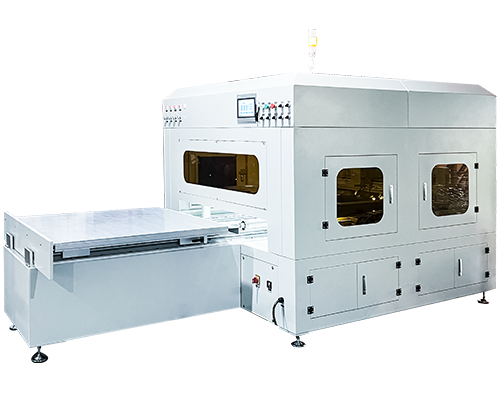
Overview of Ultrasonic Spraying Technology
Ultrasonic spraying is a coating preparation technique that utilizes high-frequency sound wave energy to atomize precursor solutions into micrometer sized droplets and uniformly deposit them on the surface of the substrate. Compared with traditional pneumatic spraying, ultrasonic atomization process does not require high-pressure gas, with narrow droplet size distribution and low kinetic energy, which can effectively avoid splashing and rebound. It is particularly suitable for preparing thin electrode coatings with controllable thickness and uniform morphology.
For titanium based anodes, industrial pure titanium or titanium alloys are usually used as the substrate, which is pre treated with acid etching or sandblasting to increase the specific surface area and mechanical anchoring points. Subsequently, precursor solutions containing metal elements such as iridium, ruthenium, titanium, etc. (such as chlorides, nitrates, or organic complexes) are transported to the surface of the titanium plate through an ultrasonic nozzle to form a wet liquid film. After subsequent thermal decomposition and oxidation treatment, metal salts are converted into corresponding oxides or mixed oxide coatings, ultimately obtaining anodes with electrocatalytic activity.
Material properties of iridium based and ruthenium iridium titanium anodes
1. Iridium based anode
Pure iridium oxide coatings and composite systems such as iridium tantalum and iridium tin are known for their excellent electrocatalytic activity and corrosion resistance in oxygen evolution. In acidic electrolysis environments (such as sulfuric acid systems), iridium anodes exhibit extremely low oxygen evolution overpotential and high stability, and can withstand high current density shocks for a long time without significant dissolution. Its electrochemical stability is mainly attributed to the dense and low defect surface layer formed by iridium oxide under anodic polarization conditions, which effectively inhibits passivation and corrosion of the titanium substrate.
2. Ruthenium iridium titanium anode
The ruthenium iridium titanium ternary system is a classic material in the fields of chlorine evolution reaction and chlorate electrolysis. Ruthenium oxide has extremely high catalytic activity for chlorine evolution, but its corrosion resistance is insufficient when used alone; The introduction of iridium element can significantly enhance the chemical stability and anti deactivation ability of the coating; The addition of titanium oxide helps to adjust the microstructure of the coating, increase the specific surface area, and reduce costs. The synergistic effect of the three enables the ruthenium iridium titanium anode to exhibit excellent comprehensive performance in scenarios such as chlor alkali industry, seawater electrolysis for chlorine production, and sodium hypochlorite generation.
Advantages of Ultrasonic Spray Preparation Process
The use of ultrasonic spraying technology to prepare the above-mentioned anode coating has the following significant advantages compared to traditional brush coating, immersion coating, or atmospheric plasma spraying:
-High coating uniformity: The droplet size generated by ultrasonic atomization is concentrated in the range of 20-50 microns, and the motion trajectory is controllable, which can form a wet film with a thickness deviation of less than ± 5% on a large area of titanium substrate. This avoids the stripe like unevenness caused by brushing or the edge accumulation effect caused by immersion coating.
-High utilization rate of precious metals: Traditional manual coating often results in 20% -30% solution waste, while ultrasonic spraying can achieve over 95% material transfer efficiency. For expensive metals such as iridium and ruthenium, this advantage directly translates into significant cost savings.
-Adjustable microstructure of coating: By controlling the spraying parameters (atomization power, carrier gas flow rate, substrate temperature) and heat treatment program, the grain size, porosity, and crack morphology of the coating can be precisely controlled. Research has shown that iridium based coatings produced by ultrasonic spraying typically exhibit a nano scale particle stacking structure, with a very large specific surface area and a much higher density of electrochemical active sites than traditional methods.
-Good repeatability and suitable for large-scale production: The automated ultrasonic spraying equipment can operate continuously and stably for 24 hours, with a coating surface density fluctuation of less than 2%, making it particularly suitable for industrial mass production.
Application Fields and Actual Results
Based on the advantages of the above materials and processes, ultrasonic spraying of iridium based and ruthenium iridium titanium anodes has been successfully applied in multiple industrial fields:
-Electrolysis of water for hydrogen production: In the proton exchange membrane electrolysis cell, the oxygen evolving anode is coated with iridium, and the ultrasonic spraying process ensures complete coverage of the coating on the curved or microporous titanium substrate, significantly reducing the electrolysis voltage and extending the maintenance cycle.
-Chlor alkali industry: After replacing traditional graphite or lead dioxide anodes with ruthenium iridium titanium anodes, the current efficiency is increased by 5% -8%, the purity of chlorine gas is improved, and the coating life can reach more than 8 years. Ultrasonic spraying further solves the problem of coating consistency for large plate anodes.
-Wastewater treatment and electrochemical synthesis: Iridium tantalum anodes exhibit excellent electro oxidation degradation ability for industrial wastewater containing organic pollutants or ammonia nitrogen; The ruthenium iridium titanium anode is suitable for on-site sodium hypochlorite generation devices. The ultrasonic spraying process enables the anode to maintain excellent catalytic activity on complex shaped substrates such as mesh and porous plates.
-Cathodic protection and seawater pollution prevention: In marine engineering, ruthenium iridium titanium auxiliary anodes prepared by ultrasonic spraying can stably output current for a long time in high chloride ion environments, protecting ship hulls or pipelines from corrosion.
Technology Outlook
Although ultrasonic spraying technology has shown great potential, it can still be further developed in the following directions in the future: developing environmentally friendly water-soluble precursor systems to reduce organic solvent volatilization; Introducing machine learning into process parameter optimization to accelerate the screening of coating formulations; Explore composite processes with atomic layer deposition, pulsed laser deposition, and other techniques to prepare gradient or multi-layer composite structures. It can be foreseen that with the increasing demand for hydrogen production industry and high-end electrochemical equipment, high-performance iridium based and ruthenium iridium titanium anodes prepared by ultrasonic spraying will have broader application prospects.
In summary, ultrasonic spraying technology provides an efficient, economical, and environmentally friendly solution for the precise preparation of iridium based and ruthenium iridium titanium anodes. This process not only fully utilizes the electrocatalytic potential of precious metal materials, but also promotes the continuous progress of the electrochemical industry towards low energy consumption, long lifespan, and high consistency.
About Cheersonic
Cheersonic is the leading developer and manufacturer of ultrasonic coating systems for applying precise, thin film coatings to protect, strengthen or smooth surfaces on parts and components for the microelectronics/electronics, alternative energy, medical and industrial markets, including specialized glass applications in construction and automotive.
Our coating solutions are environmentally-friendly, efficient and highly reliable, and enable dramatic reductions in overspray, savings in raw material, water and energy usage and provide improved process repeatability, transfer efficiency, high uniformity and reduced emissions.
