
Ultrasonic Spraying in Ruthenium-Titanium Anode Preparation
Application of Cheersonic Ultrasonic Spraying in Ruthenium-Titanium Anode Preparation for Chlor-Alkali Industry
The chlor-alkali industry is an essential fundamental sector of the national economy. Its core process, brine electrolysis, imposes extremely high requirements on the performance of electrode materials. Titanium anodes are widely adopted in this field due to their excellent corrosion resistance and electrical conductivity. Coating the surface of titanium substrates with ruthenium-titanium mixed oxide coatings can significantly enhance the catalytic activity and service life of electrodes. Among numerous coating preparation methods, ultrasonic spraying technology has emerged as an advanced approach for fabricating high-performance titanium-based ruthenium-titanium coatings by virtue of its unique advantages.
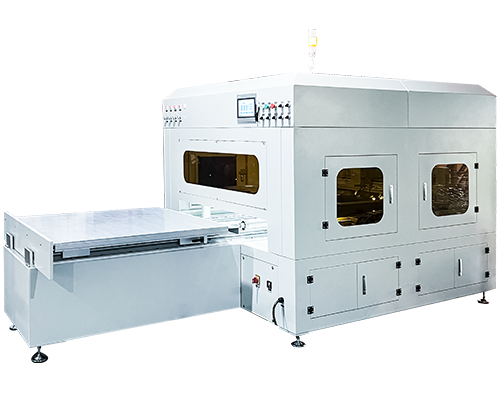
Principle of Ultrasonic Spraying Technology
Ultrasonic spraying technology converts electrical energy into high-frequency mechanical vibration via piezoelectric transducers, atomizing liquid at the nozzle into uniform droplets with a diameter of tens of micrometers. This atomization process does not rely on high pressure or high-speed airflow; it solely depends on the cavitation effect and surface wave action generated by ultrasonic vibration. Consequently, the droplets feature a highly uniform size distribution and low initial velocity. For ruthenium-titanium coating precursor solutions, this mild atomization method effectively avoids solution splashing and component separation caused by high-speed airflow impact in conventional pneumatic spraying, ensuring the chemical uniformity of the coating.
Characteristics and Requirements of Titanium-Based Ruthenium-Titanium Coatings
Titanium anodes for the chlor-alkali industry generally use titanium mesh or titanium plates as substrates, on which ruthenium-titanium oxide coatings need to be fabricated. The coating is mainly composed of ruthenium dioxide and titanium dioxide. Ruthenium dioxide provides electrocatalytic activity and reduces the overpotential of chlorine evolution reactions, while titanium dioxide enhances coating stability and bonding strength with the titanium substrate. An ideal ruthenium-titanium coating should possess the following characteristics: uniform and controllable thickness, dense microstructure, rational crack distribution, and stable component ratio. Traditional brushing and roller coating methods tend to cause uneven thickness and component segregation, drawbacks that ultrasonic spraying can perfectly compensate for.
Key Control Parameters in Ultrasonic Spraying Preparation
In practical production, multiple parameters need precise control when applying ruthenium-titanium coatings with ultrasonic spray equipment. The precursor solution is typically prepared by dissolving ruthenium salts and titanium salts in organic solvents at a specific ratio. During spraying, ultrasonic frequency determines droplet size, while carrier gas flow rate affects the traveling path and deposition morphology of droplets reaching the substrate surface. Substrate temperature control is equally critical: appropriate preheating accelerates solvent volatilization, prevents droplet aggregation and flowing on the surface, and forms a smooth and uniform wet film. In addition, the relative moving speed and path planning of the spray nozzle and substrate directly determine the thickness uniformity of the coating.
A multi-layer thin-coating strategy is commonly adopted, with intermediate heat treatment applied after each spraying cycle to fully decompose organic components and enable gradual crystallization of oxides. High-temperature sintering is finally performed to form a ruthenium-titanium solid solution coating with a rutile structure. Ultrasonic spraying technology enables precise control of the single spraying volume, limiting the thickness of each thin layer to only several micrometers or even sub-micrometers, which is highly beneficial for regulating the crack morphology and internal stress distribution of the coating.
Technical Advantages and Application Effects
Compared with traditional manual brushing and roller coating processes, ultrasonic spraying technology delivers remarkable advantages in the preparation of titanium-based ruthenium-titanium anodes. Firstly, its non-contact deposition method avoids mechanical damage, making it particularly suitable for uniform coating of large-area or special-shaped titanium substrates. Secondly, the automated spraying system achieves precise control over coating thickness and component distribution with excellent batch consistency, greatly reducing human operation errors. Furthermore, ultrasonic spraying boasts high material transfer efficiency with minimal solvent volatilization loss during atomization, cutting down the waste of precious ruthenium metal and offering superior economic benefits.
Titanium-based ruthenium-titanium anodes prepared by ultrasonic spraying feature a smooth and delicate coating surface, reasonably distributed crack networks, and increased active specific surface area. In chlor-alkali electrolysis condition tests, such anodes exhibit lower chlorine overpotential and longer accelerated electrolysis service life. The bonding strength between the coating and titanium substrate is enhanced, effectively inhibiting the formation of passivation films and the dissolution and loss of active components.
Conclusion
Ultrasonic spraying technology provides a high-quality, high-precision solution for the preparation of titanium-based ruthenium-titanium anodes used in the chlor-alkali industry. By precisely controlling droplet size and the deposition process, this technology realizes uniform and controllable composition and structure of ruthenium-titanium coatings, thereby improving the electrocatalytic performance and service life of anodes. As the chlor-alkali industry raises higher requirements for energy conservation, consumption reduction and production stability, ultrasonic spraying technology will enjoy broader application prospects in titanium anode manufacturing. Continuously optimizing spraying process parameters and developing automated equipment suitable for large-scale production represent important directions to promote the industrialization of this technology.
About Cheersonic
Cheersonic is the leading developer and manufacturer of ultrasonic coating systems for applying precise, thin film coatings to protect, strengthen or smooth surfaces on parts and components for the microelectronics/electronics, alternative energy, medical and industrial markets, including specialized glass applications in construction and automotive.
Our coating solutions are environmentally-friendly, efficient and highly reliable, and enable dramatic reductions in overspray, savings in raw material, water and energy usage and provide improved process repeatability, transfer efficiency, high uniformity and reduced emissions.