
Ultrasonic Spray Coating Machines Enhance Syringe Lubrication
Ultrasonic Spray Coating Machines Enhance Syringe Lubrication, Improving the Medical Operation Experience
In the medical field, syringes are fundamental and crucial medical devices. Their smooth operation directly impacts the efficiency of medical staff and the patient experience. The smoothness of the syringe plunger relies heavily on a precision process—using an ultrasonic spray coating machine to apply silicone oil to the inner wall of the syringe. This forms a uniform lubricating coating, effectively reducing plunger thrust resistance and ensuring a smooth and stable operation, thus laying a solid foundation for medical safety.
Silicone oil, as an ideal material for syringe lubrication, has properties that are highly compatible with the needs of medical scenarios. Silicone oils used for syringe lubrication are mostly medical-grade polydimethylsiloxanes, possessing excellent biocompatibility, chemical inertness, and thermal stability. They meet the stringent standards of the medical industry, do not react with drugs, and do not irritate human tissue, making them safe for surface treatment of various syringes. The viscosity of this silicone oil can be flexibly adjusted to match the appropriate lubrication effect according to the syringe specifications and usage requirements, ensuring smooth plunger operation while preventing impurities caused by excessive silicone oil shedding, which could affect medical safety.
Ultrasonic spraying machines, with their precise and controllable technological advantages, have become the core equipment for silicone oil lubrication treatment of syringes, completely solving many limitations of traditional spraying processes. Traditional immersion, wiping, or air pressure spraying methods are prone to problems such as uneven silicone oil coating, localized accumulation, or missed coatings, leading to either poor lubrication, sticking of the plunger, silicone oil waste, or even the risk of particle shedding due to excessive coating thickness. Ultrasonic spraying machines, however, atomize silicone oil into uniform droplets of 10-50 micrometers through the vibration of high-frequency ultrasonic transducers. With the aid of a precision motion control system, they achieve precise coverage of the syringe’s inner wall, controlling coating thickness error to a very small range, fundamentally ensuring the uniformity and density of the lubricating coating.
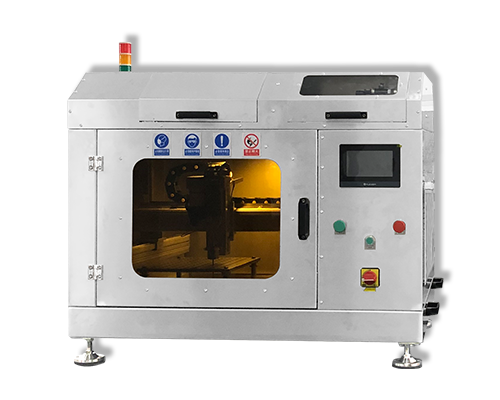
The application of ultrasonic spraying machines in silicone oil spraying for syringes has irreplaceable technological advantages. Firstly, the spraying precision is extremely high. Employing a non-contact spraying method, combined with a multi-axis linkage mechanical structure, it can precisely control the spraying area, forming a coating only on the areas of the syringe’s inner wall that require lubrication, avoiding contamination of the syringe’s exterior, and ensuring consistent lubrication for every syringe. Secondly, the material utilization rate is high, reaching over 95%, significantly reducing silicone oil waste and lowering production costs. Compared to traditional processes, it effectively saves on medical consumable costs. Thirdly, the equipment is easy to operate, allowing for flexible adjustment of atomized particle size, spray flow rate, and movement speed based on the syringe’s material, capacity, and other parameters, adapting to the production needs of different syringe specifications. The equipment also features a self-cleaning function, effectively preventing nozzle clogging, reducing maintenance costs, and is suitable for large-scale industrial production.
In practical medical applications, the ultrasonic spraying process for silicone oil provides multiple safeguards for the safe use of syringes. When medical personnel use syringes lubricated with silicone oil, the push rod advance resistance is significantly reduced, making operation more effortless and precise. Especially in emergency injections and continuous injection scenarios, it effectively improves operational efficiency and reduces medical risks caused by operational delays. Simultaneously, the uniform silicone oil coating forms a hydrophobic surface, reducing drug residue on the syringe’s inner wall, ensuring accurate dosage, and further enhancing the safety and reliability of medical treatment. Furthermore, the sprayed silicone oil coating is compatible with common medical sterilization methods such as ethylene oxide sterilization and irradiation sterilization. It remains stable during the sterilization process, without issues like coating peeling or failure, ensuring the syringe maintains excellent lubrication performance throughout its shelf life.
With the continuous development of the medical industry, the quality requirements for medical devices such as syringes are increasingly stringent, leading to the widespread application of ultrasonic spraying technology in syringe lubrication. This precision process not only solves the pain points of traditional lubrication methods and improves the operational and safety performance of syringes, but also promotes the refinement and upgrading of medical device manufacturing processes. In the future, with continuous technological optimization, ultrasonic spraying machines will achieve more precise and efficient applications in syringe lubrication, providing stronger support for the high-quality development of the medical industry and safeguarding the operational convenience of medical personnel and the safety of patients.
About Cheersonic
Cheersonic is the leading developer and manufacturer of ultrasonic coating systems for applying precise, thin film coatings to protect, strengthen or smooth surfaces on parts and components for the microelectronics/electronics, alternative energy, medical and industrial markets, including specialized glass applications in construction and automotive.
Our coating solutions are environmentally-friendly, efficient and highly reliable, and enable dramatic reductions in overspray, savings in raw material, water and energy usage and provide improved process repeatability, transfer efficiency, high uniformity and reduced emissions.