
Ultrasonic Spray Coating on Complex and Non‑Planar Substrates
Advantages of Ultrasonic Spray Coating Technology on Complex and Non‑Planar Substrates
Against the backdrop of the rapid iteration of photovoltaic (PV) technology, traditional spray coating processes are often limited by substrate morphology and struggle to meet the demands for diversified and lightweight development. By virtue of its unique working principle and structural design, ultrasonic spray coating technology demonstrates exceptional stability and adaptability in matching complex or non‑planar substrates, opening up broad prospects for the PV industry to break through the constraints of conventional planar glass and develop new‑form products. This technology eliminates the stringent requirements for substrate flatness imposed by traditional processes. Even for substrates with uneven surfaces, variable curvatures, or complex structures, it enables uniform and efficient coating deposition. Its outstanding robustness has become one of the core driving forces promoting morphological innovation in PV products.
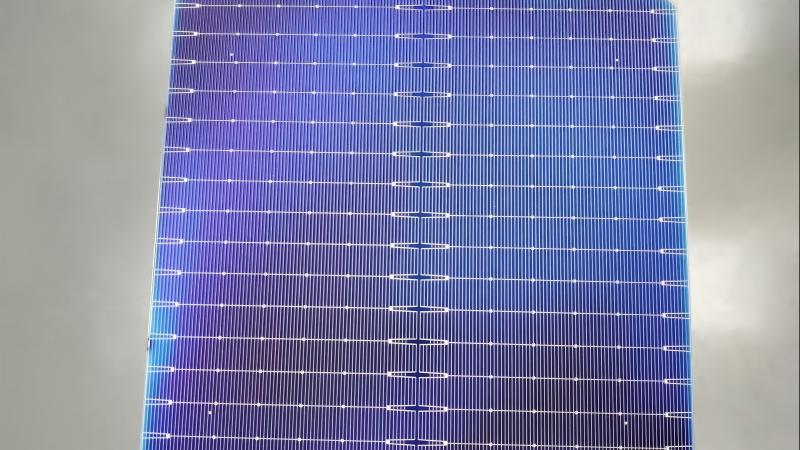
The robustness of ultrasonic spray coating technology stems first from its non‑contact spraying method and precise atomization control. Unlike traditional contact spray processes, this technology atomizes coating materials into fine and uniform droplets via ultrasonic vibration. Guided by airflow, the droplets adhere precisely to the substrate surface without direct contact, effectively preventing scratches and damages to complex substrates that may occur in contact spraying, while also avoiding issues such as uneven coating thickness and missed coating caused by substrate surface irregularities. Whether for curved substrates with complex surfaces or non‑planar substrates with irregular structures like protrusions and grooves, ultrasonic spraying can uniformly cover every area of the substrate through precise atomization control and flexible spraying paths, ensuring coating consistency and integrity, and providing a solid guarantee for the stable performance of subsequent PV modules.
Second, ultrasonic spray coating technology features strong process adaptability. It can flexibly adjust spraying parameters according to the morphological characteristics of various complex substrates, further enhancing its compatibility. In practical applications, there is a wide variety of complex and non‑planar substrates, including curved metal substrates and flexible polymer substrates for special PV products, as well as composite substrates with intricate hollow structures. These substrates differ in material, surface roughness, and curvature, requiring distinct spraying processes. By adjusting parameters such as ultrasonic frequency, atomization pressure, spraying distance, and moving speed, ultrasonic spray coating technology can adapt to the characteristics of different substrates and achieve ideal spraying effects on both highly curved surfaces and structurally complex shaped substrates. This high degree of flexibility allows the technology to easily meet the needs of various complex scenarios without designing dedicated spraying equipment for substrates of different forms, significantly reducing the R&D and production costs of new PV products.
More importantly, the excellent compatibility of ultrasonic spray coating technology with complex and non‑planar substrates directly drives the morphological innovation of PV products, breaking the long‑standing dependence of PV modules on planar glass. Traditional PV modules mostly use planar glass as substrates, which, limited by the rigidity and form of glass, are difficult to apply in curved buildings, portable devices, special equipment, and other scenarios, greatly restricting the application scope of PV technology. With ultrasonic spray coating technology, researchers can precisely deposit PV coatings on non‑planar substrates and develop a series of new PV product forms — such as flexible PV modules that can conform to building curves, small shaped PV modules integrated into portable electronic devices, and lightweight PV components for aerospace applications. These new PV products not only expand the application scenarios of PV technology but also better adapt to usage requirements in different environments, injecting new vitality into the diversified development of the PV industry.
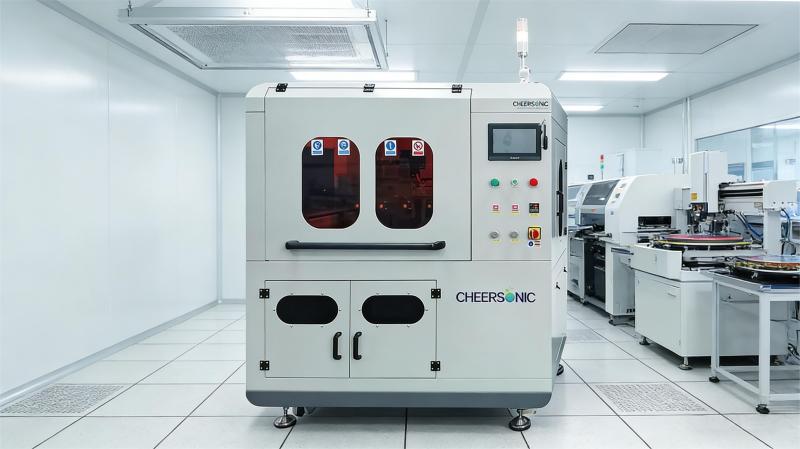
In practical industrial applications, the robustness of ultrasonic spray coating technology has been fully verified. In the production of flexible PV modules, it uniformly sprays PV coatings on flexible polymer substrates, ensuring the modules are bendable, foldable, and performance‑stable. In the R&D of shaped PV products, it achieves precise spraying on complex curved substrates to maintain high PV conversion efficiency. In both cases, ultrasonic spray coating technology shows irreplaceable advantages. It not only solves the technical difficulty of achieving uniform coating on complex substrates with traditional processes but also enables the large‑scale production of new PV products by simplifying processes and reducing production costs.
In summary, ultrasonic spray coating technology possesses remarkable robustness in adapting to complex and non‑planar substrates. Its non‑contact spraying and flexible parameter adjustment can not only meet the spraying requirements of various complex substrates but also promote innovative breakthroughs in PV product morphology, freeing PV technology from the traditional form of planar glass. As the PV industry evolves toward diversification, lightweight, and scenario‑based applications, ultrasonic spray coating technology will play an increasingly important role in bringing more new PV products to the market and providing strong support for energy transition and sustainable development.
About Cheersonic
Cheersonic is the leading developer and manufacturer of ultrasonic coating systems for applying precise, thin film coatings to protect, strengthen or smooth surfaces on parts and components for the microelectronics/electronics, alternative energy, medical and industrial markets, including specialized glass applications in construction and automotive.
Our coating solutions are environmentally-friendly, efficient and highly reliable, and enable dramatic reductions in overspray, savings in raw material, water and energy usage and provide improved process repeatability, transfer efficiency, high uniformity and reduced emissions.
Chinese Website: Cheersonic Provides Professional Coating Solutions