
PTCA Guidewire Surface Treatment
Application of Ultrasonic Spraying Technology in the Surface Treatment of 0.014-inch PTCA Guidewires
Overview of 0.014-inch PTCA Guidewires
The 0.014-inch (approximately 0.36 mm) PTCA (percutaneous transluminal coronary angioplasty) guidewire is a core instrument in cardiovascular interventional surgery. As the “precursor” of interventional treatment, it plays a crucial role in guiding balloon catheters, stents, and other devices precisely to the coronary artery lesion site.
This type of guidewire typically employs a composite structure design: the proximal end is a high-strength stainless steel core wire, providing excellent pushing force and torque transmission performance; the distal end is made of a highly elastic nickel-titanium alloy (Nitinol), combined with a precision spring coil, achieving excellent flexibility and shape memory characteristics; the tip is treated with a special process to ensure ultra-slippery passage through complex vascular pathways.
The surface coating of the guidewire is a core element determining its clinical performance. Hydrophilic coatings (such as PVP and PEG copolymer systems) can form a super-lubricating surface in body fluid environments, significantly reducing vascular wall friction resistance (the coefficient of friction can be reduced to below 0.01), thus reducing the risk of endothelial damage and thrombosis. Hydrophobic coatings (such as PTFE and fluorinated polymers) provide excellent wear resistance and low friction characteristics, suitable for the proximal end of the guidewire or specific functional areas.
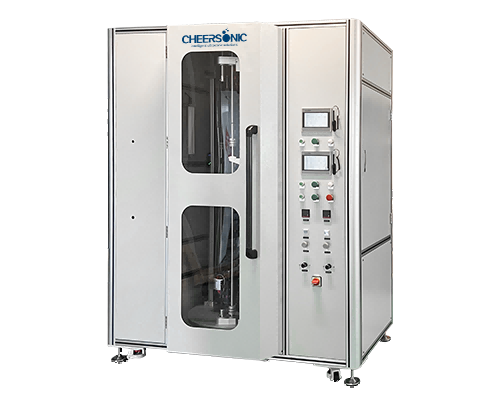
Principles and System Composition of Ultrasonic Spraying Technology
(I) Core Working Principle
Ultrasonic spraying technology utilizes high-frequency ultrasonic vibration (typically 1.6-2.4MHz) to achieve precise atomization and controllable deposition of liquid coating materials. A piezoelectric crystal converts the high-frequency electrical signal into mechanical vibration, which is transmitted to the nozzle tip via an amplitude transformer. Under the combined action of surface tension and vibrational energy, the coating solution is decomposed into uniform micron-sized droplets of 10-50μm, which are then precisely delivered to the high-speed rotating guidewire surface via a low-pressure carrier gas (usually clean air or nitrogen), forming a continuous, ultra-thin, and uniform functional coating.
Compared to traditional air spraying and dip coating processes, ultrasonic spraying offers significant advantages, including low-shear atomization (avoiding molecular chain breakage in the coating material), non-contact coating (no mechanical damage), high material utilization (>95%), and precise controllable coating thickness (nanometer to micrometer level).
(II) Precision Spraying System Composition
A complete PTCA guidewire ultrasonic spraying system integrates five core functional modules to ensure the stability and consistency of coating quality:
1. Ultrasonic Atomization Core Module: Employs a 2.0MHz high-frequency ultrasonic oscillator, equipped with a precision amplitude transformer and a non-clogging nozzle, supporting precise micro-flow rate control of 0.1-10mL/min. The atomization rate and droplet size can be precisely adjusted via ultrasonic amplitude (15%-100% adjustable).
2. Multi-Axis Precision Motion Control System: Features a three-linkage design across the X-axis (nozzle horizontal movement), Z-axis (height positioning), and R-axis (guidewire rotation); the rotation axis is equipped with a dedicated precision clamp, supporting stable clamping of 0.36mm diameter guidewires and stepless speed regulation from 0-300rpm (120rpm recommended); linear positioning accuracy reaches ±0.1mm, and nozzle movement speed is adjustable from 0-20mm/s (8mm/s recommended).
3. 4. Constant Temperature and Pressure Liquid Supply System: Features a built-in sealed liquid storage unit with temperature control (20-60℃±1℃), employing a micro-metering pump to achieve precise flow output of 0.1-10mL/min; equipped with a solution circulation and filtration device (0.45μm filtration accuracy) to ensure the stability and cleanliness of the coating solution.
5. Environmental and Process Monitoring System: A sealed spraying chamber with built-in temperature and humidity sensors (control accuracy: temperature 25±2℃, relative humidity 45±5%) and a solvent recovery device; integrated CCD vision inspection system for online monitoring of coating surface quality; full process parameter data acquisition and traceability (ultrasonic frequency, atomization rate, guide wire rotation speed, nozzle movement speed, etc.).
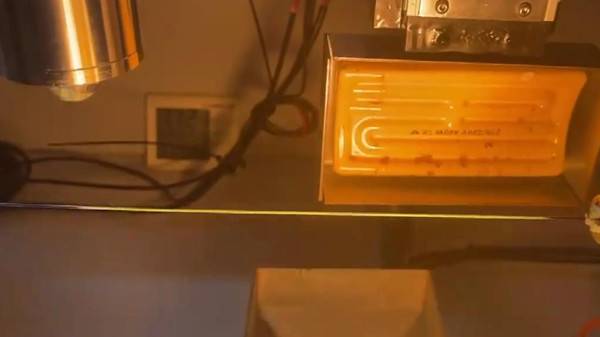
6. Post-treatment Curing Unit: Configured with hot air circulation curing (40-80℃) or UV curing systems according to the coating material characteristics to ensure a strong bond between the coating and the guide wire substrate (adhesion reaches 5B grade, no peeling in cross-cut adhesion test).
Key Process Parameter Optimization and Coating Performance Control
(I) Core Process Parameter Combinations (Based on a 0.36mm Diameter Guide Wire)
Through system process experiments, the following optimized parameter combinations are recommended for different coating material systems:
|Process Parameters|Hydrophilic Coating (PEG-PCL Copolymer)|Hydrophobic Coating (PTFE Dispersion)|
|Ultrasonic Frequency|2.0MHz|1.7MHz|
|Atomization Rate|2.0-2.5mL/min|1.0-1.5mL/min|
|Atomization Distance (Nozzle to Guide Wire)|45-50mm|40-45mm|
|Guide Wire Rotation Speed|120rpm|150rpm|
|Nozzle Movement Speed|8mm/s|6mm/s|
|Spraying Ambient Temperature|25℃|23℃|
|Coating Solution Temperature|35℃ (to improve fluidity)|Room Temperature (25℃)|
|Curing Temperature/Time|60℃/30min (hot air curing)|80℃/45min (hot air curing)|
Coating thickness is precisely controlled by the number of reciprocating sprays: A single spray can form a 0.5-1μm coating; through 2-5 reciprocating sprays, a target coating thickness of 1-5μm can be achieved, with a thickness uniformity deviation ≤±5%, meeting the stringent requirements for medical device coatings.
(II) Core Performance Indicators of the Coating
1. Structural Integrity: The coating is continuous, without pores, sagging, or orange peel effect; surface roughness Ra≤0.5μm; thickness uniformity (measured at any three points) deviation<±3%.
2. Surface Properties: The contact angle of the hydrophilic coating is <10° in the wet state and 65±3° in the dry state; the contact angle of the hydrophobic coating is >110°; dynamic coefficient of friction (simulated vascular environment)<0.05.
3. Mechanical and Durability Properties: The coating adhesion reaches grade 5B (cross-cut test); bending resistance (100 cycles of repeated 180° bending) shows no coating peeling; abrasion resistance (1000 cycles of reciprocating friction) shows a friction coefficient change of <15%.
4. Biocompatibility: Meets ISO 10993 biocompatibility standards, with no cytotoxicity, no sensitization, and no hemolytic reaction; excellent anti-protein adsorption performance (protein adsorption amount <0.5μg/cm²).
Performance Comparison with Traditional Coating Processes
| Process Type | Coating Uniformity | Thickness Control Accuracy | Material Utilization | Coating Adhesion | Applicable Coating Types | Process Stability |
|Ultrasonic Spraying|≤±3%|Nano to Micron (10nm-100μm)|>95%|5B Grade|Hydrophilic, Hydrophobic, Pharmaceutical Coatings|Extremely High (Parameters Fully Closed-Loop Control)|
|Air Spraying|±15%-20%|Micron (>5μm)|30%-50%|3B-4B Grade|Mainly Hydrophobic Coatings|General (Susceptible to pressure and flow fluctuations)|
|Dip Coating|±10%-15%|Micron (>3μm)|70%-80%|4B Grade|Mainly Hydrophilic Coatings|Medium (Susceptible to solution concentration and temperature)|
|Electrostatic Spraying|±8%-12%|Micron (>2μm)|60%-70%|4B Grade|Powder Coating|Medium (Highly Affected by Ambient Humidity)|
Application Expansion and Technological Trends
(I) Development of Multifunctional Coatings
1. Drug-eluting coating: Antiplatelet drugs (such as aspirin and clopidogrel) or anti-restenosis drugs (such as paclitaxel and rapamycin) are combined with biodegradable polymers via ultrasonic spraying to prepare PTCA guidewires with local drug release function, further reducing the risk of postoperative thrombosis and restenosis.
2. Dual-functional coating: A segmented spraying process is used, with a hydrophilic super-lubricating coating sprayed at the distal end of the guidewire and a wear-resistant hydrophobic coating sprayed at the proximal end, achieving the combined functional requirements of “distal super-lubricating and proximal wear-resistant”.
3. Imaging enhancement coating: Nanoscale imaging particles (such as gold, platinum, and bismuth oxide) are introduced into the coating and uniformly distributed on the guidewire surface via ultrasonic spraying, improving the imaging clarity under X-ray fluoroscopy, especially suitable for precise localization of complex lesions.
(II) Technological Development Trends
1. Multi-material synergistic spraying: Developing dual-nozzle or multi-nozzle ultrasonic spraying systems to achieve simultaneous coating or gradient coating preparation of different functional coatings.
2. Intelligent Process Control: AI algorithms are introduced to adaptively optimize process parameters through real-time monitoring of coating surface morphology (CCD vision system) and performance parameters.
3. Green Process Optimization: Aqueous coating systems are used to replace organic solvent-based coatings. Combined with solvent recovery and recycling technologies, VOC emissions are reduced, meeting environmental protection requirements.
4. Miniaturization and Integration: Ultrasonic spraying technology suitable for guidewire tips (<0.010 inches) is developed to achieve more refined localized coating functionalization.
Ultrasonic spraying technology, with its superior coating uniformity, precise thickness control, and excellent material compatibility, has become the preferred process for preparing functional coatings on the surface of 0.014-inch PTCA guidewires, providing safer and more efficient core device support for cardiovascular interventional therapy.
About Cheersonic
Cheersonic is the leading developer and manufacturer of ultrasonic coating systems for applying precise, thin film coatings to protect, strengthen or smooth surfaces on parts and components for the microelectronics/electronics, alternative energy, medical and industrial markets, including specialized glass applications in construction and automotive.
Our coating solutions are environmentally-friendly, efficient and highly reliable, and enable dramatic reductions in overspray, savings in raw material, water and energy usage and provide improved process repeatability, transfer efficiency, high uniformity and reduced emissions.
Chinese Website: Cheersonic Provides Professional Coating Solutions
