
Drug Eluting Stents Coating Machine
Drug Eluting Stents Coating Machine – Ultrasonic Coating – Cheersonic
In the field of interventional cardiology, drug-eluting stents (DES) have revolutionized the treatment of coronary artery disease by releasing anti-proliferative drugs locally to inhibit neointimal hyperplasia, thereby significantly reducing the risk of in-stent restenosis (ISR)—a major limitation of bare metal stents. However, the performance and clinical efficacy of DES are directly determined by the quality of the drug coating, which acts as the critical interface between the stent and the patient’s vascular tissue. Traditional stent coating methods, such as dip-coating, spray-coating, and brush-coating, have long been plagued by inherent flaws that undermine the reliability, safety, and cost-effectiveness of DES production, posing challenges for both clinical trials and large-scale manufacturing.
Traditional stent coating techniques often struggle to achieve uniform coating on the intricate strut structures of modern stents, which feature thin, interconnected designs optimized for flexibility and lumen compatibility. Due to the irregular geometry of these struts—including sharp edges, varying widths, and complex inter-strut gaps—conventional methods frequently deposit uneven layers of coating material: thicker deposits may form on strut edges, while thinner or incomplete coatings appear on concave surfaces or between struts. This inconsistency not only compromises the aesthetic and structural integrity of the stent but also leads to erratic drug release profiles—thicker regions may release drug too rapidly, causing systemic side effects, while thinner regions may fail to deliver therapeutic doses, increasing the risk of ISR. Additionally, excessive material waste is a persistent issue: traditional methods often require over-spraying or over-dipping to ensure partial coverage, resulting in the loss of high-value drug formulations, which can account for a significant portion of the total production cost of DES.
Variability in drug loading is another critical shortcoming of traditional coating methods. Factors such as fluctuations in coating viscosity, ambient temperature, and application pressure can lead to inconsistent drug concentrations across different stents, or even within a single stent. This variability makes it difficult to replicate results in clinical trials, where precise and predictable drug delivery is essential for evaluating safety and efficacy. Furthermore, traditional techniques often create unintended webbing or bridge-like structures between adjacent struts. These webs form when excess coating material accumulates in the gaps between struts, solidifying into thin, fragile connections that distort the stent’s original geometry. During stent deployment, these webs can tear or break, releasing debris into the vascular lumen or causing uneven stent expansion—both of which can damage blood vessels and impair long-term stent performance.
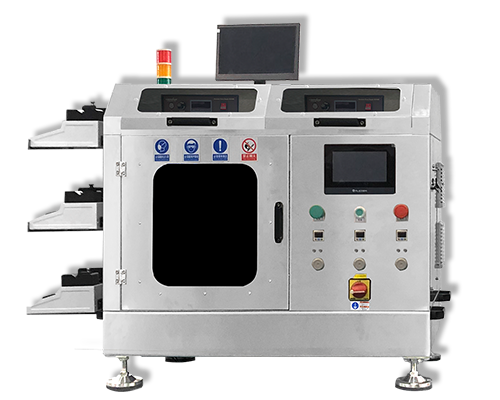
Advanced Drug Eluting Stents Coating Machine technology addresses these critical limitations through innovative design and precision engineering, leveraging state-of-the-art fluid dynamics, automated control systems, and optimized application methodologies to deliver superior coating quality and manufacturing efficiency. By integrating these cutting-edge features, the machine ensures consistent, reliable performance that meets the rigorous standards of clinical research and validated industrial production, while also reducing costs and improving patient outcomes.
First and foremost, the machine enables uniform coating around individual struts and across the entire stent surface, regardless of the stent’s complex geometry. Unlike traditional methods that struggle with uneven deposition, this technology uses controlled atomization and targeted application to deliver coating material in micro-sized droplets, ensuring that every surface—from strut edges to concave gaps—receives a consistent, thin layer. This uniformity is critical for achieving predictable drug release kinetics, as it eliminates the hotspots and gaps that plague conventional coatings, ensuring that the drug is released at a steady, therapeutic rate over the intended period.
Precise control of drug load and coating thickness is another key advantage. The machine is equipped with advanced sensors and automated feedback systems that monitor and adjust coating parameters in real time, allowing manufacturers to set exact drug concentrations and coating thicknesses (often within micrometer precision) and maintain these settings consistently across every stent. This level of control is essential for clinical trials, where reproducibility is paramount, and for large-scale manufacturing, where adherence to validated specifications is required to ensure product safety and efficacy. By eliminating variability in drug loading, the machine reduces the risk of batch failures and ensures that every DES performs as intended.
The technology also delivers strong, repeatable adhesion on both bare metal stents (BMS) and polymer-primed surfaces. Traditional coatings often suffer from poor adhesion, leading to flaking or peeling during stent deployment or in vivo use—an issue that can cause drug loss, inflammation, or vascular injury. The Drug Eluting Stents Coating Machine addresses this by optimizing the interaction between the coating material and the stent surface, using surface pretreatment capabilities and tailored coating formulations to enhance bond strength. This ensures that the coating remains intact through sterilization, storage, deployment, and long-term implantation, maintaining its structural integrity and drug delivery functionality.
Crucially, the machine eliminates webbing between struts, preserving the stent’s original geometry and lumen openness. By precisely controlling the volume and direction of coating material, it avoids excess deposition in inter-strut gaps, ensuring that no unintended bridges form between struts. This preservation of stent geometry is vital for maintaining lumen patency—critical for unobstructed blood flow—and ensuring that the stent can expand uniformly without resistance, reducing the risk of vascular injury during deployment. It also eliminates the need for post-coating cleaning processes to remove webbing, streamlining the manufacturing workflow.

Lower waste of high-value drug formulations is another significant benefit. Given that the drugs used in DES (such as sirolimus, paclitaxel, and their derivatives) are often extremely expensive, reducing waste directly translates to lower production costs. The machine’s targeted application technology ensures that nearly all coating material is deposited on the stent surface, rather than being wasted as over-spray or excess dip solution. This not only reduces material costs but also minimizes the environmental impact of manufacturing, aligning with sustainable production practices.
Finally, the machine features programmable recipes that repeat reliably, making it ideal for both clinical trials and validated manufacturing. Manufacturers can store custom coating parameters (including drug concentration, coating thickness, application speed, and atomization settings) as programmable recipes, ensuring that every batch of stents is produced with identical specifications. This reproducibility is critical for clinical trials, where consistent product performance is necessary to generate reliable data, and for commercial manufacturing, where adherence to regulatory standards (such as ISO 13485) is mandatory. The ability to recall and repeat recipes also reduces setup time between batches, improving production efficiency and throughput.
In summary, Drug Eluting Stents Coating Machine technology represents a significant advancement in DES manufacturing, addressing the key limitations of traditional coating methods while delivering superior quality, consistency, and cost-effectiveness. By ensuring uniform coating, precise drug control, strong adhesion, no inter-strut webbing, reduced waste, and reliable programmability, this technology not only streamlines the manufacturing process but also enhances the safety and efficacy of drug-eluting stents—ultimately benefiting patients with coronary artery disease by providing more reliable, predictable treatment outcomes.
About Cheersonic
Cheersonic is the leading developer and manufacturer of ultrasonic coating systems for applying precise, thin film coatings to protect, strengthen or smooth surfaces on parts and components for the microelectronics/electronics, alternative energy, medical and industrial markets, including specialized glass applications in construction and automotive.
Our coating solutions are environmentally-friendly, efficient and highly reliable, and enable dramatic reductions in overspray, savings in raw material, water and energy usage and provide improved process repeatability, transfer efficiency, high uniformity and reduced emissions.
Chinese Website: Cheersonic Provides Professional Coating Solutions
