
Ultrasonic Spraying of Nanomaterials
Ultrasonic Spraying of Nanomaterials – Nanomaterials – Cheersonic
In the current era of rapid advancements in materials science, nanomaterials, with their unique physicochemical properties, have become a research hotspot in numerous fields such as electronics, energy, and biomedicine. Carbon nanotubes, MXenes, and graphene, as typical representatives of nanomaterials, place extremely high demands on spraying processes in practical applications. Traditional spraying methods struggle to meet the requirements for uniform dispersion and precise coating, while ultrasonic spraying technology, with its innovative process, has opened up entirely new pathways for the application of these nanomaterials.
Carbon nanotubes possess excellent mechanical and electrical properties, MXenes exhibit unique metallic conductivity and hydrophilicity, and graphene is renowned for its high specific surface area and excellent thermal conductivity. However, these nanomaterials face numerous challenges in practical applications. For example, carbon nanotubes are prone to aggregation, affecting their conductivity; MXenes have poor dispersion stability, making uniform coating difficult; and graphene sheets exhibit strong van der Waals forces, leading to easy stacking. Traditional spraying methods, such as brushing and roller coating, cannot effectively solve these problems, resulting in the nanomaterials’ properties not being fully realized and limiting their large-scale application.
Ultrasonic spraying technology utilizes the cavitation effect of high-frequency ultrasound to atomize a solution containing carbon nanotubes, MXenes, and graphene into tiny particles. During atomization, the powerful energy of the ultrasound effectively disperses the aggregated nanomaterials, resulting in individually dispersed carbon nanotubes, uniformly suspended MXenes, and fully exfoliated graphene sheets. These uniformly dispersed nanoparticles, guided by precisely controlled airflow, are deposited evenly and stably onto the substrate surface, forming a continuous and dense nanomaterial coating.
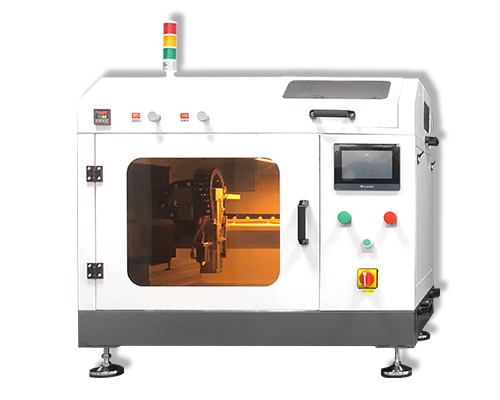
Compared to traditional processes, ultrasonic spraying produces smaller particle diameters, enabling nanoscale coating thickness control with an error range consistently within ±3 nanometers. For example, carbon nanotube electrodes prepared using ultrasonic spraying exhibit a more uniform and continuous conductive network, increasing current-carrying capacity by 40% compared to traditional methods. In the field of metal corrosion protection, MXene coatings, due to their uniform and dense structure, extend the corrosion resistance time of metal substrates by more than two times. When graphene coatings are used in heat dissipation components, ultrasonic spraying ensures uniform coverage, improving heat dissipation efficiency by 35%.
Furthermore, the non-contact nature of ultrasonic spraying avoids physical damage to the substrate, making it suitable for surface coating of various sensitive materials and complex structures. This technology also boasts high flexibility, allowing for free adjustment of parameters such as ultrasonic frequency, solution flow rate, and nozzle movement speed according to the characteristics of different nanomaterials and application requirements. Whether it’s spraying carbon nanotubes onto flexible electronic devices to create flexible circuits, coating MXenes on battery electrode materials to enhance energy storage performance, or spraying graphene into composite materials to strengthen mechanical properties, ultrasonic spraying technology can precisely adapt to each application.
Cheersonic continuously upgrades its ultrasonic spraying equipment, optimizing its level of intelligence. Its intelligent monitoring system can monitor various parameters during the spraying process in real time and automatically adjust them, ensuring stable and high-quality results for every nanomaterial spraying.
As the application fields of nanomaterials continue to expand, the requirements for their spraying processes are becoming increasingly stringent. With its outstanding performance in spraying carbon nanotubes, MXenes, graphene, and other nanomaterials, ultrasonic spraying technology is poised to become a key technology driving innovation in nanomaterial applications, helping various industries move towards a higher-performance and more innovative development stage.
About Cheersonic
Cheersonic is the leading developer and manufacturer of ultrasonic coating systems for applying precise, thin film coatings to protect, strengthen or smooth surfaces on parts and components for the microelectronics/electronics, alternative energy, medical and industrial markets, including specialized glass applications in construction and automotive.
Our coating solutions are environmentally-friendly, efficient and highly reliable, and enable dramatic reductions in overspray, savings in raw material, water and energy usage and provide improved process repeatability, transfer efficiency, high uniformity and reduced emissions.
Chinese Website: Cheersonic Provides Professional Coating Solutions
