Analysis of UTG Ultra-thin Flexible Glass Coating
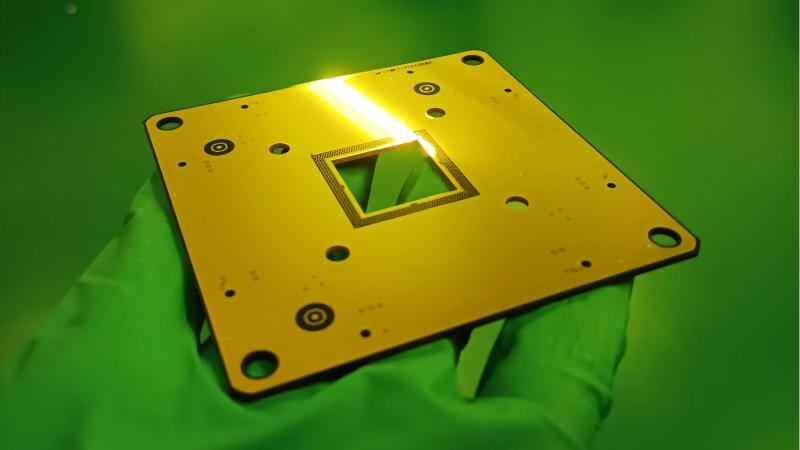
UTG ultra-thin flexible glass surfaces are typically coated with multiple layers of composite coatings, with the core consisting of a hard coating AR、AF、AG、 Anti scattering coatings, etc., can be used in combination depending on the scene. The common goal of coatings is to enhance the comprehensive performance of impact resistance, wear resistance, fingerprint resistance, and anti reflection/glare while maintaining high transparency and bendability, significantly extending the service life of foldable screens.
Main coating types
Hard Coating (HC)
-Materials: SiO ₂ (silicon-based), Al ₂ O3 (alumina), organic-inorganic hybrid (such as POSS)
-Thickness: Typically 1-3 μ m
Anti reflection coating (AR)
-Materials: MgF ₂ (single-layer), TiO ₂/SiO ₂ (multi-layer)
-Thickness: Nanoscale (such as MgF ₂ about 100nm)
Anti Fingerprint Coating (AF)
-Materials: Fluoropolymers, Siloxanes
-Structure: Nano scale hydrophobic oil layer
Anti Glare Coating (AG)
-Structure: Surface micro roughness nanostructure
-Process: Spraying or sputtering to form porous thin films
Anti scattering coating
-Characteristics: UV curable protective resin
-Function: Prevent glass fragments from splashing when broken
The core function of coatings
Improve mechanical performance
-Impact resistance: Raise the breaking height of the pen test from 20cm to ≥ 50cm
-Wear resistant: POSS coating can withstand 20000 times of steel wool friction without scratches
-Hardness: Pencil hardness can reach 9H, significantly better than ordinary glass
-Bending resistance: Under a bending radius of R1.0-1.5mm, it can withstand 200000 to 500000 folds without breaking
Optimize optical performance
-AR anti reflection: transmittance increased to>92%, reflectivity reduced to<0.5%
-AG glare control: converts specular reflection into soft diffuse reflection, making it easier to read under strong light
-High transparency: coating light loss rate<1%, maintaining visual clarity
Enhance user experience
-Anti fingerprint: hydrophobic and oleophobic, contact angle>100 °, easy to clean
-Anti fouling: reduce dust adhesion and lower cleaning frequency
-Touch: Close to ordinary glass, better than plastic film
Typical coating combinations and principles
Multi layer composite coating structure
-Bottom layer (hard coating): Provides basic scratch and wear resistance, commonly using Al ₂ O ∝ (about 15GPa) or SiO ₂ (about 9GPa)
-Intermediate layer (stress transition): Gradient refractive index material (such as SiOxNy) to alleviate interlayer stress
-Top layer (functional layer): AR enhances transparency; AF anti fingerprint; AG anti glare
Principle of POSS coating (organic-inorganic hybrid)
-Molecular structure: Silicon oxygen bond (Si-O) cage skeleton+organic functional groups
-Performance Fusion: Combining inorganic material rigidity with organic material flexibility
-Application advantages: Hardness>9H, while maintaining 500000 times without breaking under R1.5mm bending
Why does UTG need these coatings?
-Compensating for the strength weakness caused by ultra-thin: with a thickness of only 30-100 μ m (about the thickness of a human hair), the impact resistance decreases
-Addressing the challenges posed by folding: Repeated bending can easily generate microcracks, while coatings can suppress expansion
-Realize differentiation from plastic film (CPI):
-The transmittance has increased by about 30%, resulting in better outdoor visibility
-Significantly higher hardness, less prone to scratches, and as good as new for a long time
-Better aging resistance, moisture resistance and longer service life
Summary
UTG ultra-thin flexible glass is not “bare glass”, but achieves performance synergy through multi-layer composite coatings: hard coatings provide impact resistance and wear resistance, AR/AG/AF optimize light transmission, anti glare, anti fingerprint, and anti scattering coatings enhance safety. These coatings together solve the strength and durability issues brought by ultra-thin and foldable technology, enabling foldable screens to withstand tens of thousands of bends while maintaining high transparency and a glass like experience, significantly improving their service life and reliability.
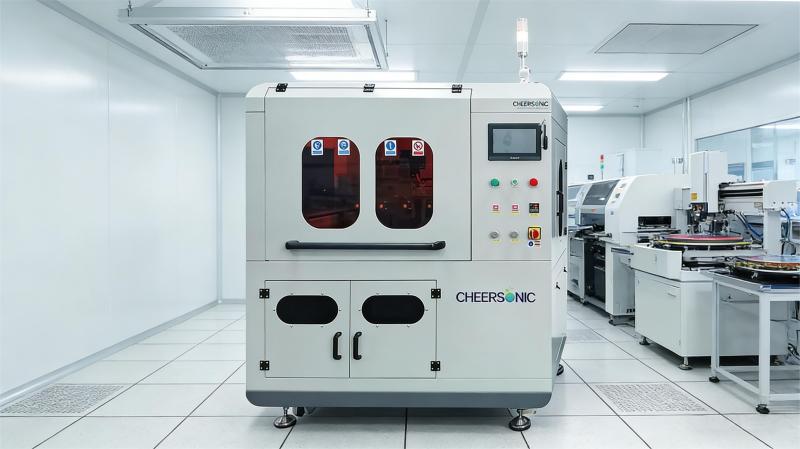
Ultrasonic spraying converts high-frequency vibrations of 15-120kHz into liquid atomization, forming uniform droplets of 5-50 μ m, which are accurately coated on UTG surfaces of 30-100 μ m under low-pressure airflow, constructing composite systems such as hard coatings, AR, and AF. Its advantages lie in controllable thickness (nanometer to micrometer level), uniformity>95%, material utilization rate>95%, and low impact on flexible substrates, while also considering impact resistance, wear resistance, high transparency, anti fingerprint and other properties, suitable for the bending reliability requirements of foldable screens.
About Cheersonic
Cheersonic is the leading developer and manufacturer of ultrasonic coating systems for applying precise, thin film coatings to protect, strengthen or smooth surfaces on parts and components for the microelectronics/electronics, alternative energy, medical and industrial markets, including specialized glass applications in construction and automotive.
Our coating solutions are environmentally-friendly, efficient and highly reliable, and enable dramatic reductions in overspray, savings in raw material, water and energy usage and provide improved process repeatability, transfer efficiency, high uniformity and reduced emissions.
Chinese Website: Cheersonic Provides Professional Coating Solutions