
PVA Spray Coating
PVA Spray Coating Technology and Smooth Coating Characteristics Analysis
Polyvinyl alcohol (PVA), as a polymer material that combines environmental friendliness and excellent film-forming properties, is favored in various industrial fields for its spray coating process. Among them, the application of ultrasonic spray coating technology has further promoted the upgrading of PVA coating quality, especially demonstrating unique advantages in achieving smooth surface performance. The smoothness of PVA coatings not only enhances the appearance of products but also endows them with functional values such as wear resistance, non-stick properties, and barrier properties, widely adapting to the high-end needs of industries such as textiles, food packaging, and electronics manufacturing.
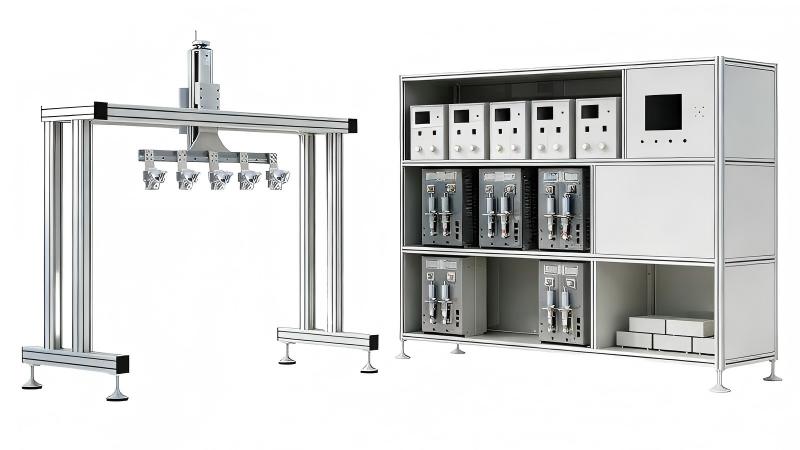
The core value of PVA spray coating lies in forming a uniform film through precise process control, and the smoothness of the coating directly depends on the water evaporation rate and the stress state of the substrate during the film formation process. Traditional PVA spray coating processes involve depositing a solution onto the substrate surface after atomization, followed by drying and curing to form a film layer. However, its smoothness is easily affected by factors such as the size of the atomized particles and uneven drying temperature. Studies have shown that when the average evaporation rate of water molecules in the PVA film is controlled at 2-8 wt%/min during the drying process, the formation of bubbles and cracks on the film surface can be effectively avoided, laying the foundation for the formation of a smooth surface. Simultaneously, precise control of the substrate’s traction tension (30-150 N/m), aided by the leveling effect of the rollers, eliminates wrinkles and marks on the film surface, further improving surface smoothness.
The introduction of ultrasonic spraying technology provides a superior solution for the preparation of smooth PVA coatings. Compared to traditional spraying processes, ultrasonic spraying atomizes the PVA solution into tiny droplets of 1-50 μm through high-frequency ultrasonic vibration. These uniform and fine droplets, after deposition on the substrate surface, naturally form a smooth film structure, reducing the risk of uneven film surfaces from the outset. Furthermore, ultrasonic spraying employs a non-contact coating method, avoiding damage to the substrate caused by mechanical contact in traditional processes, while significantly improving material utilization, with a solution conversion rate exceeding 95%, thus reducing production costs and environmental pollutant emissions.
In terms of process adaptability, ultrasonic spraying can precisely control the thickness of PVA coatings, ranging from 20nm to 100μm, with a coating uniformity exceeding 95%, meeting the stringent requirements for smooth surfaces in various scenarios. For example, in the electronics manufacturing field, the PVA insulating coating on silicon wafers needs extremely high smoothness to ensure photolithography accuracy. Ultrasonic spraying technology can achieve nanoscale uniform deposition, avoiding the edge thickening phenomenon that easily occurs in traditional spin coating processes, significantly improving device stability. In the coating of flexible electronic substrates, the low-temperature compatibility advantage of this technology is particularly significant, avoiding high-temperature damage to the substrate while maintaining a smooth and flat coating surface.
The smooth surface characteristics of PVA coatings endow them with diverse application value. In the textile industry, a smooth PVA coating enhances the moisture-wicking properties of fabrics while reducing discomfort from friction between clothing and skin, making it particularly suitable for outdoor sportswear. In food packaging, a smooth PVA coating forms an effective barrier layer, preventing the penetration of grease and moisture, and its non-toxic and biodegradable properties meet food contact safety standards. In wood processing, a smooth PVA coating can be used as a primer to improve the surface smoothness of wood, providing a good base for subsequent decorative treatments. Furthermore, in electronic component packaging, a smooth PVA coating provides insulation and protection, preventing dust adhesion from affecting component performance.
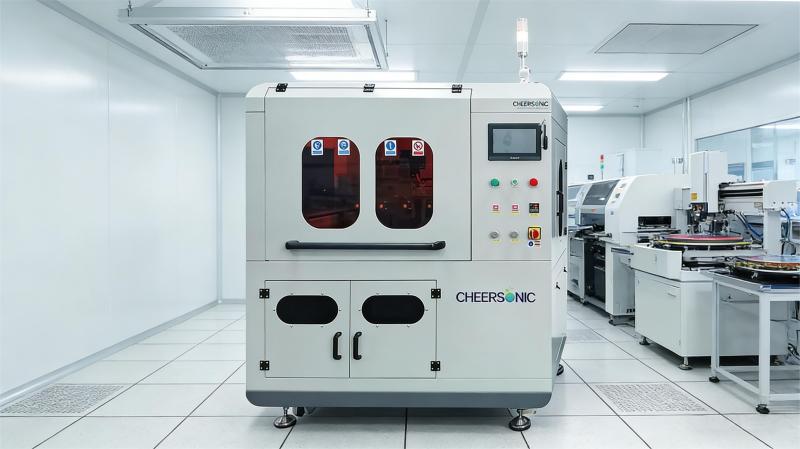
Achieving a high-quality, smooth PVA coating requires careful consideration of both material formulation and process coordination. The degree of hydrolysis of PVA (85%-98%) directly affects its solubility and film-forming properties. Selecting appropriate hydrolysis parameters can optimize solution flow and improve film surface smoothness. Simultaneously, parameter control of the ultrasonic spraying equipment is crucial. By optimizing the ultrasonic frequency, spraying distance, and substrate movement speed, the atomized particles can be further refined, ensuring uniform coating thickness. Paired with an intelligent drying system, the precise control of the drying temperature gradient effectively avoids roughness caused by uneven film shrinkage, ultimately resulting in a high-quality, smooth coating with a surface roughness of less than 0.5S.
With the deepening of environmental protection concepts and the upgrading of industrial manufacturing, PVA spraying technology is developing towards greater precision and efficiency. The synergistic application of ultrasonic spraying and PVA materials not only fully leverages the smoothness advantages of PVA coatings but also aligns with the industry trend of low-carbon production. In the future, through continuous exploration of material modification and process optimization, PVA smooth coatings will achieve breakthroughs in more high-end manufacturing fields, providing core support for product performance improvement and industrial upgrading.
About Cheersonic
Cheersonic is the leading developer and manufacturer of ultrasonic coating systems for applying precise, thin film coatings to protect, strengthen or smooth surfaces on parts and components for the microelectronics/electronics, alternative energy, medical and industrial markets, including specialized glass applications in construction and automotive.
Our coating solutions are environmentally-friendly, efficient and highly reliable, and enable dramatic reductions in overspray, savings in raw material, water and energy usage and provide improved process repeatability, transfer efficiency, high uniformity and reduced emissions.
Chinese Website: Cheersonic Provides Professional Coating Solutions
