
Analysis of Ultrasonic Spray Intravenous Stent
Analysis of Ultrasonic Spray Intravenous Stent – Ultrasonic Stent Coating Machines for Coronary Stents – Cheersonic
Ultrasonic spraying of venous stents is a core technology product in the field of high-end interventional medical devices. Through ultrasonic spraying technology, functional coatings are prepared on the surface of venous stents, which balance mechanical support and drug delivery functions, effectively solving the clinical treatment problems of venous stenosis and blockage, and greatly improving the safety and long-term effectiveness of stent implantation. Its core value lies in breaking through the bottleneck of traditional processes with precision spraying technology and adapting to the special physiological environment requirements of venous blood vessels.

The core principle of this technology is to use high-frequency sound waves of 20-120kHz to convert electrical energy into mechanical vibration through piezoelectric crystals, causing drug solutions or polymer suspensions to form capillary waves at the nozzle tip. When the amplitude reaches a critical value, they separate and form uniform micrometer sized droplets, which are then precisely deposited onto the surface of the stent through a precision control system to form a dense and uniform functional coating. Unlike traditional pressure spraying, its atomization process is gentle and does not require high-pressure airflow, which can avoid droplet splashing and nozzle blockage. It is suitable for small network structures of 80-150 microns in venous stents.
Compared to traditional spraying techniques, ultrasonic spraying has significant advantages in the manufacturing of venous stents. Firstly, the coating has excellent uniformity, which can control the thickness difference within 2%, completely solving the “coffee ring” effect of traditional processes and avoiding the problem of local drug concentration being too high to damage blood vessels or insufficient concentration to suppress restenosis. Secondly, the material utilization rate is over 90%, significantly reducing the waste of expensive drugs such as rapamycin and lowering production costs. The third is strong compatibility, which can adapt to various coating materials such as polymers and nanoparticles, and can retain the integrity of bioactive ingredients, adapting to the manufacturing needs of new products such as biodegradable scaffolds.
The core process must strictly follow the medical device production standards, mainly including three steps: first, ultrasonic cleaning and drying treatment of the stent substrate to remove impurities and improve coating adhesion; Prepare a spray solution containing drugs and polymer carriers, filter it aseptically, and set it aside for later use; Finally, in a clean environment of 18-28 ℃ and relative humidity of 20-40%, spraying is completed by adjusting parameters such as atomization power and liquid inlet rate, and then dried and cured to form a stable coating. The entire process requires precise control of parameters to ensure that the coating has no pinholes or peeling, meeting the strict standards of three types of implantable medical devices.
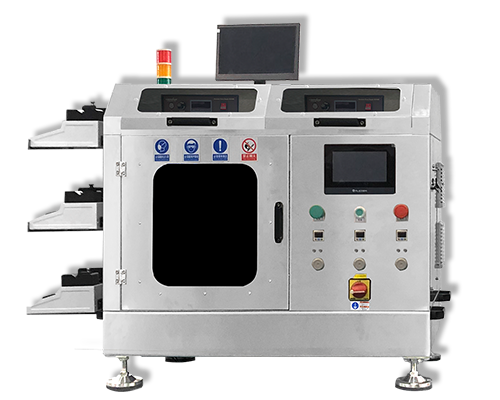
In clinical applications, ultrasound sprayed venous stents inhibit the proliferation of vascular smooth muscle cells and reduce the incidence of restenosis inside the stent through the slow release of surface drug coatings. At the same time, it reduces friction damage between the instrument and the vascular wall, improving the safety of interventional surgery. At present, this technology is developing towards intelligence and personalization, and the multi nozzle system can achieve multi drug gradient spraying, adapting to the treatment needs of different patients. With technological upgrades, it will further promote the development of precision and long-term intravenous intervention therapy, providing better treatment options for vascular stenosis diseases.
About Cheersonic
Cheersonic is the leading developer and manufacturer of ultrasonic coating systems for applying precise, thin film coatings to protect, strengthen or smooth surfaces on parts and components for the microelectronics/electronics, alternative energy, medical and industrial markets, including specialized glass applications in construction and automotive.
Our coating solutions are environmentally-friendly, efficient and highly reliable, and enable dramatic reductions in overspray, savings in raw material, water and energy usage and provide improved process repeatability, transfer efficiency, high uniformity and reduced emissions.
Chinese Website: Cheersonic Provides Professional Coating Solutions