
Applications of Biosensor Spray Coating
Applications of Biosensor Spray Coating – Medical Coating – Cheersonic
Biosensor spray coating has a wide range of applications, covering medical diagnostics, environmental monitoring, food safety, microbial detection, and new energy, among others. The following is a detailed summary of these application areas:
I. Medical Diagnostics
Protein Detection: Specific nanomaterials, such as titanium dioxide (TiO₂) nanofibers and gold nanoparticles, are deposited on the electrode surface using spray coating technology to enhance the adsorption capacity and electrochemical activity of biomolecules, thereby creating highly sensitive protein detection sensors. These sensors can be used in medical diagnostics to detect biomarkers, providing important evidence for the early detection and treatment of diseases.
Enzyme Sensors: Enzyme molecules are immobilized on the sensor surface using spray coating technology to form enzyme sensors. These sensors can respond to specific substrates, generating measurable signals, thereby enabling the detection of certain substances in the body. Enzyme sensors have the advantages of being fast, accurate, and highly sensitive in medical diagnostics, and can be used for blood glucose monitoring, liver function testing, etc.
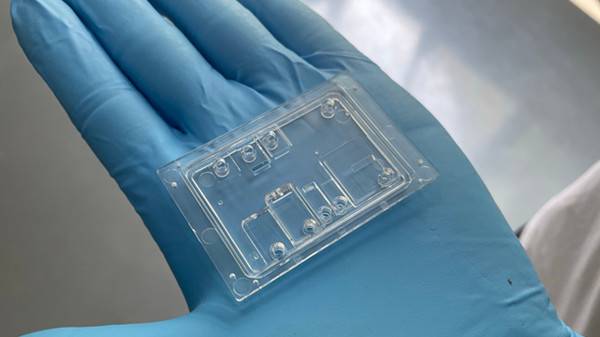
DNA Sensors: Highly sensitive DNA sensors are created by depositing nanomaterials such as silver nanoparticles and titanium dioxide nanofibers on the electrode surface using spray coating technology to improve the conductivity and surface activity of the sensor electrode. This type of sensor can specifically identify DNA sequences and can be used in fields such as gene screening and genetic disease diagnosis.
II. Environmental Monitoring
Biosensor coating technology can also be used to prepare sensors for detecting environmental pollutants. By coating functionalized nanomaterials, such as zinc oxide (ZnO) nanostructures, onto the electrode surface, the sensor’s sensitivity and selectivity for detecting heavy metal ions and organic pollutants are improved. This sensor can monitor the concentration of pollutants in the environment in real time, providing important data support for environmental protection and pollution control.
III. Food Safety
In the field of food safety, biosensor coating technology can be used to prepare sensors for the rapid detection of harmful substances in food. For example, specific enzymes or antibodies can be immobilized on the sensor surface through coating technology to form sensitive elements for specific harmful substances. When harmful substances come into contact with the sensitive element, a measurable signal is generated, thereby achieving rapid detection of harmful substances in food. This type of sensor has advantages such as fast detection speed, high accuracy, and ease of operation, and can be used for monitoring and management in food production, processing, and storage.
IV. Microbial Detection
Microbial sensors can be used to measure raw materials and metabolites in the fermentation industry, as well as to measure the number of microbial cells. Microbial sensors are created by immobilizing microbial cells or specific enzymes onto the surface of a sensor using spray coating technology. These sensors respond to the growth or metabolic activities of microorganisms, generating measurable signals for detection and monitoring. Microbial sensors have broad application prospects in fermentation industries, environmental monitoring, and water treatment.
V. New Energy Field
Besides the above-mentioned fields, biosensor spray coating technology can also be applied to the new energy field. For example, in solar cells, specific photosensitive materials are fixed to the electrode surface using spray coating technology to form photoelectric conversion elements. These elements can convert light energy into electrical energy, thereby improving the photoelectric conversion efficiency of solar cells. Furthermore, biosensor spray coating technology can also be used to prepare sensitive elements and coating materials for novel energy devices such as lithium-ion batteries.
In summary, biosensor spray coating has a wide range of applications, covering multiple fields such as medical diagnostics, environmental monitoring, food safety, microbial detection, and new energy. With continuous technological advancements and increasing demands for health and environmental protection, biosensor spray coating technology will continue to be optimized and innovated, providing more efficient and accurate detection methods for various fields.
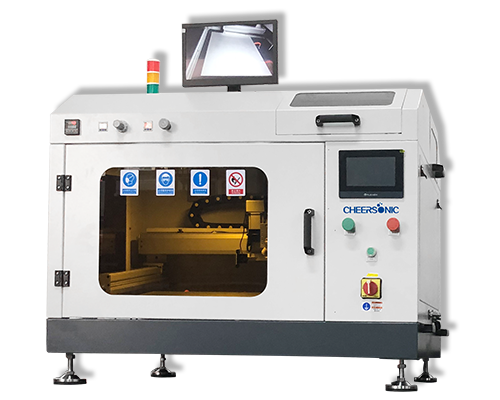
Ultrasonic spraying is the core precision technology for preparing coatings for biosensors. It atomizes liquids containing bioactive substances or nanomaterials into 5-10 micron droplets through high-frequency vibration, accurately depositing them on the surface of the sensor substrate to form a uniform coating that meets the functional requirements of various biosensors.
This technology can accurately control the coating thickness within 0.5-5 microns, with a uniformity error of ≤ 5%. It can avoid the aggregation of nanomaterials, protect enzymes, antibodies and other bioactive substances from high pressure damage, and increase material utilization by more than 40% compared to traditional spraying, significantly reducing the loss of expensive reagents.
It has strong adaptability and can spray conductive materials such as carbon nanotubes and gold nanoparticles, as well as biometric components. It is widely used in the preparation of sensors for DNA, enzyme, virus detection, etc., which can significantly improve detection sensitivity, specificity, and response speed. It can also achieve 360 degree blind spot spraying of filamentous sensors, helping to mass produce biosensors on a large scale and meet the needs of multiple fields such as medical diagnosis and environmental monitoring.
About Cheersonic
Cheersonic is the leading developer and manufacturer of ultrasonic coating systems for applying precise, thin film coatings to protect, strengthen or smooth surfaces on parts and components for the microelectronics/electronics, alternative energy, medical and industrial markets, including specialized glass applications in construction and automotive.
Our coating solutions are environmentally-friendly, efficient and highly reliable, and enable dramatic reductions in overspray, savings in raw material, water and energy usage and provide improved process repeatability, transfer efficiency, high uniformity and reduced emissions.
Chinese Website: Cheersonic Provides Professional Coating Solutions