
Applications of Heparin Coating on Blood Gas Needles
Applications of Heparin Coating on Blood Gas Needles – Cheersonic
The heparin coating technology for blood gas needles has wide applications in the medical field. The following is a detailed summary of its application areas:
Clinical Diagnosis
1. Respiratory Medicine: Patients in respiratory medicine often require blood gas analysis to assess respiratory function and acid-base balance. The heparin coating on the blood gas needle prevents blood clotting during collection, ensuring the representativeness of the collected blood sample and providing doctors with accurate diagnostic information.
2. Emergency Department: Emergency departments frequently require rapid and accurate acquisition of patients’ blood gas parameters to assess their condition and develop treatment plans. The heparin coating technology on the blood gas needle improves the accuracy and efficiency of blood gas analysis, providing strong support for emergency treatment.
3. Intensive Care Unit (ICU): In the ICU, patients’ conditions are usually more severe, requiring close monitoring of blood gas parameters to assess treatment effectiveness and disease progression. The heparin coating on the blood gas needle ensures the quality of the collected blood sample, providing doctors with timely diagnostic information.
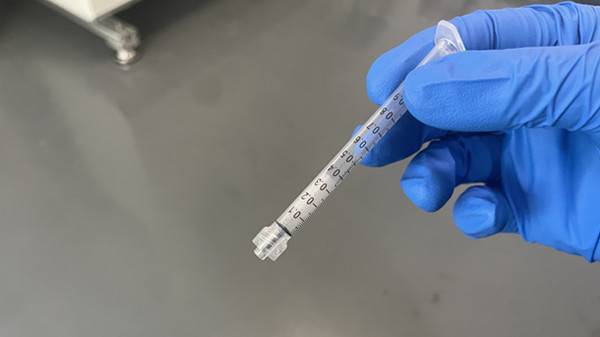
Surgical Treatment
During surgery, doctors need to monitor the patient’s blood gas parameters to assess the surgical outcome and the patient’s physiological state. The heparin-coated blood gas needle technique prevents blood clotting during collection, ensuring the representativeness of the collected blood samples and providing crucial information for surgical decisions. Furthermore, for patients requiring prolonged surgery or with coagulation disorders, this technique can reduce the risk of bleeding during surgery and improve surgical safety.
Research and Teaching
1. Research Field: In biomedical research, blood gas analysis is a commonly used research method. The heparin-coated blood gas needle technique ensures the quality of collected blood samples, providing reliable experimental data for research. In addition, this technique can be used to study the mechanism of action of heparin in the anticoagulation process, providing a theoretical basis for new drug development.
2. Teaching Field: In medical education, blood gas analysis is an important teaching component. The heparin-coated blood gas needle technique provides students with practical opportunities to master basic blood gas analysis skills. Simultaneously, this technique can be used for teaching demonstrations, allowing students to more intuitively understand the anticoagulant effect and application scenarios of heparin coatings.
Other Applications
Besides the applications mentioned above, heparin-coated blood gas needle technology can also be applied to other situations requiring blood sample collection and analysis, such as health check-up centers and blood testing centers. These situations typically require rapid and accurate acquisition of patients’ blood gas parameters to assess their health status or develop treatment plans. Heparin-coated blood gas needle technology can improve collection efficiency and accuracy, providing strong support for these applications.
In conclusion, heparin-coated blood gas needle technology has broad application prospects in the medical field. With the continuous advancement of medical technology and the increasing demand for health, this technology will be more widely applied and promoted.
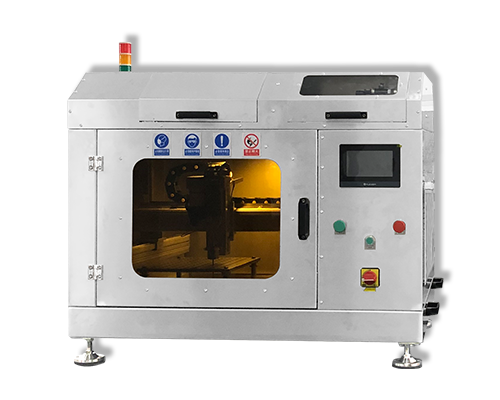
The ultrasonic spraying machine provides an efficient and accurate solution for the preparation of heparin coatings for blood gas needles, and is a key process in the production of medical blood gas needles. Heparin, as a potent anticoagulant, can inhibit the activity of coagulation factors by binding to antithrombin III, avoiding blood clotting after blood collection and ensuring the accuracy of blood gas testing results. Ultrasonic spraying technology can maximize its anticoagulant efficacy.
Before spraying, it is necessary to thoroughly clean the blood gas needle, prepare a suitable concentration of heparin solution, and then atomize the solution into micrometer sized uniform droplets through high-frequency vibration of an ultrasonic sprayer. This process is low-temperature and low-pressure, which can fully preserve the biological activity of heparin. It has strong directional droplet deposition ability and can accurately cover the complex surfaces of the needle body and inner wall, forming a dense coating with controllable thickness and no pinholes.
Compared with traditional processes, its material utilization rate reaches over 90%, significantly reducing heparin loss and cost, and there is no splashing or pollution, in line with medical GMP standards. The coating is tightly integrated with the needle body, resistant to blood erosion, and can sustainably exert anticoagulant effects, reducing sample contamination and puncture complications. This not only enhances the safety of blood gas needle clinical use, but also ensures the reliability of test results.
About Cheersonic
Cheersonic is the leading developer and manufacturer of ultrasonic coating systems for applying precise, thin film coatings to protect, strengthen or smooth surfaces on parts and components for the microelectronics/electronics, alternative energy, medical and industrial markets, including specialized glass applications in construction and automotive.
Our coating solutions are environmentally-friendly, efficient and highly reliable, and enable dramatic reductions in overspray, savings in raw material, water and energy usage and provide improved process repeatability, transfer efficiency, high uniformity and reduced emissions.
Chinese Website: Cheersonic Provides Professional Coating Solutions
