
Advantages of Heparin Coating for Blood Gas Needles
Advantages of Heparin Coating for Blood Gas Needles – Cheersonic
1. Superior Anticoagulant Performance:
Rapid Anticoagulation: Heparin is a highly effective anticoagulant. When blood enters a heparin-coated blood gas needle, heparin rapidly binds to clotting factors in the blood, especially prothrombin and factor Xa, preventing the conversion of prothrombin to thrombin and thus inhibiting the chain reaction that leads to blood coagulation. This rapid anticoagulation ensures that the blood sample remains liquid from collection to testing, which is crucial for situations requiring timely blood gas analysis.
- Good Continuous Anticoagulation Effect: The heparin coating is evenly distributed throughout the entire inner wall of the needle. As long as the blood is in contact with the needle wall, heparin continues to exert its anticoagulant effect. Compared to the traditional method of adding heparin to the bottom of the blood collection container, the heparin coating more effectively prevents blood from clotting inside the needle. Even small amounts of blood remaining in the needle can be neutralized by heparin, ensuring the quality of the blood sample.
2. Improved Detection Accuracy and Reduced Blood Component Variation:
Because heparin effectively prevents coagulation, various blood components such as oxygen, carbon dioxide, and pH levels remain relatively stable after blood collection. For example, without proper anticoagulation, blood clotting consumes oxygen and produces carbon dioxide, leading to inaccurate blood gas analysis results. Heparin-coated blood gas syringes avoid this, ensuring more accurate results reflecting the patient’s true blood gas state.
- Prevention of Blood Aggregation Interference: Blood aggregation can cause cell components to accumulate, potentially clogging the instrument’s channels or affecting the accurate measurement of blood components. The heparin coating prevents blood aggregation, ensuring uniform distribution of the blood sample within the instrument, thus improving detection accuracy.
3. Reduced Sample Contamination Risk and Lowered Exogenous Interference:
The presence of a heparin coating reduces the need for other anticoagulants or additives. Using multiple anticoagulants or additives may introduce exogenous substances that interfere with blood component detection. The heparin coating itself provides excellent anticoagulation, avoiding this potential interference and ensuring results more purely reflect the blood’s condition.
- Prevention of Microbial Contamination: The heparin coating can also prevent the adhesion and growth of microorganisms on the inner wall of the syringe to a certain extent. During blood collection, the syringe may come into contact with microorganisms in the external environment. The presence of the heparin coating can reduce the proliferation of microorganisms in the blood sample, reduce the risk of sample contamination, and help ensure the reliability of test results.
4. Improved Patient Comfort and Safety, Reduced Puncture Site Complications:
Because the heparin-coated blood gas needle is effectively anticoagulant, it reduces the possibility of blood clotting inside the syringe. Medical staff do not need to vigorously flush the syringe or take other complex anticoagulation measures after blood collection, which helps reduce the risk of blood backflow to the puncture site. Blood backflow may lead to complications such as hematoma and inflammation at the puncture site. The heparin-coated blood gas needle can reduce such risks, improving patient comfort and safety.
- Suitable for Small-Dose Blood Collection: For some situations requiring small-dose blood samples for blood gas analysis, such as pediatric patients or critically ill patients, the anticoagulant effect of the heparin-coated blood gas needle is even more important. It can ensure that the blood will not clot even with small-dose blood collection, making it convenient for medical staff to accurately collect and test the required blood samples.
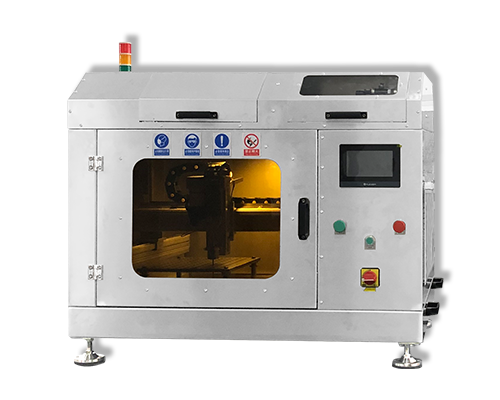
Ultrasonic spraying machine for preparation of heparin coating for blood gas needle
The ultrasonic spraying machine relies on high-frequency ultrasonic atomization technology to accurately disperse heparin solution into micrometer sized uniform droplets, which gently settle on the inner wall of the blood gas needle, forming an ultra-thin, dense, and pinhole free uniform coating. Its low-temperature and low-pressure process maximally preserves the biological activity of heparin, avoids drug inactivation, and ensures long-term stable anticoagulant effect. The coating thickness and liquid application volume are precisely controllable, with high batch consistency, eliminating the risk of coagulation caused by uneven local thickness, improving the accuracy of blood gas analysis data, adapting to the large-scale production of medical consumables, and meeting the strict quality standards of medical devices.
About Cheersonic
Cheersonic is the leading developer and manufacturer of ultrasonic coating systems for applying precise, thin film coatings to protect, strengthen or smooth surfaces on parts and components for the microelectronics/electronics, alternative energy, medical and industrial markets, including specialized glass applications in construction and automotive.
Our coating solutions are environmentally-friendly, efficient and highly reliable, and enable dramatic reductions in overspray, savings in raw material, water and energy usage and provide improved process repeatability, transfer efficiency, high uniformity and reduced emissions.
Chinese Website: Cheersonic Provides Professional Coating Solutions